
 Manuela Dopazo1
 , Felipe Arian de Andrade Araújo2, Alberto Akama3 and Wolmar Benjamin Wosiacki3
PDF: Download Here | Supplementary: Sup | Cite this article
Associate Editor: Carlos DoNascimiento
Section Editor: William Crampton
Editor-in-chief: José Birindelli
Abstract
Uma nova espécie de Peckoltia é descrita da bacia do rio Trombetas, estado do Pará, Brasil. A nova espécie foi investigada por meio de dados morfológicos e moleculares e pode ser diagnosticada de suas congêneres por: (1) aparência manchada, sem manchas ou listras definidas na cabeça e no corpo, (2) abdômen parcialmente nu com aglomerados de placas nas laterais do abdômen, da região peitoral à pélvica, (3) maior número de dentes em ambas as mandíbulas, (4) odontódeos curtos na face, (5) manchas escuras nas membranas interradiais de todas as nadadeiras, (6) quatro placas ao longo do corpo, (7) lábios inferiores com papilas arredondadas, (8) listras amarelas na cabeça posicionadas obliquamente, não maiores que a órbita ocular, (9) lábio superior completamente escuro e (10) margem dorsal da hiomandíbula côncava. A análise genética revelou uma divergência genética de 2,3% a 15% entre a nova espécie e outras espécies do gênero. Adicionalmente, foi realizada uma análise filogenética baseada em um gene mitocondrial (Cytb), e a espécie foi reconhecida como uma unidade monofilética. A descrição da nova espécie contribui para o conhecimento da bacia do rio Trombetas, um afluente pouco conhecido na margem esquerda do rio Amazonas.
Palavras-chave: Ancistrini, Bacia amazônica, Cascudos, Espécies reofílicas, Taxonomia.
Introduction
The genus Peckoltia Miranda Ribeiro, 1912 comprises 23 valid species distributed in Amazon, Essequibo, and Orinoco systems and coastal drainages north of the Amazon to French Guiana. Its representatives inhabit a variety of habitats including swift riffles, rapids, small forest creeks, and slow-flowing muddy streams. Most species are small bodied species (~10 cm SL) living inside cavities in submerged logs, rocks, or lateritic conglomerates during the day and forage on epilithic algae at night (Armbruster et al., 2018; Fricke et al., 2026).
The genus was originally described by Miranda Ribeiro (1912), based on Chaetostomus vittatus Steindachner, 1881 (= Peckoltia vittata). The original description was made without including consistent diagnostic characteristics and used specimens collected from different locations in the Amazon River basin, which led to several taxonomic uncertainties. Since its description, the genus has been considered taxonomically problematic, mainly due to the lack of unambiguous synapomorphic characters.
Armbruster (2008) revised Peckoltia sensu stricto and defined the genus as having teeth that meet at an angle of less than 90°, but without any of the synapomorphies of other Ancistrinae genera with angular jaws. Despite this definition, subsequent studies have used an expanded definition of Peckoltia without clear boundaries, including species such as Ancistomus snethlageae (Steindachner, 1911)and Peckoltia sabaji Armbruster, 2003, which Armbruster (2008) considered part of the polyphyletic Hemiancistrus Bleeker, 1862(Oliveira et al., 2010, 2012; Fisch-Muller et al., 2012).
The inconsistency regarding species identity is due to the lack of clear morphological groups to which species can be assigned and attempts to restrict species to two artificial taxa. A molecular phylogeny grouped different species originally described in different genera of Ancistrinae, such as Ancistrus Kner, 1854, Chaetostoma Tschudi, 1846, Etsaputu Lujan, Armbruster & Rengifo, 2011, Hemiancistrus Bleeker, 1862 and Peckoltichthys Miranda Ribeiro, 1917, into Peckoltia Clade (Lujan et al., 2015), demonstrating the taxonomic inconsistencies of the group (Tab. 1).
In Peckoltia, several species appear to be closely related to P. vittata, the type species of the genus, by sharing its morphotype. The species that form this group are P. braueri (Eigenmann, 1912), P. brevis (LaMonte, 1935), P. cavatica Armbruster & Werneke, 2005, P. vermiculata (Steindachner, 1908) and P. vittata. This group can be characterized by the tooth row of the dentary forming an angle of approximately 90° (Armbruster, Wernecke, 2005). Armbruster (2008) had recognized a wide-ranging P. vittata that included specimens from the Marañón to the Madeira and upper Orinoco systems but suggested that this putative range of P. vittata included multiple species.
TABLE 1 | Nominal species available for the Peckoltia genus.
Original name | Authority | Current status |
Peckoltia amjikin | Araújo, Ferreira, Silva & Wosiacki, 2025 | Peckoltia amjikin Araújo, Ferreira, Silva & Wosiacki, 2025 |
Hemiancistrus braueri | Eigenmann, 1912 | Peckoltia braueri (Eigenmann ,1912) |
Hemiancistrus brevis | LaMonte, 1935 | Peckoltia brevis (LaMonte, 1935) |
Peckoltia caenosa | Armbruster, 2008 | Peckoltia caenosa Armbruster, 2008 |
Peckoltia capitulata | Fisch-Muller & Covain, 2012 | Peckoltia capitulata Fisch-Muller & Covain, 2012 |
Peckoltia cavatica | Armbruster & Werneke, 2005 | Peckoltia cavatica Armbruster & Werneke, 2005 |
Peckoltia compta | de Oliveira, Zuanon, Rapp Py-Daniel & Rocha, 2010 | Peckoltia compta de Oliveira, Zuanon, Rapp Py-Daniel & Rocha, 2010 |
Peckoltia ephippiata | Armbruster, Werneke & Tan, 2015 | Peckoltia ephippiata Armbruster, Werneke & Tan, 2015 |
Chaetostoma furcatus | Fowler, 1940 | Peckoltia furcata (Fowler, 1940) |
Peckoltia greedoi | Armbruster, Werneke & Tan, 2015 | Peckoltia greedoi Armbruster, Werneke & Tan, 2015 |
Peckoltichthys kuhlmanni | Miranda Ribeiro, 1920 | Peckoltia vittata (Steindachner, 1881) |
Peckoltia lineola | Armbruster, 2008 | Peckoltia lineola Armbruster, 2008 |
Peckoltia lujani | Armbruster, Werneke & Tan, 2015 | Peckoltia lujani Armbruster, Werneke & Tan 2015 |
Ansictrus multispinis | Holly, 1929 | Peckoltia multispinis (Holly, 1929) |
Chaetostomus oligospilus | Günther, 1864 | Peckoltia oligospila (Günther, 1864) |
Peckoltia otali | Fisch-Muller & Covain, 2012 | Peckoltia otali Fisch-Muller & Covain, 2012 |
Hemiancistrus pankimpuju | Lujan & Chamon, 2008 | Peckoltia pankimpuju (Lujan & Chamon, 2008) |
Etsaputu relictum | Lujan, Armbruster & Rengifo, 2011 | Peckoltia relictum (Lujan, Armbruster & Rengifo, 2011) |
Peckoltia sabaji | Armbruster 2003 | Peckoltia sabaji Armbruster, 2003 |
Peckoltia simulata | Fisch-Muller & Covain, 2012 | Peckoltia simulata Fisch-Muller & Covain, 2012 |
Ancistrus vittatus vermiculatus | Steindachner, 1908 | Peckoltia vermiculata (Steindachner, 1908) |
Chaetostoma vittatus | Steindachner, 1881 | Peckoltia vittata (Steindachner, 1881) |
Peckoltia wernekei | Armbruster & Lujan, 2016 | Peckoltia wernekei Armbruster & Lujan, 2016 |
The Trombetas River basin is a clearwater tributary on the left bank of the Amazon River. Its ichthyofauna is still poorly understood, with only a few studies listing species, such as those by Ferreira (1993), Dutra et al. (2020) and Araújo et al. (2026). These studies recognized only one species of Peckoltia for the basin and were referred to in the literature under different taxonomic designations associated with P. vittata (e.g., Peckoltia cf. vittata by Ferreira (1993), Peckoltia sp. by Dutra et al. (2020), and Peckoltia gr. vittata by Araújo et al. (2026)), reflecting the historical taxonomic uncertainty related to this species complex. However, in recent collections in the rapids of the Trombetas and Mapuera rivers and through morphological and molecular analysis of the specimens, we detected that it was a species not yet described, which is described here.
Material and methods
Morphological analysis. Measurements of the body are expressed as percents of standard length and measurements of head are expressed as percents of head length. Morphometrics were made with direct corporal measurements taken with digital calipers to the nearest 0.1 mm. Counts and measurements follow Armbruster (2003). Counts and nomenclature of lateral plate series follow Schaefer (1997). Numbers in parentheses following meristic counts correspond to number of specimens having that count, and those indicated by an asterisk represent the holotype. Institutional codes follow Sabaj (2025). Data for comparison were compiled from original Peckoltia species descriptions (Armbruster, 2003, 2008; Armbruster Werneke, 2005; Ribeiro et al., 2010; Armbruster et al., 2015; Armbruster, Lujan, 2016; Araújo et al., 2025) as well as voucher specimens deposited in the MPEG and MNRJ fish collections. The species distribution map was produced using Google Earth Pro 7.3 and Quantum GIS 3.10.For osteological analysis, it was conducted X-ray scanning and three-dimensional image reconstructions X-ray scanning with nanocomputerized tomography of the described species. Samples were scanned using a GE vjtomejx m dual tube 300/180 kv system. Each specimen was scanned with an energy beam of 80 kV and a flux of 80 x μA using a 360° rotation and then reconstructed into the 4,096 x 4,096 matrix of 1,536 slices. The final computed tomography (CT) reconstructed images were exported with a minimum resolution of 6,099 μm. The images were segmented manually using 3DSlicer (Fedorov et al., 2012) to isolate the suspensorium. The estimated Area of Occupation (AOO) of the species was calculated using the web portal of the Geospatial Conservation Assessment Tool (GeoCAT: http://geocat.kew.org/) and the categories and criteria of conservation status of species followed IUCN (IUCN Standards and Petitions Committee, 2024).
DNA extraction, amplification, and sequencing. Total DNA was extracted from a muscle tissue sample of the paratypes specimens using the kit DNeasy Blood & Tissue (Qiagen Inc., Valencia, EUA) according to the manufacturer’s protocol. The quality and concentration of the purified DNA were assessed using Qubit®️ (Thermo Fisher Scientific, Waltham, USA). Amplification of cytochrome b (Cytb) fragment followed thermocycler conditions according to Lujan et al. (2015). Each polymerase chain reaction (PCR) had a final volume of 15 μL, containing 2.5 μL of dNTPs (1.25 mM), 1.5 μL of 10 buffer, 0.6 μL of MgCl2 (1.5 mM), 0.6 μL of each primer (50 ng/μL), approximately 100 ng (1 μL) of total DNA, 0.1 μL of Taq DNA polymerase (5 U/μL) and purified water to complete the volume. Positive PCR products were purified using the ExoSAP-IT PCR Product Cleanup Reagent (Thermo Fisher Scientific, Waltham, EUA) according to the manufacturer’s protocol and subsequently the sequencing reactions were prepared using the BigDye™️ Terminator v. 3.1 Cycle Sequencing Kit (Applied Biosystems), in accordance with the manufacturer’s recommendations, using the same primer as that employed in the amplification, for bidirectional sequencing of the Cytb gene. The reaction products were purified using the BigDye XTerminator™️ Purification Kit (Applied Biosystems). The purified samples were subsequently run on the SeqStudio Genetic Analyzer (Applied Biosystems) at the Molecular Biology Laboratory of the Museu Paraense Emílio Goeldi.
Molecular analysis. A total of 35 sequences were used (Tab. S1). Four new sequences of the new species of Peckoltia were generated and incorporated in the analyses, in addition to 31 sequences available in Genbank. The sequences were identified using the names assigned by GenBank, except for sequence KP960136, which is identified as Peckoltia aff. vittata, but is actually Peckoltia wenerkei. Samples from the new Peckoltia species were deposited at the MPEG tissue collection. Sequence editing and alignment were performed and the final alignment (934 bp) of all sequences were performed in the MEGAX (Kumar et al., 2016) using the MUSCLE algorithm. Evolutionary distances between Cytb gene sequences were estimated using the distance Kimura-2 parameters (K2P) paired in the MEGAX program and distances compared between species. For phylogenetic reconstruction, a Maximum Likelihood (ML) analysis was generated on the IqTree web server (http://www.iqtree.org/), following the default parameters with HKY model and Standard Bootstrap analysis (1000 replicates). The analysis was rooted in Harttia surinamensis.
Results
Peckoltia kahxi, new species
urn:lsid:zoobank.org:act:78BC13DC-603B-4855-8637-1039B11F6C17
(Fig. 1; Tab. 2)
Peckoltia gr. vittata. —Araújo et al., 2026 (list of species).
Holotype. MPEG 40872, 85.9 mm SL, Brazil, Pará State, Oriximiná municipality, rio Trombetas, Cachoeira Porteira, 01°05’07.64”S 57°03’8.14”W, 28 Sep 2023, A. Akama & D. R. Costa.

FIGURE 1 | Dorsal, lateral and ventral view of holotype of Peckoltia kahxi, MPEG 40872, 85.9 mm SL, Brazil, Pará State, municipality of Oriximiná, Cachoeira Porteira, rio Trombetas basin.
Paratypes. Brazil, Pará State. MNRJ 56235, 2, 71.4–91.2 mm SL, MPEG 39871, 9, 63.9–97.6 mm SL, MZUSP 131675, 2, 76.7–94.4 mm SL, collected with the holotype. MPEG 39830, 5, 55.7–99.5 mm SL, Oriximiná, Pedral frente a comunidade indígena Mapuera (tribo Waiwai), rio Mapuera, rio Trombetas basin, 01°08’25.1”S 57°11’44.7”W, 29 Sep 2023, A. Akama & D. R. Costa. MPEG 39836, 12, 27.7–101.1 mm SL, Oriximiná, Cachoeira Porteira, Trombetas River basin, 01°05’20.4”S 57°02’55.6”W, 28 Sep 2023, A. Akama & D. R. Costa.
Diagnosis. Peckoltia kahxi can be diagnosed from its congeners, except for P. amjikin, P. compta, P. greedoi, P. multispinis, P. vermiculata, P. vittata and P. wernekei, by having a mottled appearance, without defined spots or patches on the head and body (vs. defined spots or patches of various sizes on the head and body). It differs from P. compta, P. multispinis and P. vermiculata, in terms of abdominal plates (largely naked with clusters of plates on the lateral sides of the abdomen from the pectoral to the pelvic region (almost ⅓ of the total abdominal area) in adults, occasionally with central plates sometimes connected to the lateral plates of the abdomen (Fig. 2) (vs. completely naked abdomen in P. compta and abdomen completely covered by plates from the gular region to the urogenital opening in P. multispinis and P. vermiculata); from P. vittata and P. vermiculata by having higher numbers of teeth on both jaws, with 28–51 premaxillary and 30–42 dentary teeth (vs. nine in premaxillary and seven to ten in dentary in P. vermiculata and up to 20 teeth in P. vittata on both jaws); from P. amjikin by having short odontodes in the cheeks that do not reach the spine of the pectoral fin when adpressed against the body (vs. by elongated odontodes on cheeks reaching the pectoral-fin spine when adpressed to body); from by P. greedoi by having four saddles along the body (vs. three saddles) and from P. wernekei by having upper lip completely dark (vs. upper lip with two to three black bar-shaped marks aligned like a mustache). Additionally, P. kahxi diagnosed from P. compta by having dark spots on the interradial area membranes on all fins (vs. presence of small dark brown spots only on fin rays, rarely reaching the interradial membranes) and smaller snout 43.2–49.3% HL (vs. 51.6–55.7% HL); from P. multispinis by having lower lips with rounded papillae (vs. branched fimbriate papillae); from P. vittata by having spots on the nape (vs. nape lacking spots), dorsal margin of the hyomandibula concave (Fig. 3) (vs. rounded, see fig. 2c in Araújo et al., 2025) and dentaries more widely divergent, forming a broader mandibular angle (vs. dentaries less divergent); from P. vermiculata by yellow stripes of the head obliquely positioned on head, not larger than eye orbit (vs. lines originating on supraoccipital).

FIGURE 2 | Abdomen partially exposed with some plates covering the abdomen Peckoltia kahxi, MPEG 39871, paratypes.
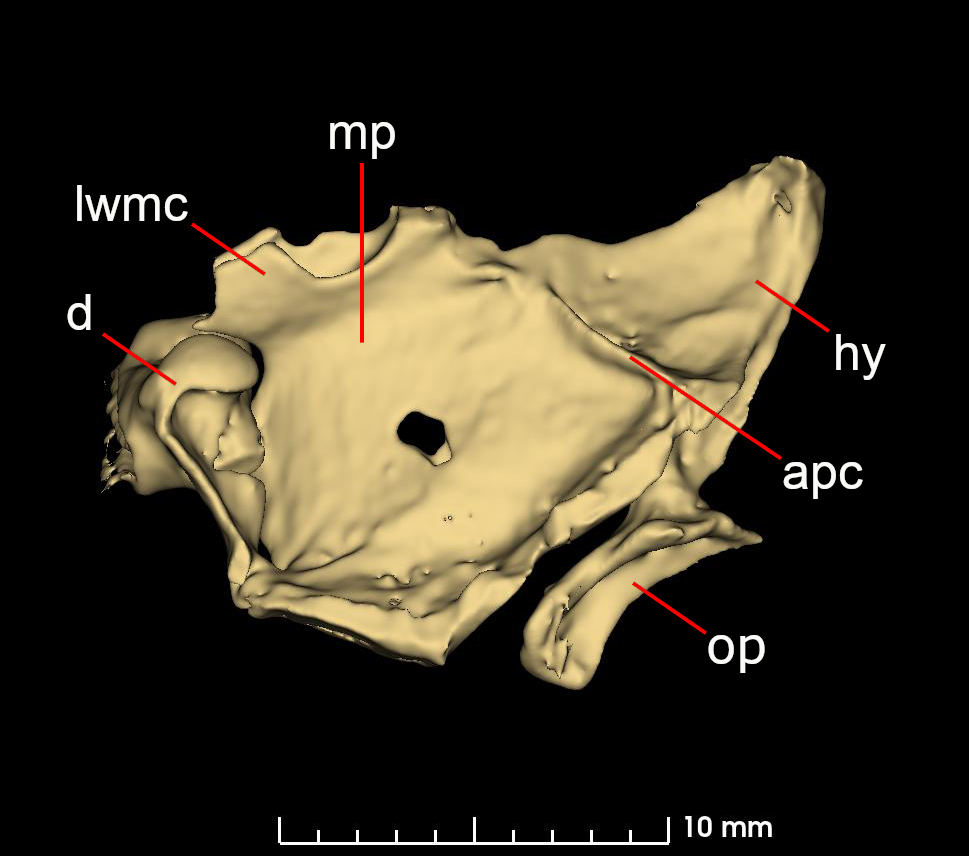
FIGURE 3 | Suspensorium of Peckoltia kahxi, MPEG 39871, paratype, apc, adductor palatini crest; d, dentary plate; hy, hyomandibula; lwmc, lateral wall of metapterygoid channel; mp, metapterygoid; op, opercle.
Description. Morphometric data in Tab. 2. Description based on 31 specimens. Largest specimen measuring 101 mm SL. Body stout. Head gently sloped to supraoccipital. Supraoccipital with tall, rounded crest. Body section rounded anteriorly in dorsal view, becoming gradually narrower from dorsal-fin origin to caudal fin. Body short and deep, with deepest point at insertion of dorsal fin. Dorsal profile convex, rising as straight line from snout to orbit, becoming flat from orbit to dorsal-fin insertion and gently declining from this point to end of caudal peduncle. Head short, without ridges or carenae. Ventral profile flat to caudal fin. Head and snout completely covered by strong odontodes. Snout rounded. Many hypertrophied odontodes on cheek plates, such odontodes completely exposed and partly encased in depression above cleithrum. Eye dorsolateral with very large conspicuous iris with a large operculum; orbit round. Supraoccipital pointed posteriorly.
TABLE 2 | Morphometric data of holotype (H) and paratypes of Peckoltia kahxi, range includes the holotype. N, number of specimens; SD, standard deviation.
| H | N | Range | Mean | SD |
Standard length (mm) | 85.9 | 19 | 70.2–101.1 | 90.6 | – |
Percents of standard length | |||||
Predorsal length | 41.3 | 19 | 38.7–43.4 | 41.6 | 1.3 |
Head length | 34.2 | 19 | 32.7–40.1 | 34.5 | 1.7 |
Head-dorsal length | 7.2 | 19 | 5.7–8.8 | 7.7 | 0.9 |
Cleithral width | 30.3 | 19 | 27.4–31.5 | 30.3 | 1.1 |
Head-pectoral length | 26.2 | 19 | 23.3–31.4 | 28.0 | 2.0 |
Thorax length | 22.6 | 19 | 19.7–26.1 | 22.7 | 1.5 |
Pectoral-spine length | 32.8 | 19 | 29.7–35.5 | 32.3 | 1.7 |
Abdominal length | 22.4 | 19 | 19.4–25.0 | 22.5 | 1.4 |
Pelvic-spine length | 25.3 | 19 | 23.0–29.7 | 25.6 | 1.5 |
Postanal length | 33.5 | 19 | 23.4–36.8 | 33.0 | 3.1 |
Anal-fin spine length | 14.8 | 19 | 9.6–18.1 | 14.4 | 1.8 |
Dorsal-pectoral distance | 27.8 | 18 | 25.6–31.4 | 27.9 | 1.2 |
Dorsal spine length | 33.6 | 16 | 28.1–36.3 | 32.1 | 2.8 |
Dorsal-pelvic distance | 25.0 | 19 | 20.1–37.1 | 25.0 | 3.4 |
Dorsal-fin base length | 27.6 | 19 | 21.4–28.2 | 25.3 | 1.7 |
Dorsal-adipose distance | 14.8 | 19 | 13.7–19.5 | 16.2 | 1.4 |
Adipose-spine length | 11.3 | 19 | 8.0–12.8 | 11.0 | 1.3 |
Dorsal Adipose-caudal distance | 20.5 | 19 | 12.4–23.1 | 19.6 | 2.3 |
Caudal peduncle depth | 10.5 | 19 | 9.9–12.9 | 10.9 | 0.9 |
Ventral adipose-caudal distance | 24.4 | 19 | 19.4–27.0 | 24.3 | 2.4 |
Adipose-anal distance | 16.2 | 19 | 15.7–18.7 | 17.4 | 1.0 |
Dorsal-anal distance | 16.5 | 19 | 15.5–17.8 | 16.5 | 0.7 |
Pelvic-dorsal distance | 25.3 | 19 | 14.3–26.7 | 24.1 | 2.7 |
Percents of head length | |||||
Head-eye length | 29.3 | 19 | 27.4–32.2 | 29.1 | 1.1 |
Orbit diameter | 17.5 | 19 | 13.4–19.7 | 17.5 | 1.7 |
Snout length | 44.8 | 19 | 43.2–49.3 | 46.9 | 1.8 |
Internares width | 12.4 | 19 | 9.3–12.5 | 10.8 | 0.9 |
Interorbital width | 31.5 | 19 | 29.8–37.2 | 33.0 | 1.9 |
Head depth | 67.0 | 19 | 50.0–67.0 | 56.7 | 4.3 |
Mouth length | 38.6 | 19 | 33.2–43.4 | 38.9 | 2.7 |
Mouth width | 40.8 | 19 | 35.5–42.1 | 39.3 | 2.2 |
Barbel length | 19.7 | 19 | 11.8–22.1 | 17.1 | 3.0 |
Dentary tooth cup length | 11.0 | 19 | 10.3–16.5 | 12.7 | 1.5 |
Premaxillary tooth cup length | 12.7 | 19 | 10.3–15.4 | 13.2 | 1.4 |
Lateral line with 23(2), 24*(9), 25(4) and 26(5) plates, four to five* plates between dorsal and adipose fins, 10–12 plates between anal and caudal fins. Body not carenate or keeled. Plates of midventral series behind pectoral fin slightly bent; plates encircling dorsal-fin base also slightly bent. Caudal peduncle deep and covered by five series of plates. All body plates covered by strong odontodes. Gular area naked, gill-openings small. Partially naked abdomen with clusters of plates on sides of abdomen from pectoral to pelvic region in adults (juveniles with completely naked abdomen). All fin rays carrying odontodes, more developed on first (undivided) ray.
Dorsal fin short, dorsal spinelet V-shaped, one spine, and seven soft, segmented and branched rays II,7*(19); spine with small odontodes along its anterior margin; not reaching preadipose plate when adpressed; extended membrane between last dorsal-fin ray and dorsum absent. Pectoral fin with spine and six soft, segmented and branched rays I,6*(19); reaching proximal third of pelvic when adpressed. Pelvic fin with i,5*(19) rays; tip reaching posterior end of anal-fin base. Anal fin with i,4*(19) rays. Adipose-fin spine with small odontodes on its anterior surface with single preadipose plate; moderately long spine. Caudal fin slightly emarginates; i,14,i*(19) and bearing small odontodes in all rays. Mouth small; lips well developed and densely papillate. Border of lower lip densely fringed with delicate papillae. Buccal papillae small and low. Maxillary barbel length nearly equal to horizontal orbit diameter. Dentaries more widely divergent, forming a broader mandibular angle (Fig. 4). Each premaxilla with 28(1), 32(1), 33(1), 36(3), 39(1), 40(2), 41*(4), 42(1), 43(2), 46(1), 47(1) and 51(1) teeth. Each dentary with 30(1), 31(5), 32(3), 33(1), 34(1), 36(2), 37(1), 38*(2), 39(1) and 42(1) teeth. Premaxillary and dentary teeth of similar size, small, and unevenly cuspidate with internal cusp larger than external.
Coloration in alcohol. Base color light tan with brown to black markings. Four dorsal saddles on body, first below middle rays of dorsal fin, second below posterior rays of dorsal fin and slightly posterior, third below adipose fin and slightly anterior, and fourth at end of caudal peduncle. Third and fourth saddles may have anterior extensions or have an anterior projection making them h-shaped or may be split nearly in half. Saddles two to four extend to median plate row, saddle one continues to insertion of pectoral fin. Very large blotches or spots present from first saddle to caudal fin. Head and nape mottled dark brown with distinct vermiculate lines. Supraoccipital crest darker than surrounding areas. Upper lip almost entirely dark brown with a beige distal edge. Lower lip entirely beige. All fins, except dorsal, always with dark bands with dark areas from about as wide to about twice as wide as light areas. Number of bands increases with size. Dorsal fin coloration complex, ranging from a mix of dark and light spots that may or may not combine to form bands (bands always forming distally). Dark or light spots or bands in dorsal fin may or may not combine with those dorsal or ventral. Dark spots or bands typically darker on rays distally and on membranes proximally. Dark spot present between dorsal-fin spinelet and spine. Abdomen with medium spots. Lower surface of caudal peduncle with dark blotches.

FIGURE 4 | Oral disc morphology of Peckoltia kahxi,MPEG 39871, paratype, 90.4 mm SL.
Coloration in life. Live specimens with limits of body bars and markings on snouts, more prominent and turning orange than described alcohol color (Fig. 5).
Sexual dimorphism. None observed.
Geographical distribution. Peckoltia kahxi is known from the rapids of rio Mapuera and rio Trombetas, rio Trombetas basin, municipality of Oriximiná, Pará State, Brazil (Figs. 6–7).
Conservation status. The new species is currently known from only two localities in the municipality of Oriximiná, Pará State, Brazil. Although its Area of Occupancy (AOO) estimated using GeoCAT is only 8 km², meeting the threshold for Critically Endangered (CR), the species is here classified as Data Deficient (DD) following IUCN recommendations (IUCN Standards and Petitions Committee, 2024), as it is likely more widely distributed than currently documented. Moreover, its known range lies almost entirely within protected areas, including Quilombola Territories and the Kaxuyana-Tunayana Indigenous Territory (Graça et al., 2025), suggesting no immediate threats to the species. Nevertheless, the Hydropower Plant Cachoeira Porteira project could represent a significant threat in the future by altering its habitat, especially considering that, in recent years, the federal government, through the Barão do Rio Branco Program, has raised the possibility of building a hydroelectric plant even larger than the initial project.
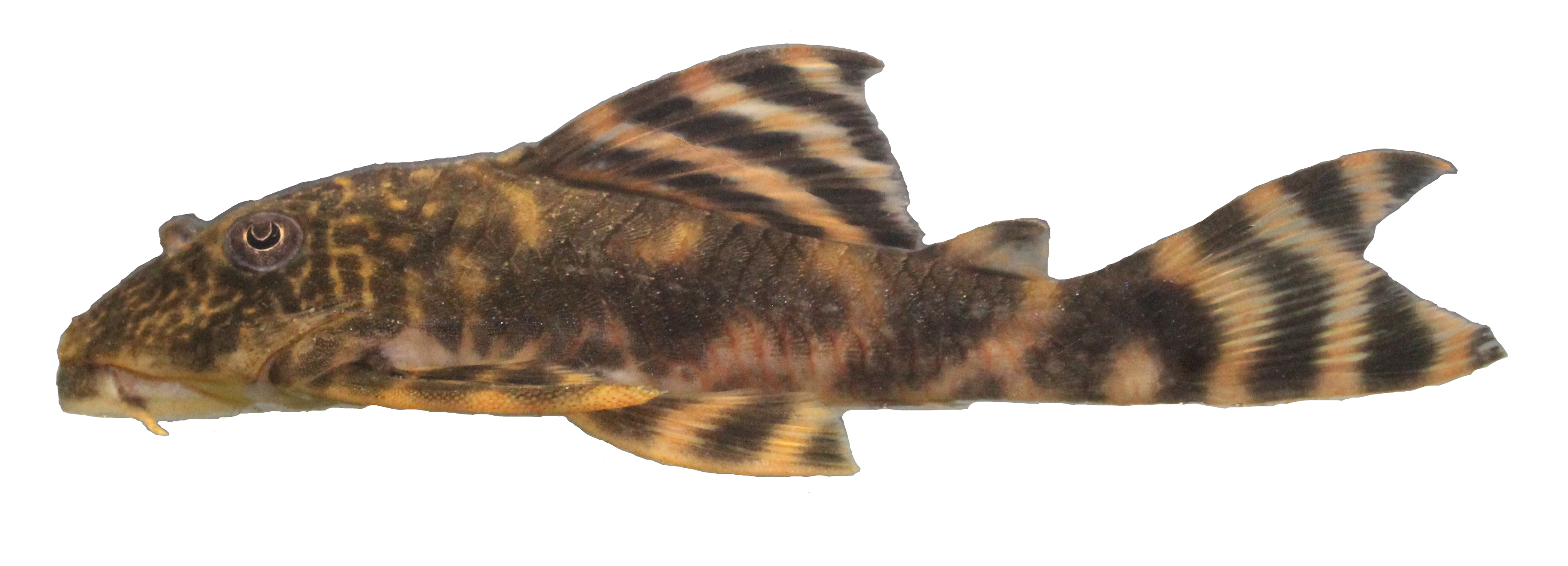
FIGURE 5 | Live specimen of Peckoltia kahxi collected at Cachoeira Porteira, municipality of Oriximiná, Pará State, Brazil, uncatalogued. Photo by Heriberto Gimenês Jr.

FIGURE 6 | Partial map of South America showing the geographic distribution of Peckoltia kahxi (star for type locality).
Etymology. The specific epithet “kahxi” refers to a waterfall for the Waiwai indigenous peoples (Pawana, 2026), who belong to the Cariban language family and are distributed throughout the northern Amazon, with populations in Brazil, Guyana, and Suriname (Instituto Socioambiental, 2009). The term is associated with the striking presence of rapids and waterfalls in the rivers that make up their territory, specifically in the region of the Mapuera and Trombetas rivers in the state of Pará, where the new species is distributed. Treated as a noun apposition.
Genetic distance and molecular phylogenetics. The genetic distance between the Peckoltia kahxi and the other species ranged from 2.3% to 15% (Tab. S2). DNA-sequence comparisons confirmed that these species are genetically distinct. The new species was recovered as a monophyletic unit, as it was consistently recovered within a well-supported clade that also includes P. amjikin, P. braueri, P. compta, P. lineola, and P. vittata (Fig. 8).
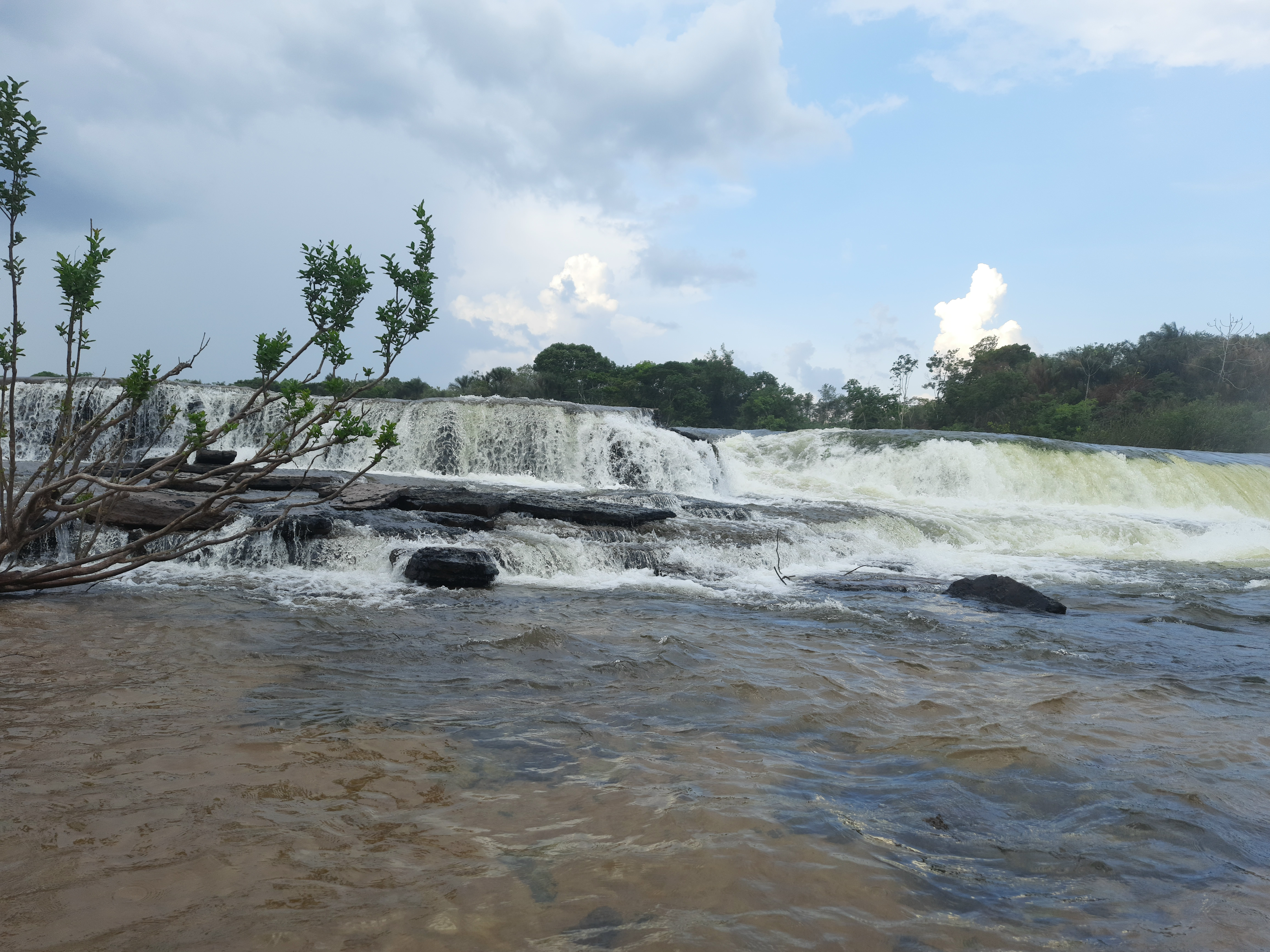
FIGURE 7 | Cachoeira Porteira, rio Trombetas basin, type locality of Peckoltia kahxi, municipality of Oriximiná, Pará State, Brazil. Photo by Felipe Araújo.

FIGURE 8 | Tree topology estimated by Maximum Likelihood (ML) showing the phylogenetic relationships among Peckoltia kahxi using the mitochondrial gene Cytb (35 sequences with 934 bp). Numbers in the nodes correspond to bootstrap values.
Discussion
Peckoltia kahxi can be differentiated from all other congeners by a combination of character states described in the revision of the genus by Armbruster (2008), such as color pattern, abdominal plates and angle of the dental row. The mottled color pattern of P. kahxi is also found in several species of the genus (see Diagnosis), including the syntypes species P. vittata, which in a preliminary external analysis made it difficult to recognize that specimens from the Trombetas River basin were a new species and not P. vittata. Abdominal plates have been widely used in diagnosing Peckoltia, both regarding abdominal coverage (which may be bare or covered by plates) and plate size, as observed in P. bachi by Armbruster (2008). The dentary angle has proven to be an important taxonomic feature since Armbruster’s studies (2008), in which he divided Peckoltia into two groups: those with nearly straight dentaries, and those with acutely angled dentaries. The author considered Peckoltia sensu stricto and defined the genus as having teeth that meet at an angle of less than 90°. This characteristic was found in the new species, corroborating its inclusion in the genus Peckoltia.
The suspensorium, especially the shape of the hyomandibula, has been a character used in recent studies to differentiate Hypostominae species, as initially observed by Araújo et al. (2024, 2025). However, this character requires further investigation through detailed internal examination, including diaphanization or tomographic imaging. For taxa represented by few available specimens, such as Peckoltia, non-destructive methods like tomography are particularly advantageous.
Although Lujan et al. (2017) recovered species of Peckoltia as monophyletic, support values were generally low, even with a more representative taxon sampling and a multigene phylogenetic reconstruction. Therefore, phylogenetic resolution does not appear to depend solely on the methodological approach employed, as both molecular- and morphology-based phylogenies have recovered different arrangements among species of Peckoltia (Armbruster, 2004, 2008; Lujan et al., 2015; Lujan et al., 2017). The single-gene topology presented herein is intended primarily to test and support the placement of the new species within the Peckoltia clade rather than to accurately resolve intrageneric relationships. A comprehensive assessment of phylogenetic relationships within the genus is still required with a broader taxonomic sampling, as many Peckoltia species remain unsampled in all previously published phylogenetic studies (Armbruster, 2004, 2008; Lujan et al., 2015; Lujan et al., 2017; Roxo et al., 2019).
The type series of Peckoltia vittata includes specimens collected from the Madeira River, the lower Xingu River, and the Amazon River. In contrast, P. kahxi was described from the Trombetas River, upstream of the Cachoeira Porteira, which is recognized as an important biogeographic barrier for several species of freshwater fish (Ferreira, 1993; L. Rapp Py-Daniel, pers. obs.), restricting dispersal between the upper and lower sections of the basin. This may support the hypothesis that the long-term geographic isolation imposed by the Cachoeira Porteira promoted lineage divergence and speciation. In addition, in the phylogenetic reconstruction based on the Cytb gene, it was found that the sequences identified as Peckoltia vittata from the Madeira River (KP960161) and the Xingu River (KP960162) were distantly related to the P. kahxi, which supports the recognition of the Trombetas population as a distinct evolutionary lineage.
However, some basins draining the Guiana Shield into the Amazon, such as the Trombetas, are relatively poorly known as to their ichthyofaunal composition, with comparatively few reported species, rare cases of endemism and poor information on shared species with other drainages. Such precarious knowledge precludes a clear understanding of the connections of the fish faunas in those basins (Dagosta, de Pinna, 2019). The Trombetas River, along with 47 other medium to large rivers drain the Greater Guyana Shield region (Albert et al., 2011). Despite being one of the largest tributaries in the northern channel of the Amazon River basin and its importance in the Guiana Shield, knowledge of its ichthyofauna is still lacking, especially when compared to other Amazon basins.
Peckoltia kahxi is listed here as Data Deficient (DD, see conservation status) since its distribution is likely broader than is currently known. This apparent low sample size can be explained, in part, by the cryptic habits of Peckoltia species, which remain species hide inside cavities in submerged logs, rocks, or lateritic conglomerates during the day, which often makes it difficult to collect these individuals and consequently leads to low representation in collections (Armbruster et al., 2018). The known localities of the species are located almost entirely within protected areas (Graça et al., 2025), which suggests the absence of immediate threats. However, the possible construction of the Hydropower Plant Cachoeira Porteira could represent a significant threat to the rheophilic habitats occupied by the species. In this context, it is worth noting that several species of Loricariidae were collected in sympatry with P. kahxi (Araújo et al., 2026), highlighting the high diversity of this group in the rapids of the Trombetas River. Many of these species appear to represent taxa that have not yet been described, reinforcing the fact that the diversity of Loricariidae in the region remains underestimated and that part of this fauna may suffer impacts resulting from environmental changes even before it is formally recognized by science. These results highlight the need to intensify ichthyofaunal inventories, as well as taxonomic and phylogenetic studies, in regions of the Amazon that are still poorly understood.
Comparative material examined. In addition to the comparative material listed in Araújo et al. (2025), the following species were examined: Peckoltia braueri: MNRJ 31550, 1, 93.2 mm SL; MNRJ 50401, 2, 56.3–66.4 mm SL. Peckoltia cf. furcata: MNRJ 43636, 2, 41.6–44.7 mm SL; MNRJ 43637, 2, 72.9–81.8 mm SL. Peckoltia ephippiata: MNRJ 15619, 2, 88.2–88.8 mm SL. Peckoltichthys kuhlmanni, paralectotype, synonym of Peckoltia vittata, 84.9 mm SL. Peckoltia sp.: MPEG 39233, 2, 55.3–63.4 mm SL; MNRJ 35730, 1, 64.2 mm SL. Peckoltia vittata: MPEG 13427, 1, 88.5 mm SL; MNRJ 51504, 1, 123.1 mm SL.
Acknowledgments
We thank Aline Silva and Zoneibe Luz (MPEG) for their curatorial support and Lucia Rapp Py-Daniel (INPA) for the information provided on the syntypes of Peckotia vittata. MD is grateful to Anna Salles and Marcelo Britto (MNRJ) for assistance and support at the Museu Nacional/UFRJ. This manuscript greatly benefited from the suggestions of Jonathan Armbruster, Lucia Rapp Py-Daniel and an anonymous reviewer.
References
Albert JS, Petry P, Reis RE. Major biogeographic and phylogenetic patterns. In: Albert JS, Reis RE, editors. Historical biogeography of Neotropical freshwater fishes. California: University of California Press; 2011. p.21–57.
Araújo F, Ferreira M, Monteiro I, Wosiacki W. A new species of Hypancistrus Isbrücker & Nijssen 1991 (Loricariidae, Siluriformes) from the rapids of the middle rio Tocantins. J Fish Biol. 2024; 106(2):592–601. https://doi.org/10.1111/jfb.15971
Araújo FAA, Dopazo M, Ferreira MFC, Luz Z, Silva AN, Braga MLP etal. Baseline fish inventory of the Trombetas River rapids, a drainage of Southeastern of the Guiana Shield. Pap Avulsos Zool. 2026; 66:e202666022. https://doi.org/10.11606/1807-0205/2026.66.022
Araújo FAA, Ferreira MFC, Silva AN, Wosiacki WB. A new species of Peckoltia (Siluriformes, Loricariidae) from the rapids of the rio Tocantins-Araguaia basin, Brazil. J Fish Biol. 2025; 108(1):351–60. https://doi.org/10.1111/jfb.70235
Armbruster JW. Peckoltia sabaji, a new species from the Guyana Shield (Siluriformes: Loricariidae). Zootaxa. 2003; 344(1):1–12. https://doi.org/10.11646/zootaxa.344.1.1
Armbruster JW. Phylogenetic relationships of the suckermouth armoured catfishes (Loricariidae) with emphasis on the Hypostominae and the Ancistrinae. Zool J Linn Soc. 2004; 141(1):1–80. https://doi.org/10.1111/j.1096-3642.2004.00109.x
Armbruster JW. The genus Peckoltia with the description of two new species and a reanalysis of the phylogeny of the genera of the Hypostominae (Siluriformes: Loricariidae). Zootaxa. 2008; 1822(1):1–76. https://doi.org/10.11646/zootaxa.1822.1.1
Armbruster JW, Lujan NK. A new species of Peckoltia from the Upper Orinoco (Siluriformes, Loricariidae). ZooKeys. 2016; 569:105–121. https://doi.org/10.3897/zookeys.569.6630
Armbruster JW, Werneke DC. Peckoltia cavatica, a new loricariid catfish from Guyana and a redescription of P. braueri (Eigenmann 1912) (Siluriformes). Zootaxa. 2005; 882(1):1–14. https://doi.org/10.11646/zootaxa.882.1.1
Armbruster JW, Werneke DC, Tan M. Three new species of saddled loricariid catfishes, and a review of Hemiancistrus, Peckoltia, and allied genera (Siluriformes). ZooKeys.2015; 480:97–123. https://doi.org/10.3897/zookeys.480.6540
Armbruster JW, Van der Sleen P, Lujan N. Subfamily Hypostominae – plecos and relatives. In: Van der Sleen P, Albert JS, editors. Field guide to the fishes of the Amazon, Orinoco & Guianas. Princeton: Princeton University Press; 2018. p.259–86.
Dagosta FCP, de Pinna M. The fishes of the Amazon: distribution and biogeographical patterns, with a comprehensive list of species. Bull Am Mus Nat Hist. 2019; 2019(431):1–163. https://doi.org/10.1206/0003-0090.431.1.1
Dutra GM, Freitas TMS, Prudente BS, Salvador GN, Leão MDV, Peixoto LAW et al. Rapid assessment of the ichthyofauna of the southern Guiana Shield tributaries of the Amazonas River in Pará, Brazil. Acta Amazon. 2020; 50(1):24–36. http://doi.org/10.1590/1809-4392201901402
Fedorov A, Beichel R, Kalpathy-Cramer J, Finet J, Fillion-Robin JC, Pujol S et al. 3D slicer as an image computing platform for the quantitative imaging network. Magn Reson Imaging. 2012; 30(9):1323–41. https://doi.org/10.1016/j.mri.2012.05.001
Ferreira EJG. Composição, distribuição e aspectos ecológicos da ictiofauna de um trecho do rio Trombetas, na área de influência da futura UHE Cachoeira Porteira, estado do Pará, Brasil. Acta Amazon. 1993; 23:1–89.
Fisch-Muller S, Montoya-Burgos JI, Le Bail PY, Covain R. Diversity of the Ancistrini (Siluriformes: Loricariidae) from the Guianas: the Panaque group, a molecular appraisal with descriptions of new species. Cybium. 2012; 36(1):163–93.
Fricke R, Eschmeyer WN, Van der Laan R. Eschmeyer’s catalog of fishes: genera, species, references [Internet]. San Francisco: California Academy of Science; 2026. Available from: http://researcharchive.calacademy.org/research/ichthyology/catalog/fishcatmain.asp
Graça MAS, Callisto M, Mello FT, Rodríguez-Olarte D, editors. Rivers of South America. Amsterdam, Netherlands: Elsevier; 2025.
Instituto Socioambiental. Povos indígenas no Brasil [Internet]. São Paulo; 2009. Available from: https://pib.socioambiental.org/
International Union for Conservation of Nature (IUCN). Guidelines for using the IUCN Red List Categories and Criteria [Internet]. Gland; 2024. Available from: https://www.iucnredlist.org/documents/RedListGuidelines.pdf
Kumar S, Stecher G, Tamura K. MEGA7: molecular evolutionary genetics analysis version 7.0 for bigger datasets. Mol Biol Evol. 2016; 33(7):1870–74. https://doi.org/10.1093/molbev/msw054
Lujan NK, Armbruster JW, Lovejoy NR, López-Fernández H. Multilocus molecular phylogeny of the suckermouth armored catfishes (Siluriformes: Loricariidae) with a focus on subfamily Hypostominae. Mol Phylogenet Evol. 2015; 82:269–88. https://doi.org/10.1016/j.ympev.2014.08.020
Lujan NK, Cramer CA, Covain R, Fisch-Muller S, López-Fernández H. Multilocus molecular phylogeny of the ornamental wood-eating catfishes (Siluriformes, Loricariidae, Panaqolus and Panaque) reveals undescribed diversity and parapatric clades. Mol Phylogenet Evol. 2017; 109:321–36. https://doi.org/10.1016/j.ympev.2016.12.040
Miranda Ribeiro A. Loricariidae, Callichthyidae, Doradidae e Trichomycteridae. In: Commissão de Linhas Telegraphicas Estrategicas de Matto-Grosso ao Amazonas. Matto-Grosso, Historia Natural: Zoologia. 1912; 5:1–31.
Oliveira RR, Rapp Py-Daniel L, Zuanon J, Rocha MS. A new species of the ornamental catfish genus Peckoltia (Siluriformes: Loricariidae) from rio Xingu basin, Brazilian Amazon. Copeia. 2012; 2012(3):547–53. https://doi.org/10.1643/CI-11-140
Oliveira RR, Zuanon J, Rapp Py-Daniel L, Rocha MS. Peckoltia compta, a new species of catfish from Brazilian Amazon, rio Tapajós basin (Siluriformes: Loricariidae). Zootaxa. 2010; 2534(1):48–56. https://doi.org/10.11646/zootaxa.2534.1.3
Pawana. Dicionário Wai Wai [Internet]. 2026. Available from: https://dicionario.pawana.com.br/
Roxo FF, Ochoa LE, Sabajc MH, Lujan NK, Covain R, Silva GSC et al.Phylogenomic reappraisal of the Neotropical catfish family Loricariidae (Teleostei: Siluriformes) using ultraconserved elements. Mol Phylo Evol. 2019; 135:148–65. https://doi.org/10.1016/j.ympev.2019.02.017
Sabaj MH. Codes for Natural History Collections in Ichthyology and Herpetology (online supplement). [Internet]. Version 9.7. Washington: American Society of Ichthyologists and Herpetologists; 2025. Available from: https://asih.org
Authors

Manuela Dopazo1 , Felipe Arian de Andrade Araújo2, Alberto Akama3 and Wolmar Benjamin Wosiacki3
[1] Universidade Federal do Rio de Janeiro, Museu Nacional, Departamento de Vertebrados, Setor de Ictiologia, Quinta da Boa Vista s/n, São Cristóvão, 20940-040, Rio de Janeiro, RJ, Brazil. (MD) manueladopazoleao@gmail.com (corresponding author).
[2] Programa de Pós-Graduação em Biodiversidade e Evolução, Museu Paraense Emílio Goeldi, Av. Perimetral, 1901, Terra Firme, 66077-830, Belém, PA, Brazil. (FAAA) araujo.felipearian@gmail.com.
[3] Museu Paraense Emílio Goeldi, Coordenação de Zoologia, Setor de Ictiologia, Av. Perimetral, 1901, Terra Firme, 66077-830, Belém, PA, Brazil. (AA) albertoakama@museu-goeldi.br, (WBW) wolmar@museu-goeldi.br.
Authors’ Contribution 

Manuela Dopazo: Conceptualization, Data curation, Formal analysis, Investigation, Methodology, Software, Validation, Visualization, Writing-original draft.
Felipe Arian de Andrade Araújo: Conceptualization, Data curation, Formal analysis, Investigation, Methodology, Software, Validation, Visualization, Writing-review and editing.
Alberto Akama: Conceptualization, Data curation, Formal analysis, Funding acquisition, Validation, Visualization, Writing-review and editing.
Wolmar Benjamin Wosiacki: Conceptualization, Data curation, Formal analysis, Funding acquisition, Validation, Visualization, Writing-review and editing.
Ethical Statement
The care and use of experimental animals complied with Brazilian animal welfare laws, guidelines and policies as approved by under licensing 70940–1 SISBIO/IBAMA.
Competing Interests
The author declares no competing interests.
Data availability statement
The authors confirm that the data supporting the findings of this study are available within the article.
AI statement
The authors did not use any AI-assisted technologies in the creation of this manuscript or its figures.
Funding
MD is supported by Fundação Carlos Chagas Filho de Amparo à Pesquisa do Estado do Rio de Janeiro, Grant/Award Number: Pós-doutorado Nota 10 processes E–26/200.019/2025 and 200.020/2025 (303635). The authors were funded by the Conselho Nacional de Desenvolvimento Científico e Tecnológico–CNPq (AA, proc. # 309727/2023–5; MD, Programa de Capacitação Institucional (PCI) proc. 302685/2024–3 and WW, proc. 306159/2024–4). WBW thanks to FINEP/FUNDEP/MPEG process number 01.25.0113.00 and Project 25661. This research was supported by financial contributions from of the project ‘Rheophilic Fish Fauna of the Amazon: Threatened and Unknown Natural Heritage’, conducted under the Fundo de Defesa de Direitos Difusos by the Brazilian Ministry of Justice and Public Safety.
Supplementary Material
Supplementary material SUP
Peer Review
How to cite this article
Dopazo M, Araújo FAA, Akama A, Wosiacki WB. A new species of Peckoltia (Siluriformes: Loricariidae) from the rapids of rio Trombetas basin, Brazil. Neotrop Ichthyol. 2026; 24(3):e260053. https://doi.org/10.1590/1982-0224-2026-0053
Copyright
This is an open access article under the terms of the Creative Commons Attribution License, which permits use, distribution and reproduction in any medium, provided the original work is properly cited.
Distributed under
Creative Commons CC-BY 4.0

© 2025 The Authors.
Diversity and Distributions Published by SBI
 Accepted July 18, 2026
Submitted April 12, 2026
Epub October 16, 2026