
 Bárbara B. Calegari1.2.3
 , Willian M. Ohara4, Alberto Akama5 and Jansen Zuanon6.7
PDF: Download Here | Cite this article
Associate Editor: Marcelo Britto
Section Editor: William Crampton
Editor-in-chief: José Birindelli
Abstract
O gênero Spinipterus, um membro da subfamília Auchenipterinae, era previamente conhecido por apenas duas espécies: S. acsi, originalmente descrita da Amazônia peruana e posteriormente registrada no rio Juruá, no Brasil, e S. moijiri, descrita da bacia do rio Purus. Em uma expedição de 2020 à bacia do rio Madeira, uma intensa seca que expös rochas lateríticas no leito do rio Guaporé revelou uma espécie diminuta de Spinipterus, até então não descrita. A nova espécie difere de seus congêneres, S. acsi e S. moijiri, pela coloração marmorizada do corpo, menor número de raios moles na nadadeira peitoral, cabeça mais longa, menor distância interorbital, barbilhões maxilares reduzidos e outras características osteológicas. Esta nova espécie, descrita aqui, destaca a diversidade subestimada dentro de Spinipterus, provavelmente devido à sua especificidade de habitat e raridade em coleções ictiológicas, evidenciando a importância de explorar microhabitats incomuns para revelar componentes ocultos da diversidade de peixes neotropicais. Uma chave para a identificação das espécies de Spinipterus é fornecida.
Palavras-chave: Auchenipterinae, Bagre, Biodiversidade, Chave de identificação, Taxonomia.
Introduction
The family Auchenipteridae is among the most prominent groups of Neotropical Siluriformes, currently comprising 133 recognized species distributed across 26 genera classified in the two subfamilies, Auchenipterinae and Centromochlinae (Calegari et al., 2026; Fricke et al., 2026). The genus Spinipterus Akama & Ferraris, 2011, a member of Auchenipterinae, was originally described from the Amazon basin in Peru, based on the holotype of Spinipterus acsi Akama & Ferraris, 2011. This species was later recognized from additional specimens collected in the Juruá River, Brazil (Calegari et al., 2018). More recently, a second species, S. moijiri, was described from the middle Purus River basin, distinguished from its congeners by its much larger adult size and jaguar-like color pattern, which resembles that of Liosomadoras ocinus (Birindelli, Zuanon, 2012; Rocha et al., 2020).
Spinipterus species are remarkable auchenipterid catfishes characterized by unique external autapomorphic features, including the presence of three rows of serrations along the anterior and anterolateral margins of the pectoral- and dorsal-fin spines, conspicuous spines on the dorsal surface of cephalic bones, nasal and cleithrum, and by a groove on the medial portion of the dorsum just behind the dorsal fin (Akama, Ferraris, 2011; Calegari et al., 2019).
In a recent expedition to the Madeira River basin during the extreme drought of 2020, when sections of the Guaporé River were reduced to narrow, shallow channels, a brittle block of lateritic substrate was extracted from the riverbed. This block, riddled with narrow interconnected tunnels, harbored small fishes including auchenipterids. Within this microhabitat, a third, diminutive species of Spinipterus was discovered. Although exhibiting a color pattern reminiscent of S. acsi, it is genetically distinct and shows some clear differences in morphology and morphometry compared to its congeners. Its occurrence in such a specialized microhabitat highlights the still underestimated diversity within the genus Spinipterus, likely a result of its cryptic behavior, habitat specificity, and the challenges associated with collecting specimens, which contributes to their rarity in scientific collections. The new species is described herein.
Material and methods
All counts and measurements were made under a stereomicroscope. Morphometric measurements were straight-line distances taken point-to-point obtained to the nearest 0.1 mm with digital calipers preferably on the left side of specimen. Measurements followed Lundberg, McDade (1986), with modifications introduced and described by Akama, Ferraris (2011). All measurements are expressed as percents of standard length (SL), except subunits of the head, which are expressed as percents of head length (HL). Specimens were cleared and counterstained (c&s) for bone and cartilage according to the technique of Taylor, Van Dyke (1985). Fin ray counts include all elements. Vertebral counts were based on two c&s specimens. Vertebral counts included all elements in the Weberian complex, which in Spinipterus the compound centrum includes up to eighth vertebra, and the complex caudal centrum (PU1 + U1) was counted as a single element. Counts for the holotype reported in the description are represented by an asterisk, and numbers of individual counts are given in parenthesis.
The species distribution map was developed using HydroSHEDS database (http://www.hydrosheds.org) in Quantum GIS v. 3.16.14 (2022). The specimens examined in this study are those listed in the comparative material section, and institutional abbreviations are those listed at http://www.asih.org/codons.pdf (Sabaj, 2023).
Genseq nomenclature for the new species follows Chakrabarty et al. (2013), and coI sequences from secondary types are listed below the type material of the new species. Sequencing the Cytochrome c Oxidase I gene (coI) was conducted with the primers LCO1490 (forward) and HCO2198 (reverse; Folmer et al.,1994). Total genomic DNA was isolated through the DNeasy Blood & Tissues Kit (QIAGEN®, Hilden, Germany). The polymerase chain reaction (PCR) was performed in 25 μl of 10 μM of each primer, 1× Master Mix Kit (QIAGEN®, Hilden, Germany), and ca. 40 ng of DNA. The mitochondrial gene coI was amplified to obtain a 522 bp fragment using the following PCR protocol. An initial denaturation step of 4 min at 95 °C followed by 35 cycles of denaturation at 95 °C for 60 s, annealing at four temperatures, 48 °C, 45 °C, 42 °C and 40 °C for 20 s each, and extension at 72 °C for 2 min. This was followed by a final extension of 5 min at 72 °C, and storage for 5 min at 4 °C. The amplicons were purified and sequenced in both directions at Functional Bioscience®, Inc. facility (WI, USA). The consensus sequences were edited and generated in Geneious® v. 9.1.8 (http://www.geneious.com) and deposited in GenBank. Comparative species for genetic distance were obtained from previous studies (Calegari et al., 2019, 2026): Spinipterus acsi (Genbank Accession Number OR589635), Spinipterus moijiri (Genbank Accession Number MF595260), and Liosomadoras oncinus (Genbank Accession Number MF595249).
Results
Spinipterus cuniculus, new species
urn:lsid:zoobank.org:act:F1995C6D-52FE-4126-8305-3FD33A40BBED
(Figs. 1–2; Tab. 1)
Holotype. INPA 61745, mature male, 34.2 mm SL, Rondônia, São Francisco do Guaporé, Guaporé River 3 km downstream Nova Vida Hotel, tributary of Madeira River, at border between Brazil and Bolivia, 12°26’23”S 63°43’11”W, 1 Nov 2020, Ohara, W. M. & D. H. Barbalho.
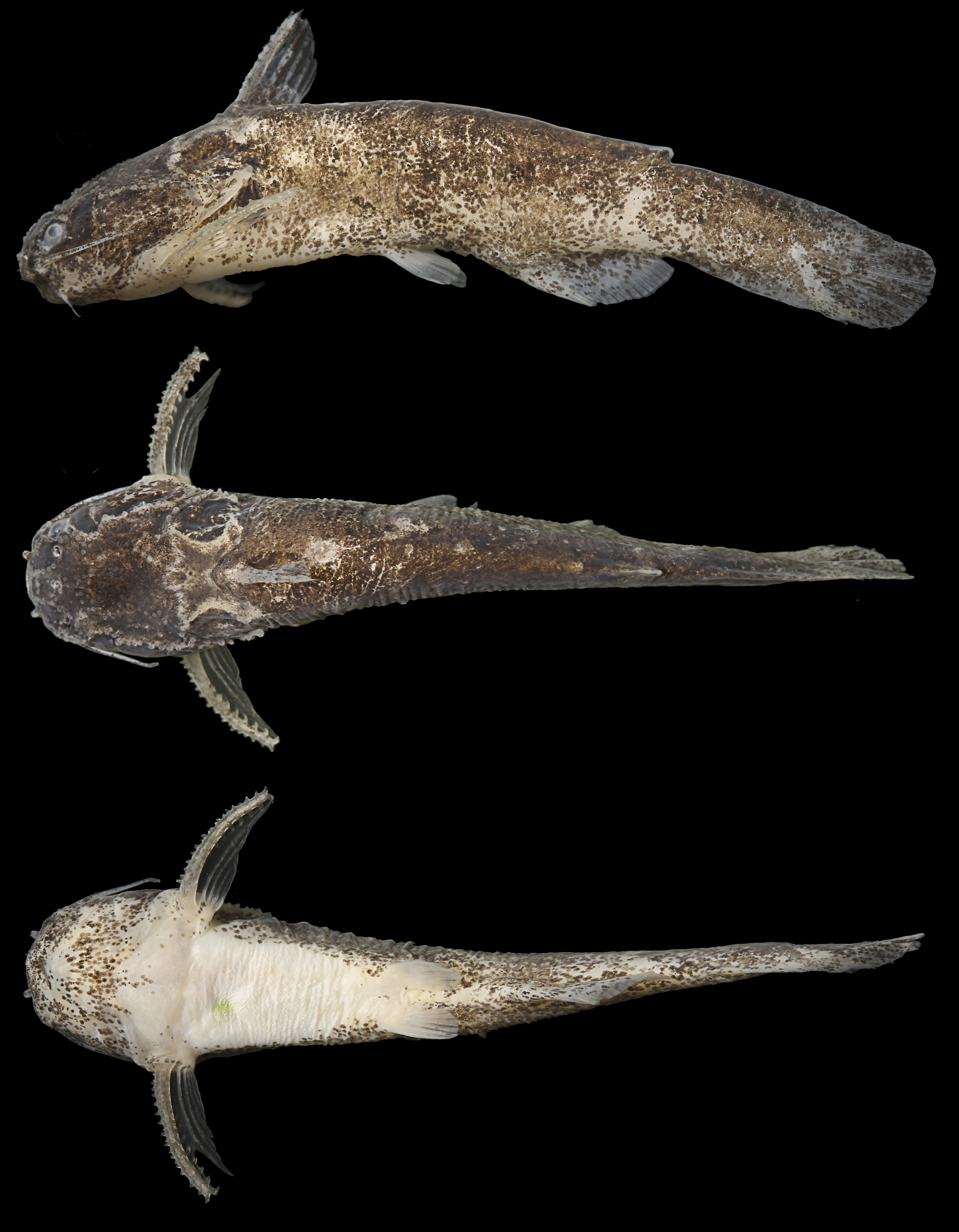
FIGURE 1 | Lateral, dorsal, and ventral views of the holotype of Spinipterus cuniculus, INPA 61745, mature male, 34.2 mm SL, Guaporé River, Madeira River basin, Rondônia, at border between Brazil and Bolivia.
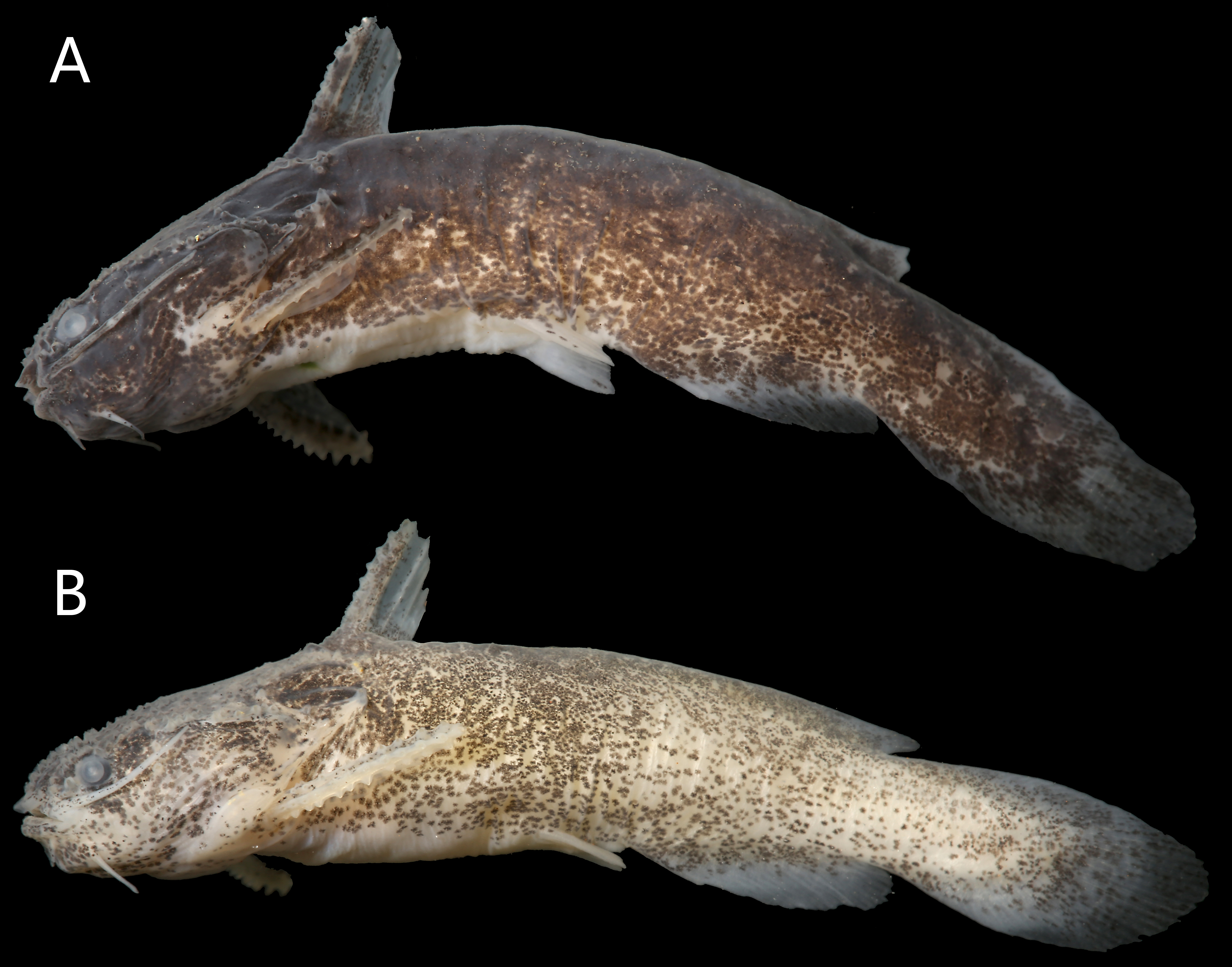
FIGURE 2 | Paratypes of Spinipterus cuniculus, INPA 61746, adult males, 24.2 mm SL (A) and 21.9 mm SL (B), Guaporé River, Madeira River basin, Rondônia, at border between Brazil and Bolivia.
TABLE 1 | Morphometric data for Spinipterus cuniculus, range includes holotype (Hol). SD = Standard deviation.
| Hol | N | Range | Mean | SD |
Standard length | 34.2 | 12 | 21.8–34.2 | 24.8 | – |
Percents of standard length | |||||
Predorsal length | 31.2 | 12 | 31.2–38.0 | 34.6 | 2.1 |
Prepectoral length | 21.6 | 12 | 20.2–25.6 | 23.2 | 1.6 |
Head length | 25.8 | 12 | 25.8–29.9 | 28.2 | 1.2 |
Body depth at anterior nuchal plate | 20.8 | 12 | 16.4–20.8 | 18.2 | 1.2 |
Body width at antero-lateral cleithrum | 23.7 | 12 | 23.7–29.4 | 27.1 | 1.5 |
Upper gill membrane distance | 19.5 | 12 | 19.5–24.5 | 22.9 | 1.4 |
Dorsal-fin base length | 10.3 | 12 | 10.3–13.2 | 11.8 | 1.1 |
Dorsal-fin spine length | 16.4 | 12 | 14.6–19.1 | 17.0 | 1.3 |
Postcleithral process length | 18.4 | 12 | 18.0–20.4 | 19.1 | 0.7 |
Pectoral-fin spine length | 19.2 | 12 | 19.2–24.8 | 22.5 | 1.5 |
Anal-fin base length | 18.9 | 12 | 19.0–27.1 | 25.0 | 2.4 |
Caudal-peduncle length | 16.7 | 12 | 12.0–17.0 | 15.0 | 1.4 |
Caudal-peduncle depth | 10.8 | 12 | 8.7–12.2 | 11.0 | 1.1 |
Percents of head length | |||||
Mouth width | 54.4 | 12 | 52.1–58.4 | 55.8 | 1.9 |
Snout length | 30.1 | 12 | 28.1–35.9 | 32.6 | 2.3 |
Orbital diameter | 13.6 | 12 | 12.8–17.4 | 14.6 | 1.3 |
Interorbital distance | 49.0 | 12 | 46.5–53.8 | 50.8 | 2.3 |
Anterior-posterior narial distance | 18.7 | 12 | 17.1–20.0 | 18.8 | 1.0 |
Paratypes. All from Amazon basin: INPA 61746, 17, 18.2–26.2 mm SL; MCP 54517, 48, 21.8–29.5 mm SL, collected with holotype.
Genseq-2 coI. MCP 54517(tissue tag B6);Genbank Acession NumberPX921089.
Diagnosis. The new species differs from the other two congeners, Spinipterus acsi and S. moijiri,by having four or five soft pectoral-fin rays (vs. seven rays in S. moijiri, and six rays in S. acsi), color of the body in having light brown background with small dark melanophores distributed sparsely with small dark dots of unequal sizes on middorsal portion of trunk (vs. color pattern with irregular dorsolateral brown blotches on body larger than eye diameter in S. acsi, or large black rosette-like spots over a light yellow to brown background in S. moijiri; figs. 1, 6, and 7 in Rocha et al., 2020), longer head length 25.8–29.9% SL (vs. 24.6–25.2% in S. acsi and 22.7–25.4% SL in S. moijiri),smaller interorbital distance 46.5–53.8% HL (vs.58.9–61.8% in S. acsi and 53.9–59.1% HL in S. moijiri), postcleithral process 18.0–20.4% SL (vs. 20.8–24% in S. acsi and 13.5–15.1% SL in S. moijiri), short maxillary barbel, extending posteriorly justbefore pectoral-fin origin or not surpassing pectoral-fin base (vs. long maxillary barbel, surpassing far that point, at least reaching one third of pectoral-fin spine length or dorsal-fin origin in both species S. acsi and S. moijiri). The new species further differs from S. acsi by having shallower body depth 16.4–20.8% SL (vs. 20.9–22.8% SL), and smaller eye 12.8–17.4% HL (vs. 19.8–20.5% HL).The new species additionally differs from S. moijiri by the caudal fin rounded (Fig. 1, vs. caudal fin truncated); larger anal-fin base 19–27.1% SL (vs. 14–18.8% SL), anterior cranial fontanel bordered by the frontal and mesethmoid (vs. anterior fontanel restricted to frontal; Fig. 3); anterior nuchal plate extremely reduced not contacting epiocipital (vs. larger anterior nuchal plate, size slightly smaller than epiocipital, contacting epioccipital; Fig. 3).
Description. Morphometric data in Tab. 1. Body compressed, relatively elongate; body deeper at predorsal region, and wider at pectoral girdle and operculum. Lateral line incomplete, ending slightly before end of anal fin, simple, not bifurcated; one individual with interruption at vertical through anal-fin origin. Lateral line midlateral, with canals forming straight line.
Head depressed and broadly convex anteriorly in lateral view, then relatively straight from vertical running through end of orbit to dorsal-fin origin. Snout length approximately twice orbital diameter; snout margin rounded. Eye small, laterodorsal, situated at one-fourth of HL, slightly visible in dorsal view but not visible in ventral view. Ocular rim circular, bordered anteriorly and dorsally by strong and large conical spines on margin of antorbital, lateral ethmoid and sphenotic. Frontal excluded from margin of orbit. Conspicuous spines surrounding entire margin of cephalic shield, lateral ethmoid, antorbital, mesethmoid, and preoperculum; bones at middle portion of cranium without spines, except in some larger adults (>30 mm SL) showing smaller spines in supraoccipital and epioccipital; spines present in males and females, both juveniles and adults. Cephalic lateral-line sensory canals narrow and ossified; three infraorbital canals bordering ventral margin of eye. Anterior nostril located on snout margin, tubular and directed anteroventrally. Posterior nostril located between eyes; nostril rim with thin, folded membrane. Anterior fontanel bordered by the frontal and mesethmoid.
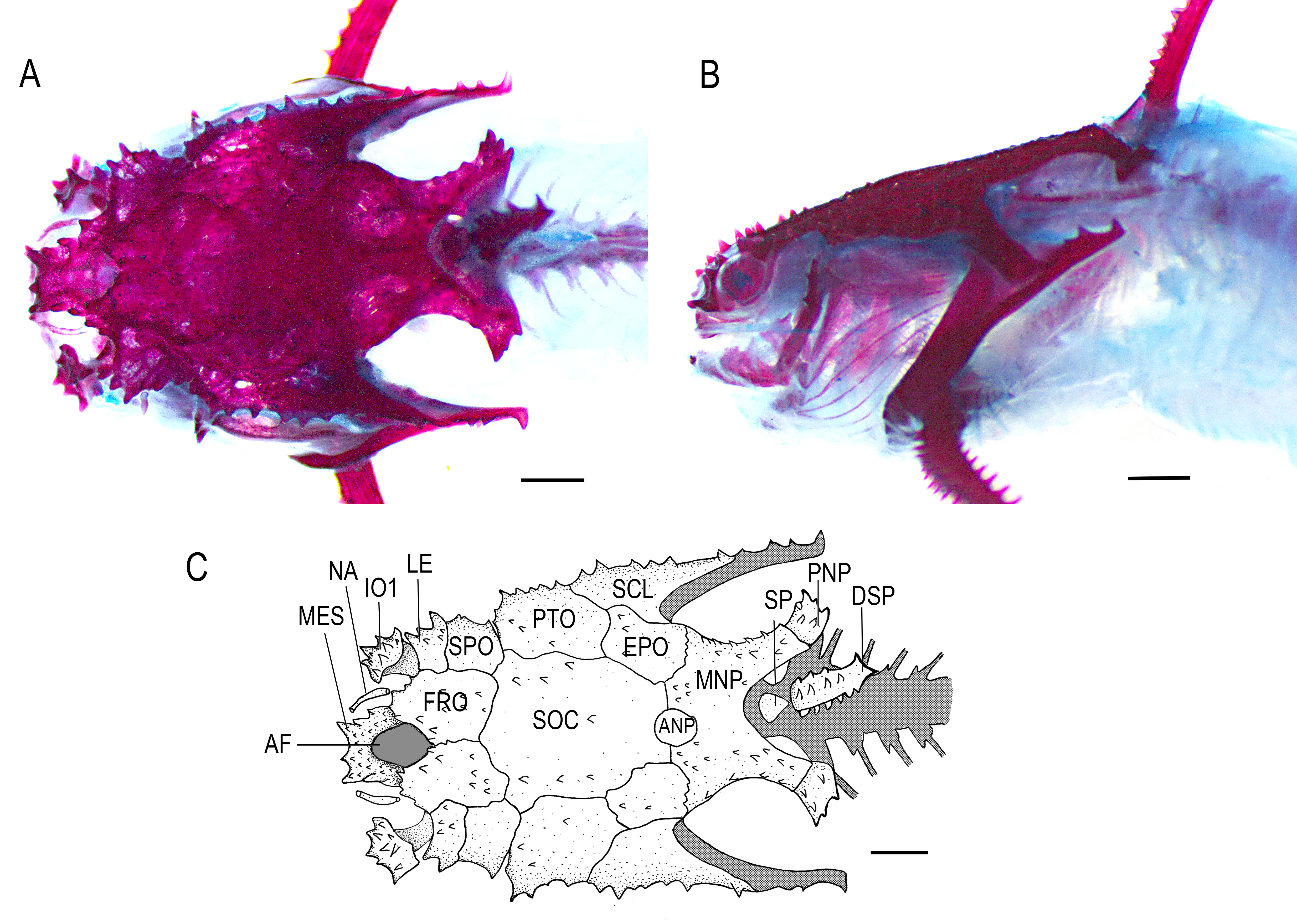
FIGURE 3 | Dorsal (A) and lateral (B) views, and schematic drawing of dorsal view (C) of neurocranium of Spinipterus cuniculus, paratype, MCP 54517, 22.7 mm SL. AF, anterior fontanel; ANP, anterior nuchal plate; DSP, dorsal-fin spine; EPO, epioccipital; FRO, frontal; IO1, infraorbital 1; LE, lateral ethmoid; MES, mesethmoid; MNP, median nuchal plate; NA, nasal; PNP, posterior nuchal plate; PTO, pterotic; SCL, supra-cleithrum; SP, spinelet; SPO, sphenotic; SOC, supraoccipital. Scale bars = 1 mm.
Mouth terminal, subequal with dentary projecting slightly beyond upper jaw. Anterior dentary teeth slightly visible from dorsal and lateral views when mouth closed. Premaxillary and dentary tooth patches with three irregular villiform tooth rows. Dentary teeth slightly larger than those on premaxilla; teeth on anterior portion of both dentary and premaxilla larger than those on lateral portion, decreasing in size progressively. Palate without teeth.
Three pairs of slender barbels. Maxillary barbel relatively long, extending posteriorly short before pectoral-fin origin. Adpressed medial mandibular barbel extending posteriorly slightly short of origin of lateral mandibular barbel. Tip of adpressed lateral mandibular barbel extending posteriorly to anterior margin of cleithrum. Branchiostegal membrane broadly attached to isthmus; ventral margin of gill opening extending to lateral margin of exposed pectoral girdle or at vertical of medial portion of base of pectoral-fin spine.
Exposed portion of postcleithral process long and narrow, inclined posterodorsally and extended up to vertical line through end of dorsal-fin base. Dorsal portion of postcleithral process ornamented with two or three large and strong spines. Anterior nuchal plate very small, smaller than exposed portion of spinelet; posterior nuchal plate with short posterior process. Dorsal fin inserted at anterior one-third of SL. Dorsal-fin spine robust, straight and not pungent; longer than branched rays.
Dorsal-fin spine with three anterior rows of perpendicular well-developed serrations running along axis of spine; one situated at midline, and other two parallel at anterolateral margin of spine. Posterior margin of dorsal-fin spine smooth, lacking any serration. Midline of dorsal surface posterior to dorsal-fin base with groove to accommodate fin rays. Spinelet of dorsal-fin large, approximately of same size of base of dorsal-fin spine. Dorsal-fin rays II,4(8) or 5*(4). Adipose fin elongate, with thick base, and free posterior lobe; extending to or closely to dorsal procurrent caudal-fin rays.
Pectoral fin with strong spine, curved and serrate along entire length of both margins. Three rows of strong perpendicular serrations along spine’s axis on anterior margin, and one row of retrorse on posterior margin. Tip of pectoral-fin spine not pungent and usually ending in two largest serrations, one in each margin of spine. First soft ray longest, but shorter than pectoral-fin spine. Pectoral-fin rays I,5*(10), or I,4(2).
Pelvic fin inserted slightly anterior to vertical through middle of SL. Pelvic-fin margin convex, with branched rays longest. Tip of adpressed pelvic falling short of anal-fin origin or reaching urogenital tube. Pelvic-fin rays I,5(12).
Anal-fin base relatively long, with slightly convex distal margin. Anal fin with first ray longest and subsequent rays becoming progressively shorter. Last anal-fin ray without membranous attachment to caudal peduncle. Anal-fin rays i,18*(7) or 19(5).
Caudal fin obliquely convex, with dorsal rays more elongated than ventral rays. Dorsal and ventral caudal-fin folds conspicuous, including several procurrent rays preceding principal ones; dorsal fold long reaching approximately end of adipose fin. Principal caudal-fin rays i,7,9,i*(3) or i,7,8,i(9). Total vertebrae 42 or 43 (compound centrum including 8 vertebra + 33 or 34 free vertebra + compound caudal complex), pleural ribs 7, first pleural rib on seventh vertebrae.
Coloration in alcohol. Overall ground coloration creamy to pale yellow, with dorsal coloration dark brown pigmented varying in intensity, darker on head and mid-dorsal portion of body. Overall pigmentation less intense in some individuals, most notable in subadults. Body pigmented with melanophores sparsely and irregularly distributed on head and body.
Dorsolateral surface of body covered with irregular spots formed by concentrated pigmentation of different sizes and erratic distribution; spots often absent in specimens of overall light ground pigmentation and in some smaller individuals (< 25 mm SL). Body side bearing less pigmentation ventrally; abdomen pale white lacking pigmentation, except by few melanophores covering anterior border of cleithrum. Ventral head with pigmentation more concentrated on border of jaw and branchiostegal membrane. Maxillary barbels typically dark pigmented along entire length; lighter individuals with diffuse pigmentation. Mental barbels without dark chromatophores, except for base of barbels. Cephalic spines, margin of nuchal plates, lateral portion of postcleithrum process mostly lacking pigmentation or less pigmented.
Patch of dark pigmentation typically present at base of dorsal fin, reaching one third of dorsal-fin rays length. Dorsal-fin spine with irregularly distributed pigmentation, sometimes more concentrated on its distal half. Dorsal-fin branched rays varying in pigmentation; darker individuals with distal portion of rays dark pigmented. Pectoral-fin spine covered by irregular pigmentation; pectoral-fin branched rays less pigmented. Dorsal surface of pelvic-fin rays with diffuse pigmentation in some individuals, usually over principal pelvic-fin ray and base of pelvic fin, but without any distinct patch of pigmentation. Anal fin distinctly darker at base, pigmentation typically concentrated on proximal half of fin; distal half lighter, bearing few diffuse pigments or none. Most of caudal fin covered with dark chromatophores continuing pigmentation of body; some individuals with small unpigmented field in region overlying central rays.
Coloration in life. Similar to color pattern in preserved specimens, but with lighter ground color of body. Color of fins (dorsal, pectoral, adipose and caudal) slightly yellowish. Cheek and opercle region, as well as pelvic fin reddish. Small black dots conspicuous in some individuals (Fig. 4).
Sexual dimorphism. Mature males have an elongated intromittent organ attached along the entire length anteriorly to the first anal-fin ray (vs. females with urogenital opening before anal fin). Intromittent organ in subadult males run in a more parallel position to the anal fin and shorter in size, one quarter to half of anal-fin length.
Geographical distribution. Spinipterus cuniculus is only known from the Guaporé River, tributary of the Madeira River basin, Rondônia, Brazil (Fig. 5).
Ecological notes. Many rivers of the southern Amazon experienced a severe drought in 2020, including portions of the Guaporé River, causing its channel to become narrow and shallow with widths reduced to approximately 60 m and depths ranging from 3 to 5 m (Fig. 6). In one such section, a brittle lateritic block was taken from the riverbed. The block, measuring approximately 1.5 m in length, 60 cm in width, and weighing nearly 45 kg, contained a complex network of interconnected tunnels and galleries (Fig. 7). The innermost, narrower tunnels were inhabited exclusively by small fishes, notably species of Tatia and the new species of Spinipterus, herein described. In contrast, the outermost and wider tunnels were occupied by larger fish species (i.e., Acanthodoras spinosissimus (Eigenmann & Eigenmann, 1888), Agamyxis pectinifrons (Cope, 1870), Batrochoglanis raninus (Valenciennes, 1840), Peckoltia cf. vittata (Steindachner, 1881), Platydoras armatulus (Valenciennes, 1840), and Trachelyopterus sp.). A total of more than 350 fish specimens were collected from the block, representing members of Auchenipteridae, Apteronotidae, Doradidae, Loricariidae, and Pseudopimelodidae. All Spinipterus individuals (n = 63) were recovered from the deepest portions of the lateritic block, suggesting a strong association with these microhabitats for shelter. The surface of the block was covered by a thin layer of greenish biofilm, where chironomid larvae were abundant. Stomach content analysis of three Spinipterus paratypes revealed two empty stomachs, while one contained a single chironomid larva, indicating possible benthic insectivory in this species.
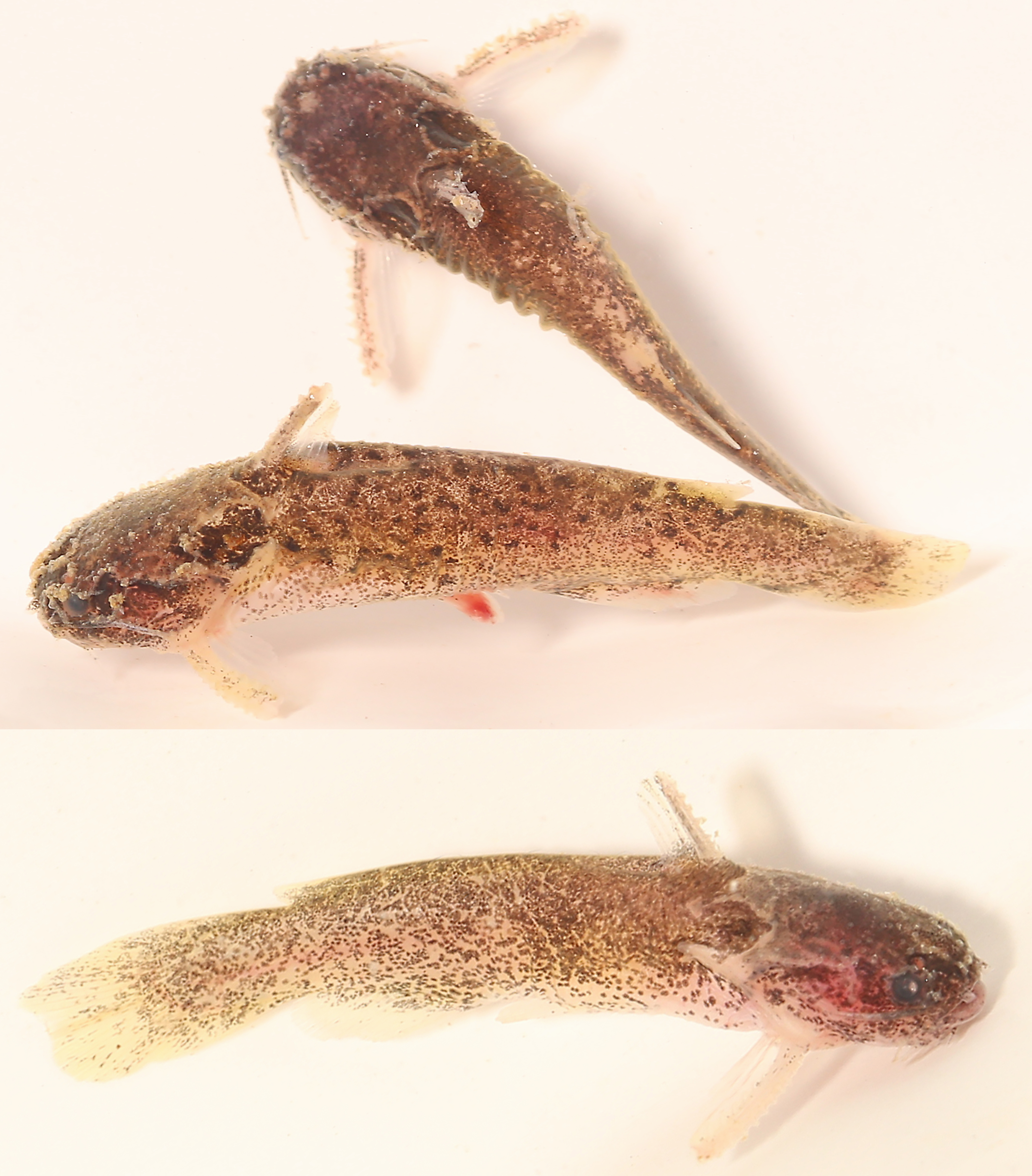
FIGURE 4 | Live coloration of adult paratypes of Spinipterus cuniculus, from Guaporé River, tributary of Madeira River basin, Rondônia, Brazil.
Conservation status. Spinipterus cuniculus is known only from Guaporé River in Rondônia State at the border between Bolívia and Brazil. Despite the relatively restricted range, the species occurs in an area not densely sampled and possibly has a broader distribution. Data on abundance or population tendencies are unknown, but no specific threats were identified. Consequently, we recommend S. cuniculus is categorized as Least Concern (LC) (IUCN, 2024).
Etymology. The specific epithet, cuniculus, is derived from the Latin and means hole or burrow, referring to the particular habitat of the new species in living inside of lateritic blocks. An adjective.
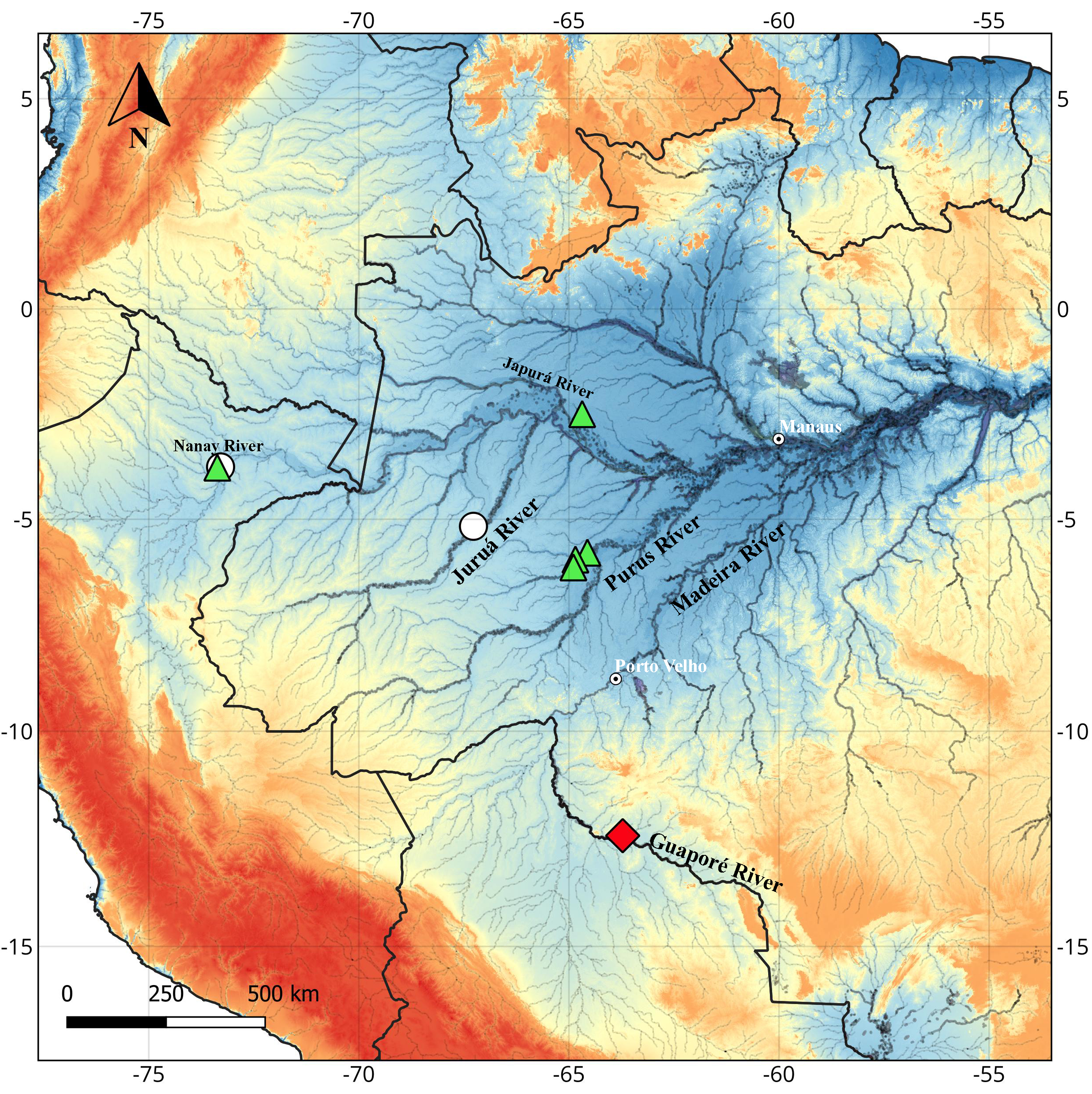
FIGURE 5 | Geographic distribution of the new species Spinipterus cuniculus (red diamond = type locality) from Madeira River basin, Rondônia, Brazil; and records of the examined congeners S. acsi (triangles) and S. moijiri (circles) and from literature. The symbols can represent more than one individual.
Remarks. Specimens of Spinipterus from Igarapé Caracol (UFRO 9984, 18324), tributary of Madeira River (Brazil) were examined (lots listed in comparative material section). Despite having a very similar overall body pattern to that of S. cuniculus, the few specimens showed slight differences in body coloration. Since the material is scarce and we are uncertain whether that population is conspecific with S. cuniculus or represents a closely related but distinct species, we are herein referring to them as Spinipterus aff. cuniculus until additional material is obtained and allows to resolve their taxonomic status.
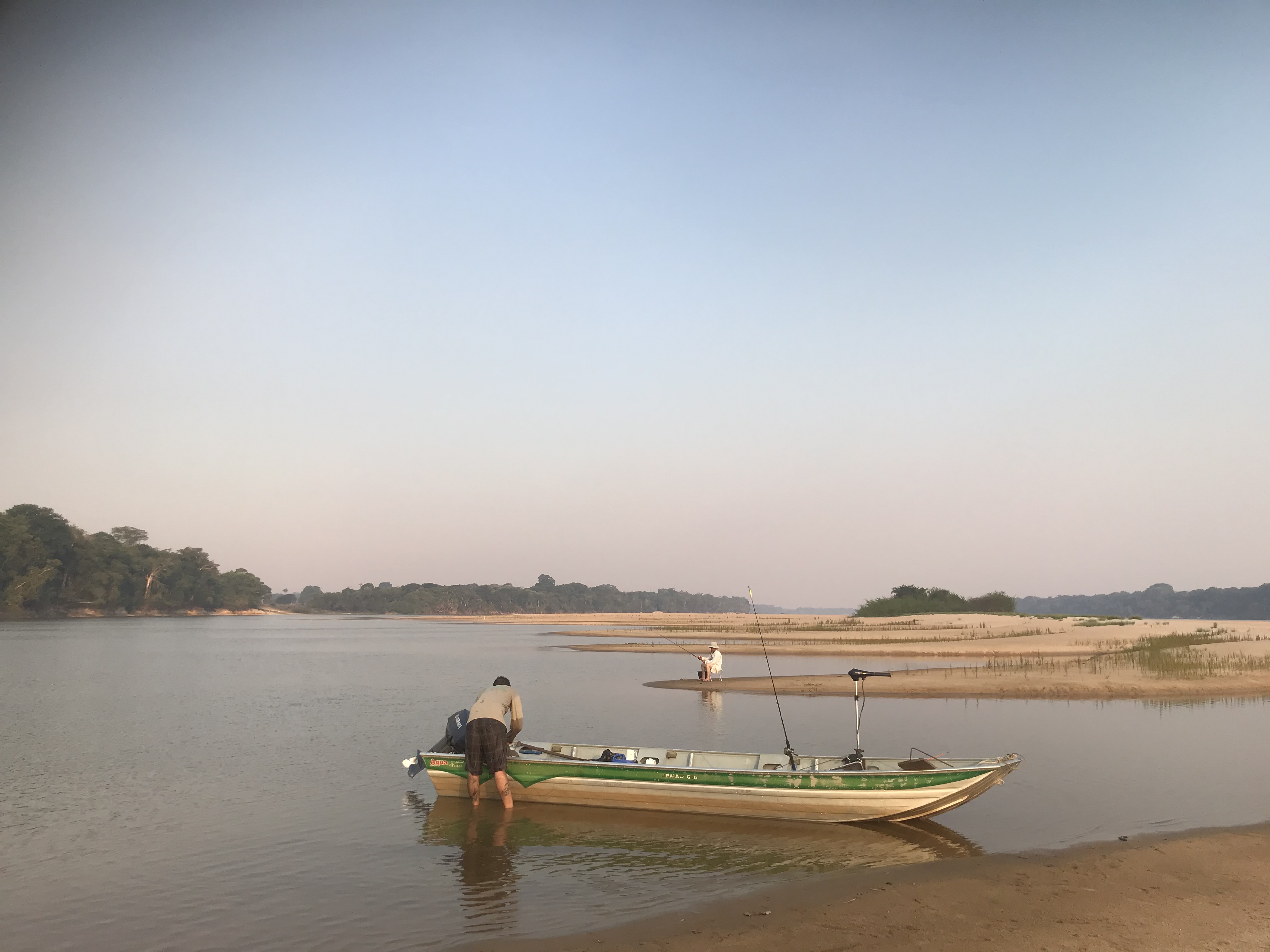
FIGURE 6 | Guaporé River during the period of severe drought in November 2020. Type locality of Spinipterus cuniculus, Madeira River basin, Rondônia, Brazil.
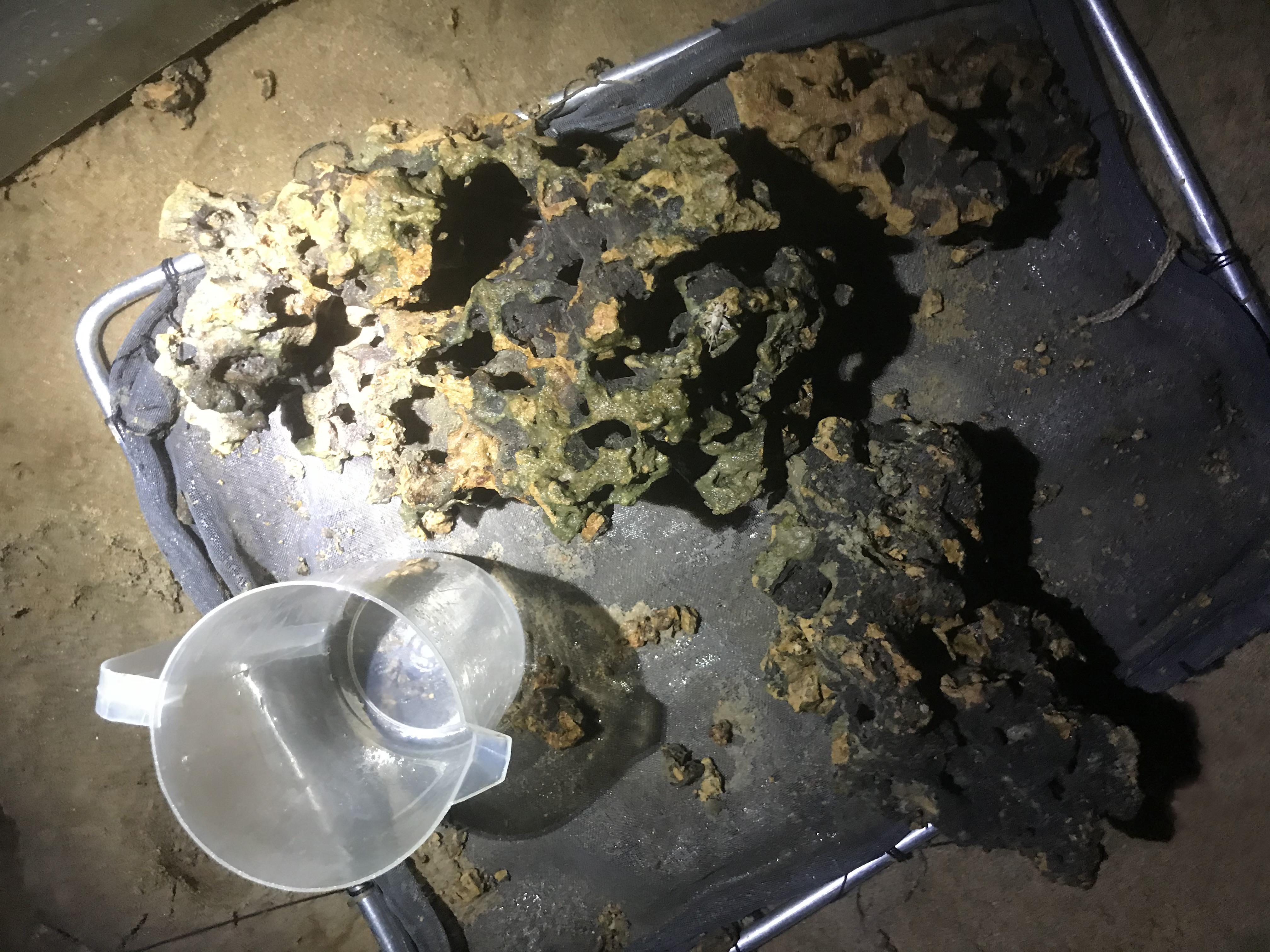
FIGURE 7 | Portion of a larger lateritic block (approx. 45 kg, 1.5 m in length, 0.6 m in width) containing numerous interconnected tunnels, from which specimens of Spinipterus cuniculus were collected. The block was taken from the riverbed of the “Guaporé River (type locality),” Rondônia, Brazil, type locality.
Key for identification of species of Spinipterus
1a. Overall body color pattern with large black rosette-like spots over light yellow to brown background; pectoral fin with 7 soft rays; truncated caudal fin, large adult size (up to 104.5 mm SL)……………….. S. moijiri
1b. Overall body color composed of a creamy to brown background with irregular dark spots or dots and scattered melanophores; pectoral fin with 4 to 6 soft rays; rounded caudal fin, small adult size (< 40.0 mm SL)……………….. 2
2a. Adpressed maxillary barbel extending beyond base of pectoral fin, at least reaching one third of pectoral-fin spine length; 6 soft pectoral-fin rays; interorbital distance 58.9–61.8% HL……………….. S. acsi
2b. Adpressed maxillary barbel extending posteriorly short before or just reaching pectoral fin base; 4 or 5 soft pectoral-fin rays; interorbital distance 46.5–53.8% HL……………….. S. cuniculus
Discussion
The new species described from the Madeira River basin shares all of diagnostic characters of Spinipterus, confirming its placement within the genus: three rows of serrations along the anterior and anterolateral margins of the pectoral- and dorsal-fin spines, prominent spines on the dorsal surface of the cephalic bones, nasal, and cleithrum, and a medial groove on the dorsum just posterior to the dorsal fin (Akama, Ferraris, 2011; Calegari et al., 2019).
The discovery of a third species of Spinipterus in the Madeira River basin not only expands the known diversity within the genus, but also reinforces the importance of specialized microhabitats in harboring unknown fish species. The rarity of Spinipterus species in ichthyological collections has long hindered a better understanding of the diversity and distribution of the genus. Specimens of Spinipterus are rare in museums (S. acsi, n = 2; S. moijiri, n = 11; S. cuniculus n = 63; S. aff. cuniculus = 3; and found inside of submerged trunks and rocks (Akama, Ribeiro, 2013; Rocha et al., 2020), which may explain its absence in samples obtained with traditional fishing devices. The recovery of 63 individuals of the new species from a single lateritic block during an exceptional drought event in Guaporé River underscores both the cryptic behavior and potential microendemism of these fishes. Their use of narrow deep tunnels within the substrate for shelter and the possible benthic insectivorous diet points to a highly specialized lifestyle that may partly explain their absence in catches obtained with conventional sampling methods.
Genetic analysis reveals that the new species is more similar to Spinipterus acsi, showing 3.8% coI sequence sequence divergence, while it is considerably more distant from S. moijiri (~18%) (Tab. 2). The comparable levels of genetic divergence observed across Spinipterus species, but also between Liosomadoras and Spinipterus species (18.4–19%) further reinforce the hypothesis that Spinipterus represent an early-diverging lineage within Auchenipterinae with its origin dating to the Miocene, approx. 20 mya (Calegari et al., 2026). These findings highlight that our knowledge about Spinipterus diversity and its evolutionary history is still incomplete and additional surveys using specialized sampling methods are likely to result in the discovery of additional species.
Morphologically, the new species of Spinipterus differs notably from its two congeners, S. acsi and S. moijiri, by a combination of features associated with reduced size and structural simplification. It exhibits not only diminutive adult body size, but also several reductions and development truncations suggesting potential miniaturization process. Reductions in size including the lower number of soft pectoral-fin rays (4–5 vs. 5–6 in S. acsi, and 7 in S. moijiri), and proportional differences such as a relatively longer head, shallower body, smaller eye, and reduced maxillary barbels further support its distinction. Notably, the anterior nuchal plate is extremely reduced, and the anterior fontanel extends between both the frontal and mesethmoid bones, features that may be related to skeletal miniaturization, also shared with S. acsi, species also with small body size. On the other hand, the new species shows an incomplete lateral line truncated anteriorly at anal-fin origin. Overall, the new species represent a case of significant reduction in the adult size among Neotropical catfishes and close to the proposed threshold for inclusion as a miniature species (q.v., Weitzmann, Vari, 1988). Additionally, all the truncations and reduced size traits evidence possible morphological miniaturization processes within Spinipterus and Auchenipteridae, a phenomenon known in other Neotropical catfish lineages but previously documented in the family only for Gelanoglanis.
TABLE 2 | Pairwise genetic distance (%) of Spinipterus species and Liosomadoras oncinus based on coI gene.
Species | S. cuniculus | S. acsi | S. moijiri | L. oncinus |
S. cuniculus | – |
|
|
|
S. acsi | 3.76 | – |
|
|
S. moijiri | 17.92 | 16.59 | – |
|
L. oncinus | 18.58 | 19.03 | 18.36 | – |
Coloration also provides key diagnostic differences. While S. moijiri displays a conspicuous jaguar-like pattern of large rosettes (Rocha et al., 2020, figs. 1, 6), and S. acsi shows diffuse pigmentation with scattered large dark blotches, the new species has a marbled body color pattern characterized by a light brown background with small, irregularly distributed melanophores and fine dark dots concentrated along the dorsal trunk. These markings, along with a rounded caudal fin and smaller number of pectoral-fin rays, provide useful field characters for distinguishing S. cuniculus among congeners.
From a biogeographic perspective, the discovery of this species in the upper Madeira basin adds an important new record for the genus in the southwestern Amazon. The Guaporé River, a clearwater tributary of the Madeira system, is known for its high levels of endemism and transitional faunal elements between the Amazon and Paraná-Paraguay basins. The microhabitat from which the specimens were collected, narrow tunnels within a lateritic block, may constitute a key factor in the natural history of the species and help explaining its supposedly patchy and limited distribution. Furthermore, the clearwater characteristic of the Guaporé River, with neutral pH and low turbidity, contrasts with the turbid whitewater environments of the Solimões, Juruá and lower Madeira rivers, possibly influencing patterns of habitat use, ecological specialization and dispersal limitation within Spinipterus.
These findings emphasize the need for targeted microhabitat sampling and exploration of under-surveyed aquatic systems, to uncover hidden biodiversity and resolve the taxonomic complexity of poorly known Neotropical fish groups.
Comparative material examined. Brazil. Liosomadoras oncinus: MCP 46029, 7 (1 c&s), Amazonas, Barcelos, creek Apanha-Luz, 20 km downstream Barcelos. Spinipterus acsi: UFRGS 21671, 1, Amazonas, Carauari, Cachimbo Creek, tributary to Bauana Branco, Juruá River, upper Amazon basin. Spinipterus aff. cuniculus: UFRO 9984, 2, UFRO 18324, 1, Rondônia, Porto Velho, Igarapé Caracol, tributary of Madeira River, Amazon basin, 09°14’34”S 64°19’20”W, 21 Jul 2010, W. M. Ohara. Spinipterus moijiri: INPA 35411, 1 skeleton, Amazonas, Tapauá, Caniuá River, Purus River basin, 06°08’18”S 64°53’33”W. Peru. Spinipterus acsi: ANSP 178209, holotype, Loreto, Maynas, caño Santa Rita, right bank of Nanay River, at 3.32 mi NW center of Iquitos near village of Pampa Chica. Venezuela. Liosomadoras oncinus: ANSP 190707, 2, Caño Tigre, right bank tributary to Orinoco, 9.6 km NE of Macuruco; MZUSP 46015, 1, purchased in aquarium shop.
Acknowledgments
The successful completion of this project was made possible by the assistance of individuals with loan and exchange of specimens, who we are pleased to thank Carolina Doria (UFRO), Roberto Reis and Carlos Lucena (MCP). We thank Roberto Reis for providing counts and information on the three non-type specimens of S. aff. cuniculus from Caracol River. We thank Diogo H. Barbalho and Hélio Vieira for helping in the fieldwork.
References
Akama A, Ferraris Jr. CJ. Spinipterus, a new genus of small, spiny catfish (Siluriformes: Auchenipteridae) from the Peruvian Amazon. Zootaxa. 2011; 2992(1):52–60. https://doi.org/10.11646/zootaxa.2992.1.2
Akama A, Ribeiro FRV. Auchenipteridae. In: Queiroz LJ, Torrente-Vilara G, Ohara WM, Pires THS, Zuanon J, Doria CRC, editors. Peixes do rio Madeira. São Paulo: Dialeto Latin America Documentary; 2013. p.172–205.
Birindelli JLO, Zuanon J. Systematics of the jaguar catfish genus Liosomadoras Fowler, 1940 (Auchenipteridae: Siluriformes). Neotrop Ichthyol. 2012; 10(1):1–11. https://doi.org/10.1590/S1679-62252012000100001
Calegari BB, Akama A, Reis RE. First record of the driftwood catfish Spinipterus acsi Akama & Ferraris, 2011 (Siluriformes, Auchenipteridae) for Brazil, Juruá River, Amazon basin. Check List. 2018; 14(4):693–97. https://doi.org/10.15560/14.4.693
Calegari BB, Carvalho TP, Reis RE. Biogeography and evolution of Auchenipteridae: a molecular and morphological perspective. In: Arratia G, Reis RE, editors. Catfishes, a highly diversified group. Volume 2: Evolution and phylogeny. Boca Raton, CRC Press; 2026. p.289–310.
Calegari BB, Vari RP, Reis RE. Phylogenetic systematics of the driftwood catfishes (Siluriformes: Auchenipteridae): a combined morphological and molecular analysis. Zool J Linn Soc. 2019; 187(3):661–773. https://doi.org/10.1093/zoolinnean/zlz036
Chakrabarty P, Warren M, Page LM, Baldwin CC. GenSeq: an updated nomenclature and ranking for genetic sequences from type and non-type sources. ZooKeys. 2013; 346:29–41. https://doi.org/10.3897/zookeys.346.5753
Folmer O, Black M, Hoeh W, Lutz R, Vrijenhoek R. DNA primers for amplification of mitochondrial cytochrome c oxidase subunit I from diverse metazoan invertebrates. Mol Mar Biol Biotechnol. 1994; 3(5):294–99.
Fricke R, Eschmeyer WN, Van der Laan R. Eschmeyer’s catalog of fishes: genera, species, references [Internet]. San Francisco: California Academy of Science; 2025. Available from: http://researcharchive.calacademy.org/research/ichthyology/catalog/fishcatmain.asp
International Union for Conservation of Nature (IUCN). Standards and petitions committee. Guidelines for using the IUCN Red List categories and criteria. Version 15.1 [Internet]. Gland; 2024. Available from: http://cmsdocs.s3.amazonaws.com/RedListGuidelines.pdf
Lundberg JG, McDade L. A redescription of the rare Venezuelan catfish Brachyrhamdia imitator Myers (Siluriformes: Pimelodidae) with a phylogenetic evidence for a large intrafamilial lineage. Not Nat Acad Nat Sci Philadelphia. 1986; 463:1–24.
Rocha M, Rossoni F, Akama A, Zuanon J. A new species of spiny driftwood catfish Spinipterus (Siluriformes: Auchenipteridae) from the Amazon basin. J Fish Biol. 2020; 96(1):243–50. https://doi.org/10.1111/jfb.14211
Sabaj MH. Codes for natural history collections in ichthyology and herpetology (online supplement). Version 9.5 (10 Nov 2023). Available from: https://asih.org
Taylor R, Van Dyke CC. Revised procedures for staining and clearing small fishes and other vertebrates for bone and cartilage study. Cybium. 1985; 9(2):107–19.
Weitzmann SH, Vari RP. Miniaturization in South American freshwater fishes; an overview and discussion. Proc Biol Soc Wash. 1988;101(2):444–65.
Authors

Bárbara B. Calegari1.2.3 , Willian M. Ohara4, Alberto Akama5 and Jansen Zuanon6.7
[1] Natural History Museum Vienna, Burgring 7, 1010 Vienna, Austria. barbara.calegari@nhm.at (corresponding author).
[2] Aquatic Ecology and Evolution, Institute of Ecology and Evolution, University of Bern, Bern, and Swiss Federal Institute for Aquatic Science and Technology (EAWAG), Kastanienbaum, Switzerland.
[3] Naturhistorisches Museum Bern, Bern, Switzerland.
[4] Universidade Federal do Amazonas, Departamento de Biologia, Av. Gen. Rodrigo Octávio, 6200, 69080-900, Manaus, AM, Brazil. ohara@ufam.edu.br.
[5] Museu Paraense Emílio Goeldi, Setor de Ictiologia, Av. Gov. Magalhães Barata, 376, 66040-170, Belém, PA, Brazil. aakama@gmail.com.
[6] Instituto Nacional de Pesquisas da Amazônia-INPA, Coordenação de Biodiversidade, Manaus, AM, Brazil. jzuanon3@gmail.com (Retired).
[7] Universidade Santa Cecília, UNISANTA, R. Oswaldo Cruz, 277, 11045-907, Santos, SP, Brazil (Senior Visiting Researcher).
Authors’ Contribution 

Bárbara B. Calegari: Conceptualization, Data curation, Formal analysis, Investigation, Methodology, Project administration, Resources, Validation, Writing-original draft, Writing-review and editing.
Willian M. Ohara: Data curation, Investigation, Validation, Writing-original draft, Writing-review and editing.
Alberto Akama: Investigation, Validation, Writing-review and editing.
Jansen Zuanon: Investigation, Validation, Writing-original draft, Writing-review and editing.
Ethical Statement
This study did not require authorization from the Animal Ethics Committes or collection licences.
Competing Interests
The author declares no competing interests.
Data availability statement
The authors confirm that the data supporting the findings of this study are available within the article or from the corresponding author upon reasonable request.
AI statement
The authors did not use any AI-assisted technologies in the preparation of this manuscript or its figures.
Funding
BBC was partially funded during PhD study by CNPq (process #140439/2011–0), CAPES (grant #3918/13–0), the National Museum of Natural History (NMNH) of Smithsonian Institution with a Fellowship Award as Short Term Visitor (2015), and BBC and AA to the project Diminuindo déficits Linneano e Wallaceano da família Auchenipteridae (Ostariophysi: Siluriformes) na Bacia Amazônica (CNPq PROTAX – grant 445552/2024–7).
Peer Review
How to cite this article
Calegari BB, Ohara WM, Akama A, Zuanon J. A new species of diminutive spiny driftwood catfish Spinipterus (Siluriformes: Auchenipteridae) from the Madeira River system, Amazon basin, Brazil. Neotrop Ichthyol. 2026; 24(3):e260022. https://doi.org/10.1590/1982-0224-2026-0022
Copyright
This is an open access article under the terms of the Creative Commons Attribution License, which permits use, distribution and reproduction in any medium, provided the original work is properly cited.
Distributed under
Creative Commons CC-BY 4.0

© 2025 The Authors.
Diversity and Distributions Published by SBI
 Accepted June 30, 2026
Submitted February 13, 2026
Epub October 16, 2026