
 Eric Bruschi Haddad1
 , Tatiana Moura Barroca2 and Fábio Vieira3
PDF: Download Here | Supplementary: Sup | Cite this article
Associate Editor: Paulo Lucinda
Section Editor: Bruno Melo
Editor-in-chief: José Birindelli
Abstract
Phalloceros uai foi originalmente descrito a partir da bacia do rio das Velhas e é caracterizado por uma grande mancha lateral quadrada em espécimes maiores. Relatos de sua ocorrência em bacias adjacentes e a presença de fenótipos alternativos suscitaram incertezas quanto à identificação precisa dos espécimes e à sua distribuição. Avaliamos a taxonomia, a distribuição geográfica e a história natural de populações de Phalloceros do centro-sul de Minas Gerais, Brasil. Características morfológicas, incluindo comprimento padrão e total, altura do corpo e comprimento do gonopódio masculino, foram mensuradas, e as características anatômicas do gonopódio foram examinadas por meio de diafanização. As distâncias genéticas foram estimadas com base no gene COI. O conteúdo estomacal foi analisado para caracterizar a dieta, e as gônadas foram examinadas para avaliar características reprodutivas. Os espécimes apresentaram de uma a três grandes manchas laterais quadradas. Não foram observadas diferenças anatômicas no gonopódio, tampouco foram detectadas diferenças significativas no comprimento do gonopódio entre fenótipos ou populações. A divergência genética situou-se abaixo de 1%. A dieta mostrou-se consistente entre as populações, consistindo principalmente de invertebrados autóctones. Todas as populações exibiram superfetação. Dados osteológicos, merísticos e moleculares corroboram a inclusão de todas as populações examinadas em P. uai. A variação observada no número de manchas laterais reflete a diversidade fenotípica intraespecífica, carecendo de divergência morfológica ou molecular suficiente para justificar o reconhecimento em nível de espécie.
Palavras-chave: Assimetria, Quadrilátero Ferrífero, Superfetação, Taxonomia integrativa.
Introduction
The genus Phalloceros Eigenmann, 1907, comprising small-sized livebearing fishes, is one of 27 valid genera within the family Poeciliidae, distributed across watersheds in southern and southeastern South America. For approximately a century, the genus remained monotypic until Lucinda (2003, 2008) described 21 new species and redescribed Phalloceros caudimaculatus (Hensel, 1868), using exclusively morphological data such as structure of gonopodium and female urogenital papilla, osteology, coloration patterns, ray counts, and morphometry. Subsequently, with the popularization of molecular techniques, challenges in species recognition emerged, including reports of species complexes, as noted for P. harpagos Lucinda, 2008 (Oliveira et al., 2024; Souto-Santos et al., 2025). Furthermore, synonymy in the “sinistral group” (sensu Souto-Santos et al., 2023), have been proposed, with P. aspilos Lucinda, 2008, and P. tupinamba Lucinda, 2008, suggested as synonyms of P. leptokeras Lucinda, 2008 (Souto-Santos et al., 2022). More recently, three additional species have been described, P. maldonadoi Souto-Santos, Lucinda & Buckup, 2023, P. circummontanus Souto-Santos, Mejia, Arcila & Buckup, 2025 and P. mimbi Serra, Scarabino, Gobel & Laufer, 2025, bringing the total to 23 valid species currently recognized in the genus.
Phalloceros uai Lucinda, 2008, is autapomorphically diagnosed by a wide, square lateral spot in larger specimens and can be further distinguished from most of its congeners by a rightward-curved and laterally positioned female urogenital papilla, the anal opening margin in contact with (or very close to) the first ray of the anal fin, a left hook on the gonopodium, and an asymmetrical gonopodial appendage where the right side is wider than the left (Lucinda, 2008). However, the reliability of the lateral spot pattern as an autapomorphy for P. uai has been questioned, as Thomaz et al. (2019) reported specimens lacking this character in the rio São Francisco basin. Additionally, Amaral et al. (2015) found a small genetic distance (0.8%) between Phalloceros anisophallos Lucinda, 2008, from Ilha Grande and Parati (RJ) and P. uai, suggesting potential synonymy.
Likeother members of Poeciliidae, Phalloceros uai is viviparous. Phylogenetic evidence suggest that the common ancestor of this family possessed a placental structure, a trait that was subsequently lost and re-acquired multiple times throughout its lineage (Pollux et al., 2014). All Phalloceros species examined to date exhibit placentotrophy (hemotrophic viviparity) (Pollux et al., 2014; Pacheco, 2019). This reproductive mode is generally associated with the absence of bright coloration, reduced male ornamentation, and limited courtship behavior (Pollux et al., 2014). Zandonà et al. (2021) investigated maternal provisioning strategies in seven Phalloceros species, including the focus species of this work, and found a distinctive pattern in which embryos initially develop under lecithotrophy, losing mass due to metabolic costs (Turner, 1940), followed by a transition to matrotrophy, during which embryos gain mass.
Superfetation has been reported for a few species within Phalloceros,such as P. anisophallos (Almeida-Silva, Mazzoni, 2014), P. harpagos (Gorini-Pacheco et al., 2018) and the populations analyzed by Arias, Reznick (2000), which may represent different species (Zandonà et al., 2021). Although superfetation may confer evolutionary advantages, such as facilitating multiple paternity, it also entails potential costs, including increased risk of physical injury during copulation, reduced foraging efficiency, higher predation risk, and greater susceptibility to sexually transmitted infections in females (Pollux et al., 2014).
Phalloceros uai was originally described from rio das Velhas basin, with subsequent records expanding its range within the same drainage (Alves et al., 2008; Leal et al., 2011). More recently, the species was reported in the rio Doce basin (rio Piracicaba and rio Santo Antônio drainages) (Vieira et al., 2015; dos Santos, Britto, 2021). However, these identifications relied solely on morphological characters and encompass populations that exhibit morphological patterns distinct from those originally described. This study provides the first integrated approach, combining morphological and genetic analyses to more accurately assess these identifications and the species distribution in adjacent basins. Information on feeding habits and reproduction was also evaluated, given the scarcity of data regarding the species’ natural history. This multifaceted approach aims to provide a comprehensive understanding of the species identity and ecological characteristics across different drainage systems.
Material and methods
Sampling. Sampling was conducted at four sites within the Quadrilátero Ferrífero region. Located in the south-central part of Minas Gerais, this region encompasses an area of approximately 7,200 km². Its boundaries are primarily defined by the geological basement, following stratigraphic and structural features (Dorr, 1969).Site 1 – Córrego Congonhas, tributary of the right bank of rio Piracicaba (rio Doce basin), Santa Rita Durão (20°11’28.28”S 43°24’45.82”W); Site 2 – Córrego Caraça, tributary of rio Barão de Cocais ou São João, sub-drainage of rio Santa Bárbara (rio Doce basin), Brumal (19°58’53.40”S 43°27’15.27”W); Site 3 – rio Manso, tributary of the left bank of rio Paraopeba (rio São Francisco basin), Brumadinho (20°09’0.98”S 44°13’53.59”W) and Site 4 – Córrego do Jaque, tributary of the left bank of rio das Velhas (type locality, rio São Francisco basin), Lagoa Santa (19°34’28.58”S 43°55’28.64”W) (Figs. 1, S1).
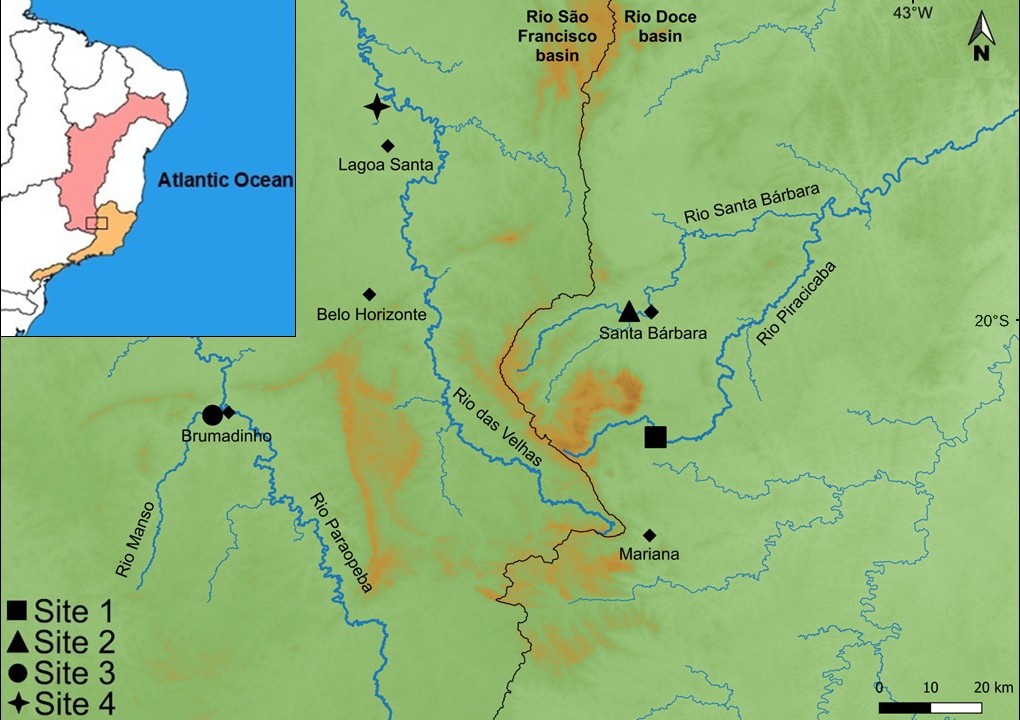
FIGURE 1 | Sampling sites of Phalloceros populations in the upper rio Doce and upper São Francisco drainages, MG.
Specimens were collected using half-moon sieves (2 mm mesh). All captured fish were anesthetized and euthanized using a hydroalcoholic solution containing commercial clove oil (Lucena et al., 2013). Half of the specimens were fixed in 90° GL ethanol for molecular analyses, while the remaining specimens were fixed in 10% formalin, then washed and transferred to 70° GL ethanol.
All specimens were identified using a Zeiss™ Stemi DV4 stereoscopic microscope and separated into adults (males and females) and juveniles’ categories. Post-identification, fishes were packed in labeled plastic bags, separated by collection point, phenotype, and sex. Phenotypes were determined by counting lateral spots on the left and right sides independently and recording them as ordered pairs (e.g., 1×1 indicates one spot on each side, whereas 2×3 and 3×2 represent distinct asymmetric phenotypes). This approach allows for the characterization of both symmetrical and asymmetrical patterns. Voucher specimens are deposited in the ichthyologic collection of Laboratório de Ictiologia do Departamento de Zoologia da Universidade Federal de Minas Gerais, under catalog numbers DZUFMG 159, 160, 161 and 171.
Morphological analysis. Total length, standard length, height (measured at the pelvic fin origin) and gonopodium length were measured using a 150 mm MTX® digital caliper with 0.01 mm resolution. Linear regression models were utilized to assess the relationship between gonopodium length and total length in males, while ANOVA were utilized to test if there were statistically significant differences between the mean gonopodium length of the populations. All statistical analyses were performed in default R (R Development Core Team, 2021).
For osteological examination, 19 males and three females were cleared and stained following Taylor, Van Dike (1985). The gonopodium of males was photographed using a Leica™ M205A stereoscopic microscope. Gonopodium structure nomenclature followed Rosen, Gordon (1953) as modified by Lucinda, Reis (2005).
Molecular analysis. DNA extraction, amplification, and sequencing were performed by EcoMol Consultoria© in Piracicaba, SP, Brazil. DNA sequences of 16 specimens (Tab. S2) were analyzed. DNA was extracted from the posterior portion of each fish using the commercial kit DNeasy Blood & Tissue (Qiagen™), following the manufacturer’s instructions. Subsequently, DNA quality and concentration (ng/µL) were evaluated using the absorbance ratio at 260/280 nm with a NanoDrop 2000 spectrophotometer (Thermo Scientific™) (Tab. S2). All samples were normalized to a concentration of 50 ng/µL.
Polymerase chain reaction (PCR) was carried out to amplify cytochrome oxidase subunit I (COI) using the primers H7152 (5’ CACCTCAGGGTGTCCGAARAAYCARAA 3’) and L6448–F1 (5’ TCAACCAACCACAAAGACATTCGGCAC 3’) described by Ivanova et al. (2007). Amplifications were performed in both directions in a 15 µL reaction volume containing 2 µL of DNA at 50 ng/µL, 7.5 µL of PCRBio Ultramix (PCRBiosystems), 1 µL of each primer diluted to 10 pmol/µL, and 3.5 µL of ultrapure water. The thermocycle profile consisted of an initial denaturation at 94°C for two min, followed by 35 cycles of annealing at 94°C for 30 sec, another 35 at 52°C for 40 sec, chain extension at 72°C for one min, and finally, the final extension occurred at 72°C for 10 min (Ivanova et al., 2007). PCR amplification resulted in fragments of approximately 750 bp. Amplicons were verified on a 1.5% agarose gel by electrophoresis and purified using Agencourt AMPure XP magnetic beads (BECKMAN COULTER©). Purified products were sequenced using BigDie Terminator v. 3.1 Cycle Sequencing Kit (Applied Biosystems®). Sequencing reaction products were then purified by precipitation with ethanol/EDTA/sodium acetate, according to the manufacturer’s protocol, and analyzed on an ABI 3730xl DNA Analyzer.
Sequences obtained were deposited in Genbank (Tab. S2). These sequences plus others available for Phalloceros species were manually edited and trimmed in Geneious Prime 2024.0.7 (Kearse et al., 2012). Sequences were aligned using MUSCLE algorithm (Edgar, 2004). The final trimmed DNA sequence consisted of a 650 bp fragment. All sequences with less than 600 bp were removed, due to the low sequencing quality, compromising the final alignment. Additionally, P. harpagos was excluded in the analysis because, at the time, it showed significant taxonomic uncertainty, and was considered a potential species complex, as later clarified (Oliveira et al.,2024; Souto-Santos et al., 2025). Genetic distance was estimated based on Kimura 2-parameter model (K2P) using MEGA X (Kimura, 1980; Kumar et al., 2018). Phylogenetic reconstructions were performed under maximum likelihood (ML) statistical analysis in IQTree v. 3.0 (Wong et al., 2026) under the best-fit model selected (TPM2u + F + R2) by AIC, cAIC and BIC. Poecilia vivipara Bloch & Schneider, 1801was used as the outgroup. For support, we performed a bootstrap test (Felsenstein, 1985) using 10.000 replicates. The resulting tree was visualized and adjusted for presentation in FigTree v. 1.4.4 (http://tree.bio.ed.ac.uk/software/figtree/).
Stomach and reproductive analysis. Ninety specimens including all locations and phenotypes, spanning five size categories, were dissected (Tab. S3). Dissection involved a horizontal cut on the specimen’s side to remove the digestive system and, in females, embryos. In females, reproductive mode and superfetation were assessed following Turner (1937) and Lodé (2012). Stomach contents were analyzed for all dissected specimens using the frequency of occurrence method (Hyslop, 1980). Food items were identified down to order level where possible.
Results
A total of 1622 specimens were sampled. We reported nine different phenotypes (1×1, 1×2, 1×3, 2×1, 2×2, 2×3, 3×1, 3×2 and 3×3 lateral spots) (Figs. 2, 3). Phenotypes differing from the original description of P. uai were observed in all populations except those from the type locality in the rio das Velhas (Tab. 1).
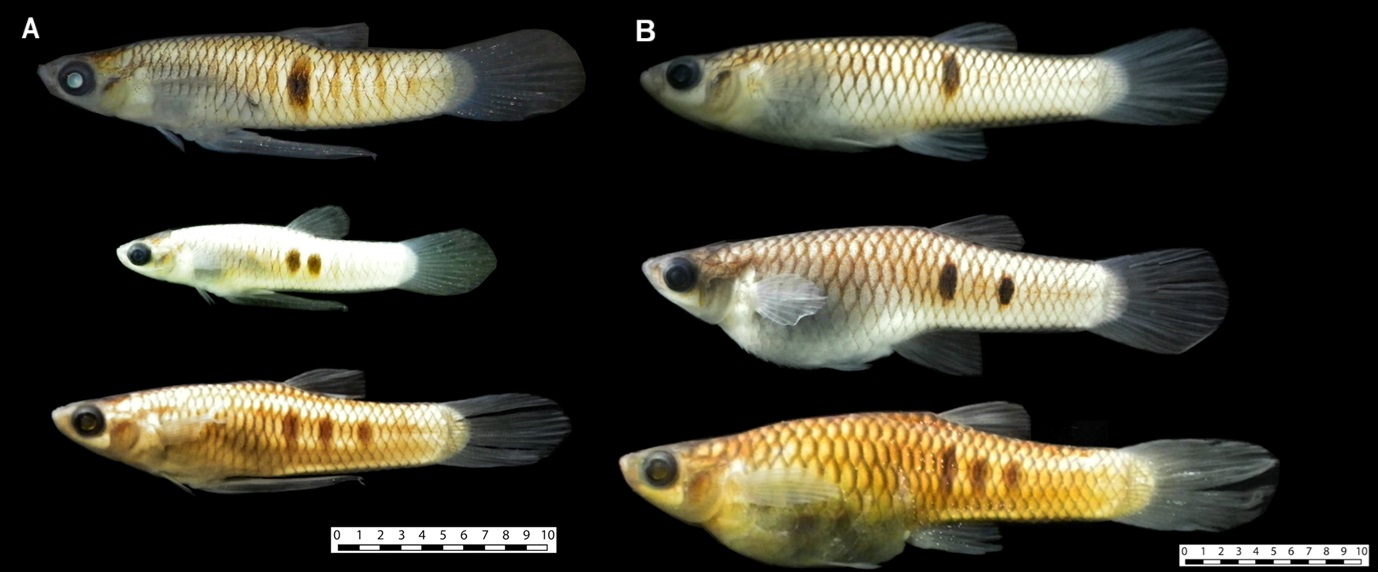
FIGURE 2 | Left lateral view of adult specimens of Phalloceros uai, DZUFMG 171, rio Piracicaba, Santa Rita Durão. A. Males. B. Females. Female with three spots appears to be an anomalous specimen as the urogenital papilla is visible in the left lateral view. Scale in millimeters.
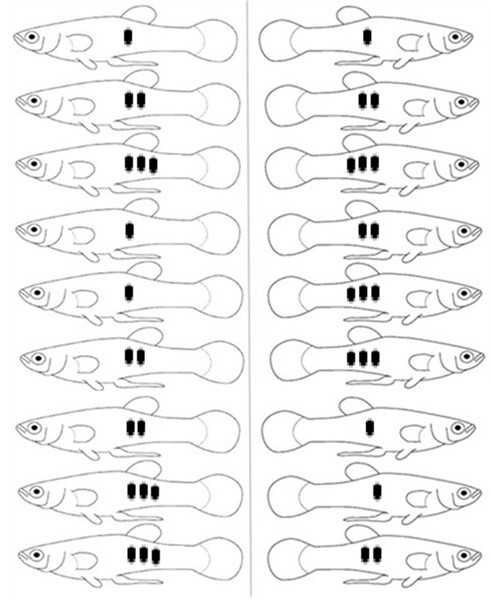
FIGURE 3 | Schematic drawing of Phalloceros uai phenotypes showing the variation in the number of lateral spots on each side of the same specimen.
TABLE 1 | Number of Phalloceros specimens collected at each locality, categorized by phenotype according to the number of lateral spots, showing total counts and relative frequencies.
Location | Number of spots | Number of specimens | Relative frequency of phenotype by location (%) | |
Right | Left | |||
Santa Rita Durão, Mariana, MG, Brazil | 1 | 1 | 582 | 62.85 |
2 | 2 | 135 | 14.58 | |
3 | 3 | 1 | 0.11 | |
1 | 2 | 103 | 21.49 | |
2 | 1 | 96 | ||
1 | 3 | 1 | 0.11 | |
3 | 1 | – | ||
2 | 3 | 8 | 0.76 | |
3 | 2 | – | ||
Brumal, Santa Bárbara, MG, Brazil | 1 | 1 | 45 | 95.74 |
2 | 2 | – | – | |
3 | 3 | – | – | |
1 | 2 | 1 | 4.26 | |
2 | 1 | 1 | ||
1 | 3 | – | – | |
3 | 1 | – | ||
2 | 3 | – | – | |
3 | 2 | – | ||
Brumadinho, MG, Brazil | 1 | 1 | 534 | 82.53 |
2 | 2 | 42 | 6.49 | |
3 | 3 | – | – | |
1 | 2 | 37 | 10.66 | |
2 | 1 | 32 | ||
1 | 3 | – | – | |
3 | 1 | – | ||
2 | 3 | – | 0.31 | |
3 | 2 | 2 | ||
Lagoa Santa, MG, Brazil | 1 | 1 | 29 | 100 |
2 | 2 | – | – | |
3 | 3 | – | – | |
1 | 2 | – | – | |
2 | 1 | – | ||
1 | 3 | – | – | |
3 | 1 | – | ||
2 | 3 | – | – | |
3 | 2 | – | ||
Total length (TL) ranged from 8.21–48.60 mm, standard length (SL) from 6.67–42.17 mm, and height/SL from 0.13–0.52. Females generally attained larger sizes and body depth, with greater variation, attributable to sexual dimorphism and abdomen dilation when pregnant (Tab. 2).
TABLE 2 | Morphometric data for male, female and juvenile specimens of Phalloceros uai from the upper Doce and upper São Francisco drainages, MG. N = Number of specimens, ẋ = Mean, md = Median, DP = Standard deviation.
Data (mm) | Sex | N | Range | ẋ | md | DP |
Total length (TL) | Males | 444 | 15.86 – 30.70 | 22.83 | 21.69 | 3.43 |
Females | 976 | 15.67 – 48.60 | 29.27 | 29.58 | 6.99 | |
Juveniles | 179 | 8.21 – 17.15 | 13.94 | 14.43 | 1.89 | |
Standard length (SL) | Males | 453 | 12.86 – 24.58 | 18.29 | 17.35 | 2.81 |
Females | 985 | 12.47 – 42.17 | 23.71 | 23.93 | 5.83 | |
Juveniles | 184 | 6.67 – 13.91 | 11.24 | 11.51 | 1.46 | |
Height/SL | Males | 453 | 0.14 – 0.29 | 0.19 | 0.19 | 0.02 |
Females | 977 | 0.14 – 0.52 | 0.23 | 0.22 | 0.03 | |
Juveniles | 183 | 0.13 – 0.24 | 0.17 | 0.17 | 0.02 | |
Gonopodium length | Males | 453 | 2.98 – 11.18 | 7.81 | 7.34 | 1.38 |
Linear regression analysis demonstrated a positive correlation between male gonopodium length and total length (r = 0.92; y = -0.39 + 0.36x), indicating an expected increase of 0.36 mm in gonopodium length for every 1 mm increase in total length (Figs. 4, S4). ANOVA revealed no significant differences in the mean gonopodium length among different populations (F (3, 437) = 0.2407, p = 0.8679). No structural differences were found in the gonopodium among varying morphotypes and populations (Figs. 5, S5). All specimens possessed a left hook on the gonopodium, an asymmetrical gonopodial appendage (right wider than the left), a canoe-shaped ray 5, a serrated structure on ray 4p, and radius 3 with spines and extensions, consistent with original description.
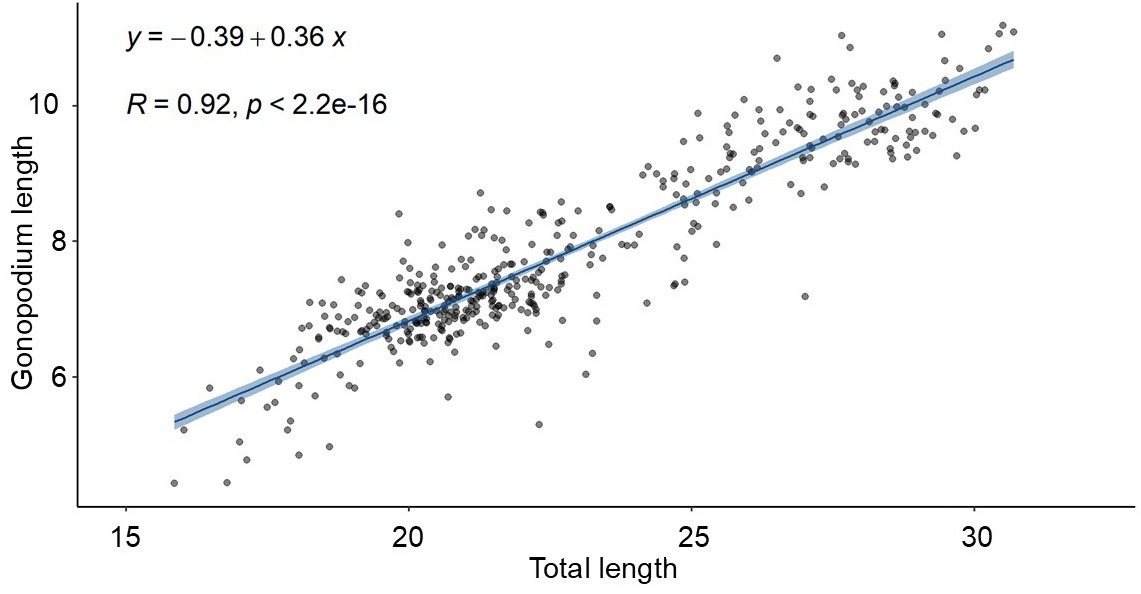
FIGURE 4 | Linear regression of gonopodium length (mm) on total length (mm) in males specimens of Phalloceros uai from four locations: rio Piracicaba, rio Santa Barbara, rio Paraopeba and rio das Velhas.
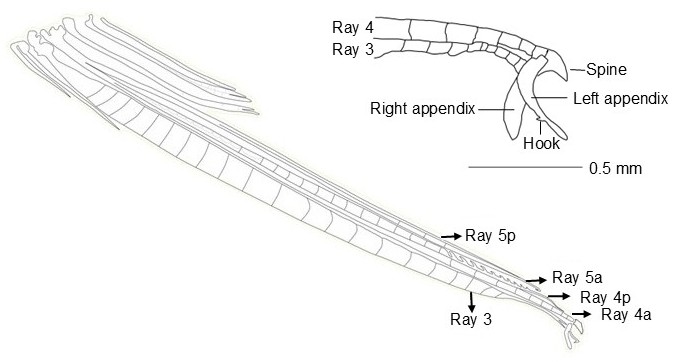
FIGURE 5 | Schematic drawing of the gonopodium of Phalloceros uai in lateral view illustrating rays 5, 4 and 3, with the anterior region on the left. Ray 5 canoe-shaped, ray 4p exhibits a serrated structure, and ray 3 possesses spines and extensions.
Mean genetic distance based on the K2P model were less than 1% among P. uai sequences, including those from specimens collected at the type locality, and exceeded 1% between P. uai and its congeners (Tab. S6), indicating that all analyzed populations belong to P. uai. Our maximum–likelihood phylogenetic analyses based on COI recovered all P. uai sequences as a monophyletic group, further supporting the conclusion that all analyzed populations belong to P. uai (Fig. S7).
Approximately half (49%) of the stomachs dissected contained food items, while 51% were empty. Among stomachs with food, the majority contained aquatic invertebrates, predominantly Diptera larvae (18.82%), and debris such as stones and sand grains (28.23%) (Tab. 3). Diet did not differ between females and males, nor among populations in different drainages (Tabs. 3, S8).
TABLE 3 | Total number and frequency of stomach contents separated by food item and sex. N = Number of stomachs found with food items.
Food item | Males (n = 35) | Females (n = 55) | Total (n = 90) | ||||
N | Frequency (%) | N | Frequency (%) | N | Frequency (%) | ||
Aquatic invertebrates | Coleoptera (Adult) | – | – | 1 | 1.82 | 1 | 1.18 |
Coleoptera (Immature) | – | – | 2 | 3.64 | 2 | 2.35 | |
Diptera (Adult) | 1 | 3.33 | 2 | 3.64 | 3 | 3.53 | |
Diptera (Immature) | 6 | 20.00 | 10 | 18.18 | 16 | 18.82 | |
Ephemeroptera (Immature) | 1 | 3.33 | – | – | 1 | 1.18 | |
Odonata (Immature) | – | – | 1 | 1.82 | 1 | 1.18 | |
Trichoptera (Immature) | 1 | 3.33 | – | – | 1 | 1.18 | |
Unidentified adult insect | 2 | 6.66 | 2 | 3.64 | 4 | 4.70 | |
Unidentified animal material | – | – | 6 | 10.91 | 6 | 7.06 | |
Plant material |
| 1 | 3.33 | 2 | 3.64 | 3 | 3.53 |
Debris | Sand/Stone grains | 4 | 13.33 | 20 | 36.36 | 24 | 28.23 |
Unidentified material |
| 2 | 6.66 | 2 | 3.64 | 4 | 4.70 |
Empty |
| 16 | 53.33 | 27 | 49.09 | 43 | 50.59 |
A total of 2028 embryos were found in 55 females (Tab. 4). Embryos were typically grouped and encased in a thin membrane (Fig. 6). In embryos nearing the final stages of development, eyes, yolk and fins were discernible. Females across all populations carried embryos at different stages of development, confirming superfetation. Embryos in the final development stages exhibited the lateral spots characteristic of the species, with offspring presenting solely three phenotypes (1×1, 1×2 and 2×2). Notably, embryos displayed different phenotypes irrespective of the mother’s phenotypes (Fig. 7).
TABLE 4 | Number of Phalloceros uai embryos by locality.
Area | Range | Average | Median | Standard deviation | Number of embryos |
Santa Rita Durão, Mariana, MG, Brazil | 4–106 | 44 | 28 | 32.1 | 1105 |
Brumal, Santa Bárbara, MG, Brazil | 0–34 | 18 | 22 | 13.5 | 90 |
Brumadinho, MG, Brazil | 0–73 | 37 | 34 | 20.5 | 744 |
Lagoa Santa, MG, Brazil | 0–46 | 18 | 11 | 18.2 | 89 |
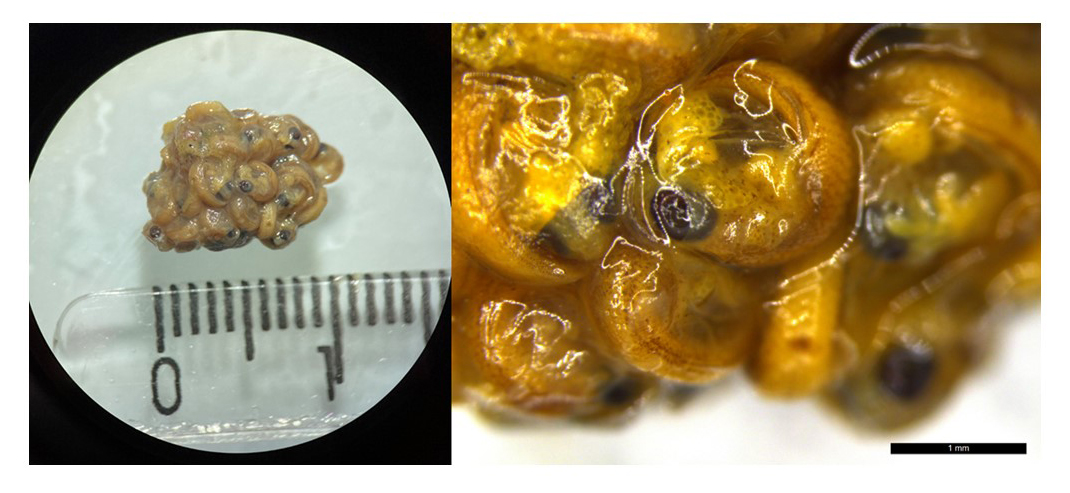
FIGURE 6 | Set of embryos taken from a Phalloceros uai female, DZUFMG 159, rio Manso, Brumadinho, 35 mm SL, surrounded by a thin membrane. Scale bar = 1 mm.
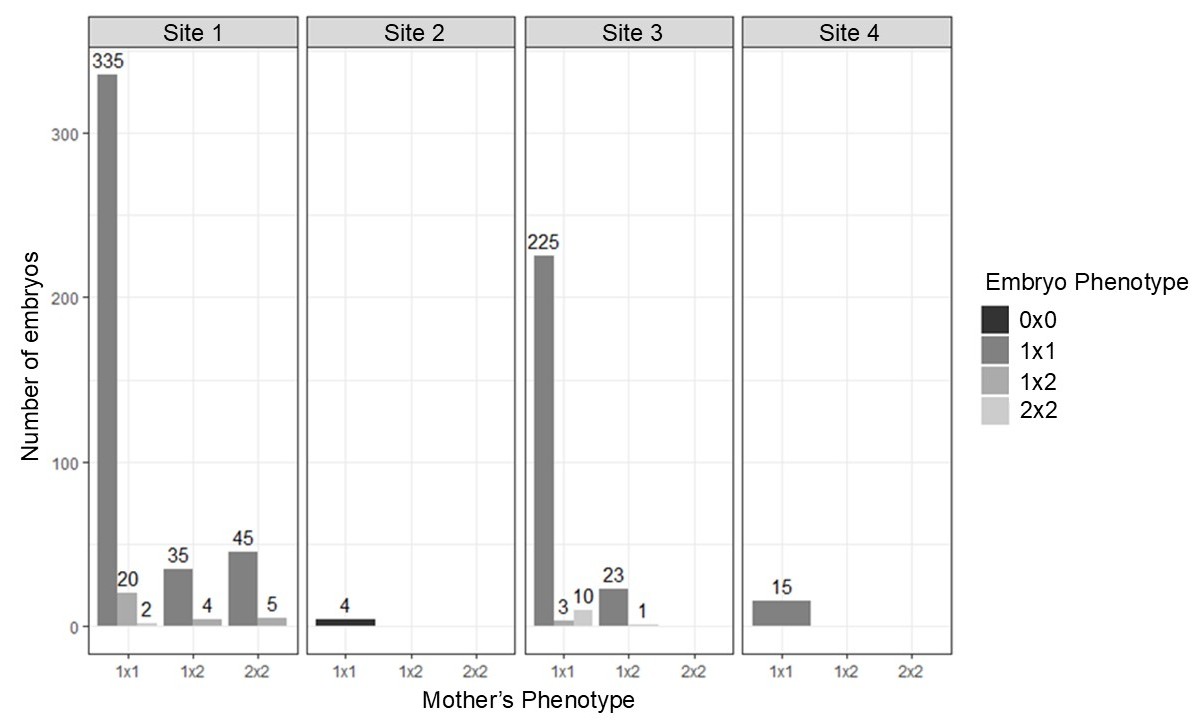
FIGURE 7 | Distribution of late-stage embryos by phenotype category in 55 Phalloceros uai females, separated by maternal phenotype and locality. Bars indicate the number of embryos in each phenotype category within each mother’s brood.
Discussion
Phalloceros uai was originally described based on specimens from córrego do Jaque, a tributary of the left bank of rio das Velhas (Lucinda, 2008). Subsequent studies expanded its documented distribution within the rio das Velhas basin to include the rio Cipó (Alves et al., 2008), and the main channel of the rio das Velhas (Leal et al., 2011). Our surveys further extend its known distribution to the rio Paraopeba basin and confirm its identification in the rio Piracicaba drainage (rio Doce basin), as initially reported by Vieira et al. (2015). Additionally, we consider the occurrence in the rio Santo Antônio drainages (rio Doce basin) as valid, as indicated by dos Santos, Britto (2021). Consequently, current data indicate that P. uai is widely distributed and common throughout the Quadrilátero Ferrífero region.
In all analyzed populations most specimens were identified as Phalloceros uai based on the diagnostic characteristics of the gonopodium and urogenital papilla described by Lucinda (2008), even though some individuals exhibited phenotypic variation relative to the original description in the number and arrangement of lateral spots, which has not been previously reported. Thomaz et al. (2019) reported specimens without lateral spots in the rio das Velhas. In contrast, all individuals in our study possessed lateral spots, and this discrepancy warrants further investigation.
Although the phenotype described by Lucinda (2008) was the most abundant in our dataset, individuals bearing asymmetric spot patterns were also common, as well as those with two or three lateral spots. Specimens with three lateral spots were found exclusively in the upper Piracicaba population, whereas only individuals exhibiting the original diagnostic phenotype were observed at the type locality. The absence of variation in lateral spot number at the type locality may indicate limited intraspecific diversity within that population. This observation could be associated with evolutionary processes such as natural selection and genetic drift, or with local environmental heterogeneity. In this context, experimental evidence from Poecilia wingei shows that variation in thyroid hormone (TH) levels can directly affect the development of color patterns (Prazdnikov, 2021), suggesting that physiological regulation may contribute to the differences observed among populations. Alternatively, the apparent uniformity at the type locality may reflect the limited number of specimens analyzed, which restricts our ability to fully assess the phenotypic diversity of that population.
In poecilids, coloration patterns are influenced by predation (Endler, 1978), female mate choice (Endler 1984; Endler, 1987; Jönck, 2004), environmental factors such as background color (Jönck, 2004) and luminosity (Endler, 1987), and intrinsic factors including stress, age, genetics (Houde, 1992), and thyroid hormones (Prazdnikov, 2021). Taken together, these factors suggest that, these patterns vary not only among species and genera, but also among populations of the same species, which may account for the variation observed in this study.
Most studies on color patterns in Phalloceros were conducted prior to 2008, when the genus was considered monotypic. Although these studies provide valuable insights into the genus, caution is warranted when using their data for interspecific comparisons. Endler (1982, 1984, 1987) highlighted three key aspects of P. caudimaculatus color patterns: (1) cryptic coloration, often matching sand or sediment, to evade predators; (2) a decrease in spot size and number with increasing local predation pressure (negative selection); and (3) female preference for more conspicuous males (positive selection). We did not find any visible differences in background among sampling sites, and our data supports the hypothesis that fishes with fewer spots may be less attractive prey, as they are more frequent across all populations. Other color patterns such as conspicuous or well-developed vertical bars (Thayer, 1909; Cott, 1940; Endler, 1978) and reddish catecholamines spots (Jönck, 2004), were not recorded in either live or fixed specimens.
Thyroid hormones (THs) are important regulators of fish ontogeny, linking environmental changes to phenotypic expression, and are associated with the speed of appearance, intensity, and asymmetry of color patterns. Experimental studies show that high TH levels favor asymmetry in fish (Prazdnikov, 2021), which might explain the different phenotypes and asymmetry observed in P. uai. Asymmetry could provide an advantage during guppy courtship, as males can present both body sides to the female, showcasing different phenotypes and expanding mate choice possibilities (Řežucha, Reichard, 2015), thus constituting an evolutionary advantage for phenotypically asymmetrical animals. However, if asymmetry conferred such an advantage, a higher frequency of asymmetrical individuals would be expected, a condition not supported by our data.
Poeciliidae exhibit a range of reproductive behaviors, including sneaky mating or gonopodial thrusting (coercion), courtship (cutting), nibbling (oral or nasal contact of the male in the female urogenital opening), postcopulatory jerking (post-copulatory masturbation) and forced reproduction. These behaviors imply competition, where females tend to maximize partner quality to avoid energy loss, while males are often more promiscuous, aiming to maximize the number of partners (Baerends et al., 1955; Farr, 1977, 1980, 1984; Endler, 1984; Pollux et al., 2014; Pacheco, 2019). Coercion involves males inserting the gonopodium directly into the female’s urogenital papilla without her permission or perception (Rosen, Tucker, 1961). In populations where this act is common, smaller males with longer genitalia are positive selected, limiting females mate choice (Pollux et al., 2014). We hypothesize that P. uai may engage in coercive acts, thereby facilitating the persistence of different phenotypes within populations.
All analyzed populations of Phalloceros showed genetic distances of less than 1% relative to other Phalloceros uai sequences available in GenBank and to the population from the type locality, supporting their conspecificity (Hebert et al., 2003; Lara et al., 2010; Pereira et al., 2011, 2013). Furthermore, all sequences clustered into a single monophyletic group with 92 bootstrap support. Amaral et al. (2015) reported a genetic divergence of 0.8% between P. uai and P. anisophallos, suggesting a possible synonymy and the need for taxonomic reassessment. In contrast, our analysis recovered a genetic divergence greater than 1% between these two species, and each was placed in a distinct, well-supported monophyletic clade. Additionally, P. anisophallos can be morphologically distinguished from P. uai by autapomorphies, including a hook on the middle portion of the left side of the gonopodial appendage (approximately one-quarter to one-third from the distal end) and an elongated medial spot forming a vertical bar (Lucinda, 2008).
Based on our dietary analysis, Phalloceros uai is considered a carnivorous species, primarily feeding on aquatic invertebrates, a trophic habit consistent with observations reported for other species of Phalloceros (Aranha, Caramaschi, 1999). Conversely, other Phalloceros species have been described as omnivorous (Casatti, 2002; Mazzoni et al., 2010), detritivorous (Wolff et al., 2022), and even strictly herbivorous in some populations (Costa, 1987; Teixeira, 1989).
Based on our reproductive analyses, females from all populations of P. uai carried multiple broods of embryos at different developmental stages, confirming the occurrence of superfetation. As suggested by Pollux et al. (2014), species exhibiting superfetation typically lack conspicuous coloration and ornamentation, possess simple sexual traits, and show little or no courtship behavior. Phalloceros uai shares the first two characteristics, and although courtship behavior has not yet been studied in this species, it is likely consistent with this pattern.
Our integrative analyses combining distributional data, morphology, coloration patterns, diet, reproduction, and molecular evidence support the recognition of Phalloceros uai as a widely distributed and common species in the Quadrilátero Ferrífero region. Despite exhibiting phenotypic variation in lateral spot number and symmetry among populations, most examined specimens share the diagnostic gonopodial and urogenital characters of P. uai, and genetic distances below 1% coupled with strong monophyly corroborate their conspecificity. Variation in coloration patterns likely reflects local environmental conditions, intrinsic physiological factors, and selective pressures rather than taxonomic differentiation. Further studies are necessary to ascertain the origin of spot pattern variation in P. uai and its role in the allopatric divergence observed among different populations.
Acknowledgments
The authors sincerely thank Dr. Mauro L. Tríques for providing access to laboratory facilities, Ms. Amanda Ribeiro Cocovick for her assistance during fieldwork. We also thank the Departamento de Zoologia, Instituto de Ciências Biológicas, Universidade Federal de Minas Gerais, for institutional support.
References
Almeida-Silva PH, Mazzoni R. Life history aspects of Phalloceros anisophallos Lucinda, 2008 (Osteichthyes, Poeciliidae) from Córrego Andorinha, Ilha Grande (RJ, Brazil). Stud Neotrop Fauna Environ. 2014; 49(3):191–98. https://doi.org/10.1080/01650521.2014.957968
Alves CBM, Leal CG, Brito MFG, Santos ACA. Biodiversidade e conservação de peixes do Complexo do Espinhaço. Megadiversidade. 2008; 4(1–2):178–96.
Amaral CRL, Maciel VA, Pereira F, Mazzoni R, Silva DA, Amorim A et al. Genetic diversity of freshwater fishes from the South American Atlantic Rainforest: the case study of the genus Phalloceros. Forensic Sci Int: Genetics Supplement Series. 2015; 5:e608–10. http://dx.doi.org/10.1016/j.fsigss.2015.09.240
Aranha JMR, Caramaschi EP. Estrutura populacional, aspectos da reprodução e alimentação dos Cyprinodontiformes (Osteichthyes) de um riacho do sudeste do Brasil. Rev Bras Zool. 1999; 16(1):637–51. https://doi.org/10.1590/S0101-81751999000300005
Arias A, Reznick D. Life history of Phalloceros caudiomaculatus: a novel variation on the theme of livebearing in the family Poeciliidae. Ichthyol Herpetol. 2000; 2000(3):792–98. https://doi.org/10.1643/0045-8511(2000)000[0792:LHOPCA]2.0.CO;2
Baerends GP, Brouwer R, Waterbolk HTS. Ethological studies on Lebistes reticulatus (Peters) I. An analysis of the male courtship pattern. Behaviour. 1955; 8:249–334. https://doi.org/10.1163/156853955X00238
Casatti L. Alimentação dos peixes em um riacho do Parque Estadual Morro do Diabo, bacia do alto rio Paraná, sudeste do Brasil. Biota Neotrop. 2002; 2(2):1–14. https://doi.org/10.1590/S1676-06032002000200012
Costa WJ. Feeding habits of a fish community in a tropical coastal stream. Rio Mato Grosso, Brazil. Stud Neotrop Fauna E. 1987; 22(3):145–53. https://doi.org/10.1080/01650528709360728
Cott HB. Adaptive coloration in animals. London: Methuen; 1940.
Dorr JVN. Physiographic, stratigraphic, and structural development of the Quadrilátero Ferrífero, Minas Gerais, Brazil. US Geol Surv Prof Paper. 1969; 641–A:110. https://doi.org/10.3133/pp641A
Edgar RC. MUSCLE: multiple sequence alignment with high accuracy and high throughput. Nucleic Acids Res. 2004; 32(5):1792–97. https://doi.org/10.1093/nar/gkh340
Endler JA. A predator’s view of animal color patterns. Evol Biol. 1978; 11:319–64. https://doi.org/10.1007/978-1-4615-6956-5_5
Endler JA. Convergent and divergent effects of natural selection on color patterns in two fish faunas. Evolution. 1982; 36(1):178–88. https://doi.org/10.2307/2407979
Endler JA. Natural and sexual selection on color patterns in poeciliid fishes. In: ZARET TM, editors. Evolutionary ecology of neotropical freshwater fishes. Developments in environmental biology of fishes. Dordrecht: Springer; 1984. https://doi.org/10.1007/978-94-015-7682-6_7
Endler JA. Predation, light intensity and courtship behaviour in Poecilia reticulata (Pisces: Poeciliidae). Animal Behaviour. 1987; 35(5):1376–85. https://doi.org/10.1016/S0003-3472(87)80010-6
Farr JA. Male rarity or novelty, female choice behavior, and sexual selection in the guppy, Poecilia reticulata Peters (Pisces: Poeciliidae). Evolution. 1977; 31:162–68. https://doi.org/10.1111/j.1558–5646.1977.tb00993.x
Farr JA. Social behavior patterns as determinants of reproductive success in the guppy, Poecilia reticulata Peters (Pisces: Poeciliidae) an experimental study of the effects of intermale competition, female choice, and sexual selection. Behaviour. 1980; 74(1–2):38–90. https://doi.org/10.1163/156853980X00311
Farr JA. Premating behavior in the subgenus Limia (Pisces: Poeciliidae): sexual selection and the evolution of courtship. Z Tierpsychol. 1984; 65(2):152–65. https://doi.org/10.1111/j.1439-0310.1984.tb00096.x
Felsenstein J. Confidence limits on phylogenies: an approach using the bootstrap. Evolution. 1985; 39(4):783–791. https://doi.org/10.1111/j.1558-5646.1985.tb00420.x
Gorini-Pacheco B, Zandonà E, Mazzoni R. Predation effects on matrotrophy, superfetation and other life history traits in Phalloceros harpagos. Ecol Freshw Fish. 2018; 27(1):442–52.
Hebert PD, Ratnasingham S, De Waard JR. Barcoding animal life: cytochrome c oxidase subunit 1 divergences among closely related species. P Roy Soc Lond B Bio. 2003; 270(suppl_1):S96–S99. https://doi.org/10.1098/rsbl.2003.0025
Houde AE. Sex-linked heritability of a sexually selected character in a natural population of Poecilia reticulata (Pisces: Poeciliidae) (guppies). Heredity. 1992; 69(3):229–35. https://doi.org/10.1038/hdy.1992.120
Hyslop EJ. Stomach contents analysis – a review of methods and their application. J Fish Biol. 1980; 17(4):411–29. https://doi.org/10.1111/j.1095-8649.1980.tb02775.x
Ivanova NV, Zemlak TS, Hanner RH, Hebert PD. Universal primer cocktails for fish DNA barcoding. Mol Ecol Notes. 2007; 7(4):544–48. https://doi.org/10.1111/j.1471-8286.2007.01748.x
Jönck CR. Coloração críptica de Phalloceros caudimaculatus (Helsen, 1868) e resposta à alteração do substrato. Ecologia e conservação da floresta Mata Atlântica na reserva natural Salto Morato. 2004; 95.
Kearse M, Moir R, Wilson A, Stones-Havas S, Cheung M, Sturrock S et al. Geneious Basic: an integrated and extendable desktop software platform for the organization and analysis of sequence data. Bioinformatics. 2012; 28(12):1647–49. https://doi.org/10.1093/bioinformatics/bts199
Kimura M. A simple method for estimating evolutionary rates of base substitutions through comparative studies of nucleotide sequences. J Mol Evol. 1980; 16:110–20. https://doi.org/10.1007/BF01731581
Kumar S, Stecher G, Li M, Knyaz C, Tamura K. MEGA X: molecular evolutionary genetics analysis across computing platforms. Mol Biol Evol. 2018; 35(6):1547. https://doi.org/10.1093/molbev/msy096
Lara A, Ponce de León JL, Rodriguez R, Casane D, Cote G, Bernatchez L et al. DNA barcoding of Cuban freshwater fishes: evidence for cryptic species and taxonomic conflicts. Mol Ecol Resour. 2010; 10(3):421–30. https://doi.org/10.1111/j.1755-0998.2009.02785.x
Leal CG, Junqueira NT, Pompeu PS. Morphology and habitat use by fishes of the Rio das Velhas basin in southeastern Brazil. Environ Biol Fish. 2011; 90(2):143–57. https://doi.org/10.1007/s10641-010-9726-6
Lodé T. Oviparity or viviparity? That is the question…. Reprod Biol. 2012; 12(3):259–64. https://doi.org/10.1016/j.repbio.2012.09.001
Lucena CAS, Calegari BB, Pereira EHL, Dallegrave E. O uso de óleo de cravo na eutanásia de peixes. Bol Soc Bras Ictiol. 2013; 105:20–24.
Lucinda PHF. Family Poeciliidae. In: Reis RE, Kullander SO, Ferraris Jr. CJ, editors. Check list of the freshwater fishes of South and Central America. Porto Alegre: Edipucrs; 2003. p. 555–81.
Lucinda PHF. Systematics and biogeography of the genus Phalloceros Eigenmann, 1907 (Cyprinodontiformes: Poeciliidae: Poeciliinae), with the description of twenty-one new species. Neotrop Ichthyol. 2008; 6(2):113–58. https://doi.org/10.1590/S1679-62252008000200001
Lucinda PHF, Reis RE. Systematics of the subfamily Poeciliinae Bonaparte (Cyprinodontiformes, Poeciliidae). Neotrop Ichthyol. 2005; 3(1):1–60. https://doi.org/10.1590/S1679-62252005000100001
Mazzoni R, Araújo RRDS, Santos GCTD, Iglesias-Rios R. Feeding ecology of Phalloceros anisophallos (Osteichthyes: Cyprinodontiformes) from Andorinha Stream, Ilha Grande, Brazil. Neotrop Ichthyol. 2010; 8(1):179–82. https://doi.org/10.1590/S1679-62252010000100021
Oliveira IJ, Diamante NA, Fabrin TMC, Frota A, Graça WJ, Oliveira AV et al.Hidden diversity and evolutionary diversification in Phalloceros harpagos Lucinda (Cyprinodontiformes: Poeciliidae). Ecol Freshw Fish. 2024; 33(1):e12741. https://doi.org/10.1111/eff.12741
Pacheco BGAP. Parallel evolution in two Phalloceros species. [PhD Thesis]. Rio de Janeiro: Universidade do Estado do Rio de Janeiro; 2019. Avaliable from: http://www.bdtd.uerj.br/handle/1/4904
Pereira LH, Hanner R, Foresti F, Oliveira C. Can DNA barcoding accurately discriminate megadiverse Neotropical freshwater fish fauna? BMC Genet. 2013; 14(1):1–14. https://doi.org/10.1186/1471-2156-14-20
Pereira LH, Maia GM, Hanner R, Foresti F, Oliveira C. DNA barcodes discriminate freshwater fishes from the Paraíba do Sul River Basin, São Paulo, Brazil. Mitochondr Dna. 2011; 22 (sup 1):71–79. https://doi.org/10.3109/19401736.2010.532213
Pollux BJA, Meredith RW, Springer MS, Garland T, Reznick DN. The evolution of the placenta drives a shift in sexual selection in livebearing fish. Nature. 2014; 513(7517):233–36. https://doi.org/10.1038/nature13451
Prazdnikov DV. Role of thyroid hormones in color diversity of male guppies: experimental data on Endler’s guppy (Poecilia wingei). Environ Biol Fish. 2021; 104(6):675–88. https://doi.org/10.1007/s10641-021-01102-x
R Development Core Team. R: a language and environment for statistical computing. Vienna: R Foundation for Statistical Computing; 2021. Available from: https://www.R-project.org/
Řežucha R, Reichard M. Strategic exploitation of fluctuating asymmetry in male Endler’s guppy courtship displays is modulated by social environment. J Evolution Biol. 2015; 28(2):356–67. https://doi.org/10.1111/jeb.12567
Rosen DE, Gordon M. Functional anatomy and evolution of male genitalia in Poeciliid fishes. Zoologica. 1953; 38:47.
Rosen DE, Tucker A. Evolution of secondary sexual characters and sexual behavior patterns in a family of viviparous fishes (Cyprinodontiformes: Poeciliidae). Copeia. 1961; 1961(2):201–12. https://doi.org/10.2307/1439999
Santos SA, Britto MR. The ichthyofauna of a poorly known area in the middle-southern Espinhaço mountain range, state of Minas Gerais, Brazil: diagnostics and identification keys. ZooKeys. 2021; 1054:25. https://doi.org/10.3897/zookeys.1054.67554
Souto-Santos ICA, Jennings WB, Buckup PA. Testing palaeodrainage hypotheses in south-eastern Brazil: phylogeography of the sinistral livebearer fish of the genus Phalloceros (Cyprinodontiformes: Poeciliidae). Zool J Linn Soc Lond. 2022; 197(2):514–31. https://doi.org/10.1093/zoolinnean/zlac030
Souto-Santos ICA, Lucinda PHF, Buckup PA. Bilateral genital asymmetry in livebearer fishes of the genus Phalloceros Eigenmann, 1907, with description of a new species from coastal drainages of southern Brazil (Cyprinodontiformes: Poeciliidae). J Fish Biol. 2023; 103(1):91–102. https://doi.org/10.1111/jfb.15410
Souto-Santos ICA, Mejia E, Arcila D, Buckup PA. Dismantling the Phalloceros harpagos species complex (Teleostei: Poeciliidae): description of a new species from Brazilian highlands based on morphological and molecular evidence. Neotrop Ichthyol. 2025; 23(1):e240129. https://doi.org/10.1590/1982-0224-2024-0129
Taylor WR, Van Dyke GC. Revised procedures for staining and clearing small fishes and other vertebrates for bone and cartilage study. Cybium. 1985; 9(2):107–19.
Teixeira RL. Aspectos da ecologia de alguns peixes do arroio Bom Jardim, Triunfo, RS. Rev. Bras Biol. 1989; 49(1):183–92.
Thayer GH. Concealing-coloration in the animal kingdom: an exposition of the laws of disguise through color and pattern. New York: Macmillan Company; 1909.
Thomaz AT, Carvalho TP, Malabarba LR, Knowles LL. Geographic distributions, phenotypes, and phylogenetic relationships of Phalloceros (Cyprinodontiformes: Poeciliidae): Insights about diversification among sympatric species pools. Mol Phylogenet Evol. 2019; 132:265–74. https://doi.org/10.1016/j.ympev.2018.12.008
Turner CL. Reproductive cycles and superfetation in poeciliid fishes. Biol Bull. 1937; 72(2):145–64. https://doi.org/10.2307/1537249
Vieira F, Gomes JPC, Maia BP, Silva LGM. Peixes do Quadrilátero Ferrífero – Guia de identificação. Belo Horizonte: Fundação Biodiversitas; 2015.
Wolff LL, Oliveira EF, Lobón-Cerviá J. Linking fish ecomorphotypes to food categories and local-scale habitat uses along a Brazilian coastal stream. Ecol Freshw Fish. 2022; 32(1):195–208. https://doi.org/10.1111/eff.12677
Wong TKF, Ly-Trong N, Ren H, Banos H, Roger AJ, Susko E et al.IQ-TREE 3: phylogenomic inference software using complex evolutionary models. Mol Biol Evol. 2026; 43:1–06. https://doi.org/10.32942/X2P62N
Zandonà E, Kajin M, Buckup PA, Amaral JR, Souto-Santos IC, Reznick DN. Mode of maternal provisioning in the fish genus Phalloceros: a variation on the theme of matrotrophy. Biol J Linn Soc. 2021; 134(4):867–78. https://doi.org/10.1093/biolinnean/blab121
Authors

Eric Bruschi Haddad1 , Tatiana Moura Barroca2 and Fábio Vieira3
[1] School of Biological Sciences, University of Louisiana at Lafayette, Lafayette, LA, 70503, USA. eric.bruschi@hotmail.com (corresponding author).
[2] Fundação de Desenvolvimento da Pesquisa, Universidade Federal de Minas Gerais, Av. Pres. Antônio Carlos, 6627, 31270-901, Belo Horizonte, MG, Brazil. tatiana.barroca@gmail.com.
[3] Departamento de Zoologia, Instituto de Ciências Biológicas, Universidade Federal de Minas Gerais, Av. Pres. Antônio Carlos, 6627, 31270-901, Belo Horizonte, MG, Brazil. small.catfish@gmail.com.
Authors’ Contribution 

Eric Bruschi Haddad: Conceptualization, Data curation, Formal analysis, Funding acquisition, Investigation, Methodology, Project administration, Resources, Software, Supervision, Validation, Visualization, Writing-original draft, Writing-review and editing.
Tatiana Moura Barroca: Conceptualization, Data curation, Formal analysis, Investigation, Methodology, Software, Supervision, Writing-original draft, Writing-review and editing.
Fábio Vieira: Conceptualization, Data curation, Formal analysis, Funding acquisition, Investigation, Methodology, Project administration, Supervision, Validation, Visualization, Writing-original draft, Writing-review and editing.
Ethical Statement
The authors declare no conflicts of interest. The specimens were obtained during studies for environmental licensing issued by Instituto Estadual de Florestas (IEF–MG).
Competing Interests
The author declares no competing interests.
Data availability statement
The authors confirm that the data supporting the findings of this study are available within the article and the accompanying supplementary material.
AI statement
Portions of the manuscript text were reviewed using ChatGPT (OpenAI) solely to improve grammar, clarity, and wording. No scientific content, data analysis, interpretation, or conclusions were generated by artificial intelligence, and all final text was written, reviewed, and approved by the authors.
Funding
EBH received financial support from CAPES (Coordenação de Aperfeiçoamento de Pessoal de Nível Superior – Brasil (CAPES) – Código de Financiamento 001) and FAPEMIG (Fundação de Amparo à Pesquisa do Estado de Minas Gerais)
Supplementary Material
Supplementary material SUP
Peer Review
How to cite this article
Haddad EB, Barroca TM, Vieira F. Phenotypic variability in populations of Phalloceros uai (Cyprinodontiformes: Poeciliidae) with comments on feeding and reproduction habits. Neotrop Ichthyol. 2026; 24(4):e250179. https://doi.org/10.1590/1982-0224-2025-0179
Copyright
This is an open access article under the terms of the Creative Commons Attribution License, which permits use, distribution and reproduction in any medium, provided the original work is properly cited.
Distributed under
Creative Commons CC-BY 4.0

© 2026 The Authors.
Neotropical Ichthyology published by SBI
 Accepted September 14, 2026
Submitted October 15, 2025
Epub November 27, 2026