
 Fernando Cesar Paiva Dagosta1.2, Thomaz Jefrey Seren1.3
 , Flávio Cesar Thadeo de Lima4 and Renata Rúbia Ota1.2
PDF: Download Here | Cite this article
Associate Editor: Fernando Carvalho
Section Editor: Bruno Melo
Editor-in-chief: José Birindelli
Abstract
Uma espécie nova de Hyphessobrycon é descrita das cabeceiras dos rios Juruena e Xingu, no estado de Mato Grosso, Brasil. A espécie nova é conhecida no hobby aquarista desde a década de 1990, onde é chamada como Hyphessobrycon sp. “LaCorte sunset”, “LaCorte Rosario Sunset tetra” ou simplesmente como “Sunset tetra”. Ela pode ser distinguida de suas congêneres por uma combinação única de caracteres, incluindo a presença de marcas laterais em forma de chevron no corpo, duas manchas umerais, alongamento das nadadeiras dorsal em machos maduros, ausência de ganchos nos raios das nadadeiras e uma mancha do pedúnculo caudal expandida e fortemente pigmentada. A espécie nova se assemelha a Hyphessobrycon heliacus quanto à forma geral do corpo, coloração e caracteres sexualmente dimórficos. As afinidades filogenéticas da nova espécie são discutidas, e ela é tentativamente atribuída ao grupo de espécies Hyphessobrycon loweae.
Palavras-chave: Bacia amazônica, Hyphessobrycon heliacus, grupo Hyphessobrycon loweae, Taxonomia.
Introduction
Hyphessobrycon Durbin, 1908, is among the most species-rich genera of Neotropical freshwater fishes, currently encompassing nearly 150 species recognized as valid (e.g., Toledo-Piza et al., 2024; Lima et al., 2025; Fricke et al., 2026). Species assigned to the genus are broadly distributed from southern Mexico to the Río de la Plata basin in Argentina, with the greatest concentration of diversity occurring in the cis-Andean region, particularly within the Amazon basin (Ohara, Lima, 2015; Dagosta, de Pinna, 2019). Traditionally, Hyphessobrycon has been diagnosed by a combination of non-exclusive morphological characters, including the presence of two rows of premaxillary teeth with five teeth in the inner row, an incompletely pored lateral line, and an unscaled caudal fin (Durbin in Eigenmann, 1908; Eigenmann, 1918). Despite its taxonomic richness and wide distribution, the genus has long been recognized as non-monophyletic. Both morphological and molecular phylogenetic analyses have consistently recovered species currently assigned to Hyphessobrycon in multiple, distantly related clades, often interspersed with representatives of Astyanax Baird & Girard, 1854, Hemigrammus Gill, 1858, Megalamphodus Eigenmann, 1915 and other characid genera (Mirande 2010, 2019; Oliveira et al., 2011; Melo et al., 2024). Recent phylogenomic studies further corroborate this pattern and have led to the reassignment of several species formerly placed in Hyphessobrycon to other genera, while highlighting the current impossibility of circumscribing a strictly monophyletic Hyphessobrycon without extensive additional revisionary work (Melo et al., 2024). Consequently, most taxonomic contributions continue to follow the traditional, pragmatic definition of the genus pending a comprehensive systematic reassessment.
In an effort to manage the exceptional diversity and morphological heterogeneity of Hyphessobrycon, several authors have proposed informal species groups, primarily based on coloration patterns and sexually dimorphic traits (e.g., Géry, 1977; Ingenito et al., 2013). Although some groups have not been rigorously tested in a cladistic framework, they have proven useful for comparative diagnoses and for organizing taxonomic diversity within the genus. Among these, species characterized by sexually dimorphic fin modifications, including elongation of the dorsal and pelvic fins, have attracted particular attention due to their morphological distinctiveness and relevance to both systematics and the ornamental fish trade (cf. Ingenito et al., 2013; Pastana, Ohara, 2016).
During the 1990’s, the famous American aquarist Rosario LaCorte bred and helped to popularize in the United States an unidentified species of Hyphessobrycon that came to be known in the aquarium hobby as Hyphessobrycon sp. “LaCorte sunset”, “LaCorte Rosario Sunset Tetra”, or simply “Sunset Tetra”. The new taxon closely resembles Hyphessobrycon heliacus Moreira, Landim & Costa, 2002 (which became known in the English-speaking aquarium hobby as the “Kitty tetra”) in overall body shape, coloration, and sexually dimorphic traits. Its exact provenance was noted to be in the southwestern portion of the Xingu basin (Lucanus, 2021), but until recently no specimens with precise locality data were available for a proper identification of the species. Recent ichthyological surveys by the first author and associates conducted in the rio Xingu basin, southeastern Amazon, led to the discovery of wild populations of this species. The purpose of the present study is to formally describe this new species, briefly discuss its morphological affinities within other Hyphessobrycon species, with particular emphasis on its resemblance to H. heliacus and its biogeographic context.
Material and methods
Counts and measurements follow Fink, Weitzman (1974), except for the number of horizontal scale rows below lateral line, which are counted to the pelvic-fin origin, not including the small scale at pelvic-fin origin and with the addition of distance from pelvic-fin origin to anal-fin origin. Standard length (SL) is given in mm and all other measurements are expressed as percentage of SL, or of head length (HL) for head subunits. In the description, the frequency of each count is provided in parentheses after the respective count, with the count of the holotype indicated by an asterisk. Number of cusps, small dentary teeth, supraneurals, branchiostegal rays, gill rakers, vertebrae, unbranched anal-fin rays and procurrent caudal-fin rays are obtained only from cleared and stained specimens (c&s) prepared according to Taylor, Van Dyke (1985). Radii and circuli counts were taken from the scale row immediately above the lateral line and below the dorsal fin. Vertebrae of the Weberian apparatus are counted as four elements and the compound caudal centra (PU1+U1) as one element. The sex of specimens was confirmed in ten specimens by dissection and direct examination of the gonads. In the list of types and comparative material, catalog numbers are followed by the number of specimens in alcohol, their SL range, and if any, the number of c&s specimens and their respective SL range. Institutional abbreviations follow Sabaj (2025) and Fricke, Eschmeyer (2026).
Results
Hyphessobrycon canarius, new species
urn:lsid:zoobank.org:act:0382F7B5-4897-4D03-93DF-CCDC9E162879
(Figs. 1–6; Tab. 1)
Holotype. MZUSP 131652, 25.9 mm SL, Brazil, Mato Grosso State, Paranatinga, lagoon of the rio Batovizinho, near MT-130 highway, rio Xingu basin, 14°15’19.81”S 54°10’17.04”W, 19 Feb 2025, F. C. P. Dagosta, A. Bulgarelli, B. A. Nagamatsu, G. Piovezan & T. J. Seren.
Paratypes. All from Brazil, Mato Grosso State. MUBIO 701, 2 (c&s), 22.3–30.0 mm SL, 28, 19.9–28.6 mm SL; CITL 1732, 5, 20.5–21.2 SL; ZUEC 18766, 5, 19.9–22.0 mm SL; INPA 62563, 5, 20.0–25.6 mm SL, collected with the holotype. MUBIO 702, 2 (c&s), 18.9–19.5 mm SL, 9, 19.7–26.6 mm SL, municipality of São José do Rio Claro, bridge over Córrego Canário, rio Arinos drainage, rio Juruena sub-basin, rio Tapajós basin, 13°25’33.98”S 56°41’15.71”W, 17 Feb 2025, F. C. P. Dagosta & A. Bulgarelli.
Non-types. MUBIO 703, 10, 24.6–30.2 mm SL; no locality (ornamental fish trade), 2023, A. Bulgarelli.
Diagnosis. Hyphessobrycon canarius can be distinguished from all congeners, except H. elachys Weitzman, 1985, H. heliacus, H. loweae Costa & Géry, 1994, H. notidanos Carvalho & Bertaco, 2026, H. peugeoti Ingenito, Lima & Buckup, 2013, and H. procyon Pastana & Ohara, 2016, by the presence of a dorsal fin with elongation of the last unbranched ray and the first branched rays, forming a filament that, when adpressed, extends beyond the adipose fin and reaches the caudal fin (Fig. 1) (vs. dorsal fin, even when elongated in males, never reaches the caudal fin). The new species differs from all remaining congeners, except H. procyon, by the presence of two humeral blotches (vs. a single blotch). It can be readily separated from H. procyon by the presence of conspicuous chevron-like dark markings along the midline of the body (vs. absence of chevron-like dark markings). Additionally, H. canarius differs from H. heliacus, the morphologically most similar species, by the shorter elongation of pelvic-fin rays in mature males, which reach the anal fin but never forming a filament (vs. pelvic-fin rays of males elongate, forming a conspicuously long filament), and by a usually broader caudal peduncle blotch, with anterior margin expanding anteroventrally towards last anal-fin rays, in mature males (vs. smaller caudal peduncle blotch, never expanding anteroventrally).
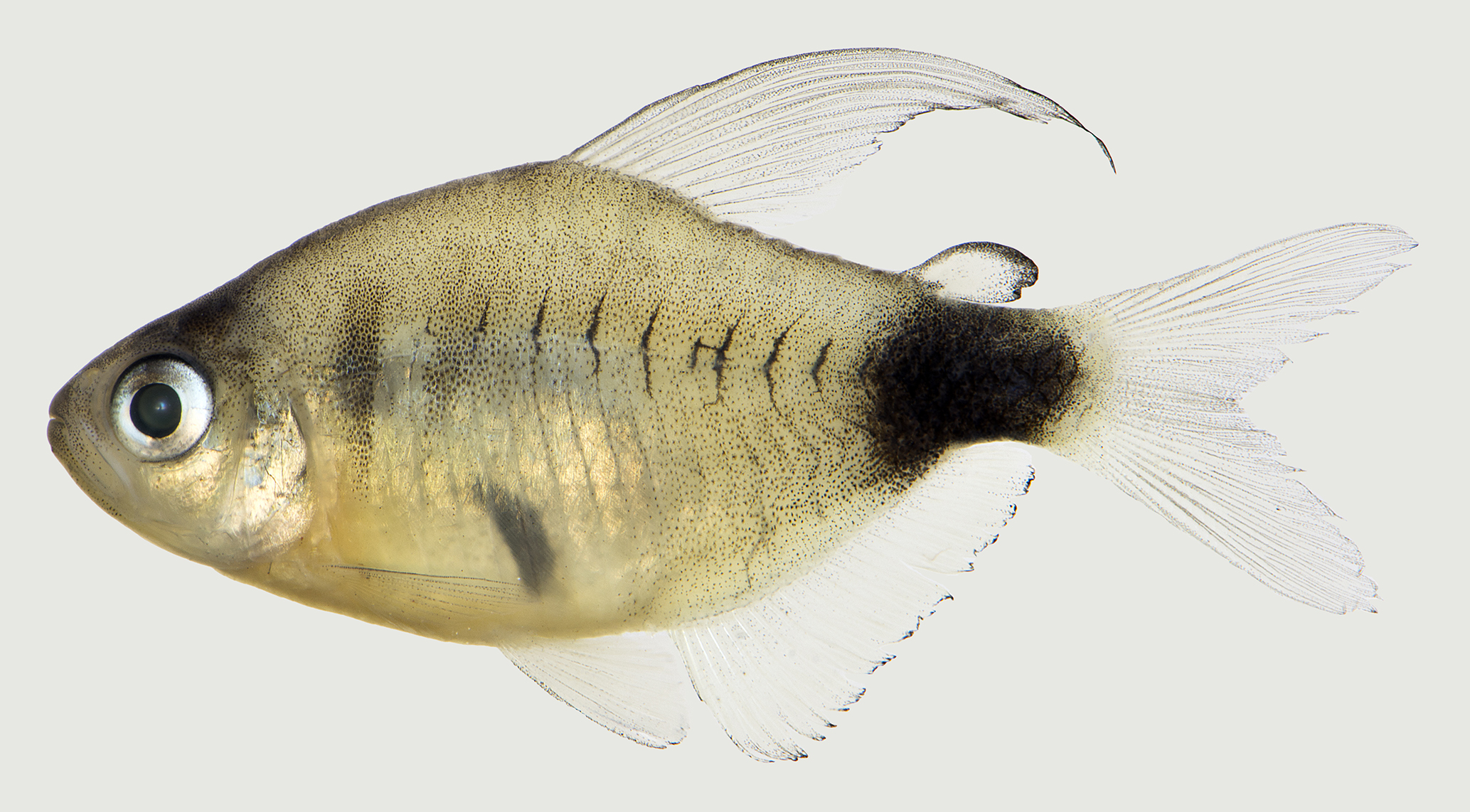
FIGURE 1 | Hyphessobrycon canarius, MZUSP 131652, holotype, 25.9 mm SL, lagoon of the rio Batovizinho, near MT-130 highway, rio Xingu basin, Paranatinga Municipality, Mato Grosso State, Brazil.
Description. Morphometric data in Tab. 1. Body compressed, greatest body depth at vertical through dorsal-fin origin. Dorsal profile convex from upper lip to vertical through nostril, straight to slightly concave from this point to distal tip of supraoccipital process, slightly convex from latter point to dorsal-fin origin, straight or slightly convex along dorsal-fin base, straight from this point to adipose-fin origin, and slightly concave along caudal peduncle. Ventral profile convex from lower lip to anal-fin origin, slightly convex along anal-fin base, and slightly concave along caudal peduncle.
TABLE 1 | Morphometric data of Hyphessobrycon canarius, including holotype and 39 paratypes (N rio Xingu = 19; males, 9 females and unsexed juveniles. N rio Juruena = 10; 4 males, 6 females and unsexed juveniles). SD = Standard deviation.
| Holotype | Rio Xingu basin | Rio Juruena basin | ||||
Range | Mean | SD | Range | Mean | SD | ||
Standard length (mm) | 25.9 | 19.9–30.2 | 25.5 | – | 19.7–26.6 | 23.9 | – |
Percentages of standard length | |||||||
Depth at dorsal-fin origin | 47.1 | 40.6–52.8 | 46.5 | 2.9 | 42.6–54.5 | 47.5 | 3.0 |
Snout to dorsal-fin origin | 55.2 | 52.9–58.0 | 55.0 | 1.2 | 54.1–56.0 | 55.3 | 0.6 |
Snout to pectoral-fin origin | 30.9 | 27.7–33.2 | 30.6 | 1.4 | 31.6–34.6 | 33.2 | 0.9 |
Snout to pelvic-fin origin | 49.4 | 49.0–53.8 | 51.3 | 1.3 | 50.8–54.5 | 52.4 | 1.3 |
Snout to anal-fin origin | 64.9 | 57.5–67.8 | 65.0 | 2.0 | 64.0–68.3 | 66.1 | 1.2 |
Caudal-peduncle depth | 12.,0 | 10.9–13.2 | 12.2 | 0.6 | 11.0–13.5 | 12.1 | 0.8 |
Caudal-peduncle length | 12.4 | 11.1–13.9 | 12.6 | 0.9 | 10.9–13.0 | 11.8 | 0.7 |
Pectoral-fin length | 25.1 | 19.7–25.1 | 22.2 | 1.3 | 21.2–24.0 | 22.3 | 1.0 |
Pelvic-fin length | – | – | – | – | – | – | – |
Males | 22.4 | 18.3–23.5 | 21.1 | 1.4 | 20.7–22.6 | 21.4 | 0.8 |
Females/immature | – | 14.7–20.3 | 18.8 | 2.1 | 18.6–21.0 | 19.6 | 0.9 |
Pelvic-fin origin to anal-fin origin | 15.4 | 12.7–16.9 | 14.7 | 1.0 | 12.7–16.3 | 14.5 | 1.3 |
Dorsal-fin base length | 17.8 | 15.7–19.8 | 17.3 | 1.0 | 17.2–18.9 | 18.0 | 0.7 |
Dorsal-fin length | – | – | – | – | – | – | – |
Males | 61.0 | 36.3–61.0 | 44.9 | 5.5 | 49.6–53.0 | 51.8 | 1.5 |
Females/immature | – | 32.3–38.1 | 35.2 | 2.3 | 34.6–41.2 | 39.2 | 2.5 |
Dorsal-fin origin to caudal-fin base | 51.4 | 47.8–55.3 | 50.7 | 1.6 | 49.7–52.6 | 51.1 | 1.1 |
Anal-fin base length | 37.8 | 32.1–37.8 | 34.4 | 1.5 | 33.5–38.7 | 35.5 | 1.7 |
Anal-fin length | 18.1 | 16.4–21.2 | 18.4 | 1.2 | 18.7–22.8 | 21.0 | 1.4 |
Eye to dorsal-fin origin | 42.1 | 38.0–43.1 | 41.1 | 1.4 | 39.4–43.2 | 40.6 | 1.2 |
Head length | 29.3 | 27.0–31.7 | 29.0 | 1.2 | 29.7–33.5 | 31.4 | 1.0 |
Percentages of head length | |||||||
Horizontal eye diameter | 39.5 | 36.5–43.1 | 39.5 | 1.6 | 38.8–42.2 | 39.9 | 1.1 |
Snout length | 26.3 | 23.1–30.5 | 26.7 | 1.4 | 22.7–26.0 | 24.8 | 1.0 |
Interorbital width | 31.6 | 27.9–34.1 | 31.5 | 1.4 | 28.8–32.5 | 30.6 | 1.0 |
Upper jaw length | 43.4 | 40.5–46.2 | 43.7 | 1.6 | 39.4–44.4 | 41.9 | 1.6 |
Jaws equal, mouth terminal. Posterior margin of maxilla at vertical through anterior margin of pupil. Premaxillary teeth arranged in two rows; outer row with 1(1), 2*(17), 3(18), or 4(4) tricuspid teeth; inner row with 4*(7) or 5(33) tri- to heptacuspid teeth, except symphyseal teeth, with four to five cusps. Maxilla with 1(5) or 2*(35) conical to pentacuspid teeth; anterior tooth larger, with more developed cusps and more cusps than posterior tooth. Dentary with 4*(39) or 5(1) large and asymmetric, tri- to hexacuspid teeth, gradually decreasing in size, followed by 7–9 diminutive conical teeth. Central cusp longer than lateral ones. Four branchiostegal rays (4). First gill arch with 11(2) or 12(2) gill-rakers in the hypobranchial+ceratobranchial, one (4) on cartilage between ceratobranchial and epibranchial, and 6(1), 7(2), or 8(1) on epibrachial.
Scales cycloid, with 4 to 6 radii from focus to posterior border, and conspicuous
circulli anteriorly. Lateral line incompletely pored, with 6(3), 7(5), 8(15), 9*(13), or 10(4) perforate scales. Longitudinal series, including perforate scales, with 31*(6), 32(19), 33(12), or 34(1). Scale rows between dorsal-fin origin and lateral line 5½(2), 6*(17), 6½(19) or 7(2). Scale rows between lateral line and pelvic-fin insertion 4(2), 4½*(25), 5(12) or 5½(1). Predorsal series irregularly arranged, with 9(1), 10*(8), 11(17), 12(9) or 13(1) scales in midline. Single row of four to seven scales covering base of anteriormost anal-fin rays. Circumpeduncular scale rows 14*(39) or 15(1). Caudal fin scaled only at base.
Supraneurals 4(4). Dorsal-fin rays ii,8(1) or ii,9*(38). First dorsal-fin pterygiophore inserted posterior to neural spine of 9th vertebra (4). Pectoral-fin rays i*(40), 9(6), 10*(20), 11(12), or 12(2). Pelvic-fin rays i,7*(40). Adipose-fin origin at vertical through base of 14th to 15th branched anal-fin rays. Anal fin with iv*(30), 21*(12), 22(13), or 23(15) rays. See Sexual Dimorphism section for description of anal-fin profile. First anal-fin pterygiophore inserted posterior to haemal spine of 15th vertebra (4). Males without bony hooks on anal- and pelvic-fin rays. Principal caudal-fin rays i,9,8,i*(18); caudal fin forked, with similar sized lobes. Dorsal procurrent caudal-fin rays 9(2) or 10(2); ventral procurrent caudal-fin rays 9(4). Total vertebrae 32(4): precaudal vertebrae 15(4) and caudal vertebrae 17(4).
Coloration in alcohol. Overall background coloration of head and body beige to pale yellow (Figs. 2–3). Dorsal region of head and middorsal region of body with dense concentration of melanophores. Snout, jaws and, anterior half of maxilla with moderate concentration of melanophores. Region of antorbital and infraorbitals 1 and 2 with few scattered melanophores. Region of infraorbitals 5 and 6, upper third of opercle and preopercle with dense concentration of melanophores. Infraorbital and opercular series retaining guanine pigmentation. Region above pupil darkened. Posterior half of maxilla and gular region with few scattered melanophores. Two dark-brown humeral blotches, vertically elongated, separated by light-beige area. First humeral blotch conspicuous, well-defined, with melanophores more concentrated on lateral line scale, encompassing approximately two scales horizontally and six or seven vertically. Second humeral blotch fainter, with melanophores evenly distributed, fading posteriorly, encompassing approximately two scales horizontally and six vertically. Body sides with scattered melanophores evenly distributed, except on anteroventral half and abdominal region with few or without melanophores. Chevron-like dark markings conspicuous along body midline. Longitudinal midlateral stripe absent. Dorsal, pectoral, pelvic, anal and caudal fins with melanophores scattered along edge of lepidotrichia and in interradial membranes. Adipose fin with dense concentration of melanophores in its edges. Adult males with broad roughly rectangular caudal peduncle blotch, expanded dorsally and ventrally, from vertical through adipose fin, encompassing entire caudal peduncle, to caudal-fin base. Anterior margin typically expanding anteroventrally towards last anal-fin rays. Females and immature specimens with slightly smaller caudal peduncle blotch.
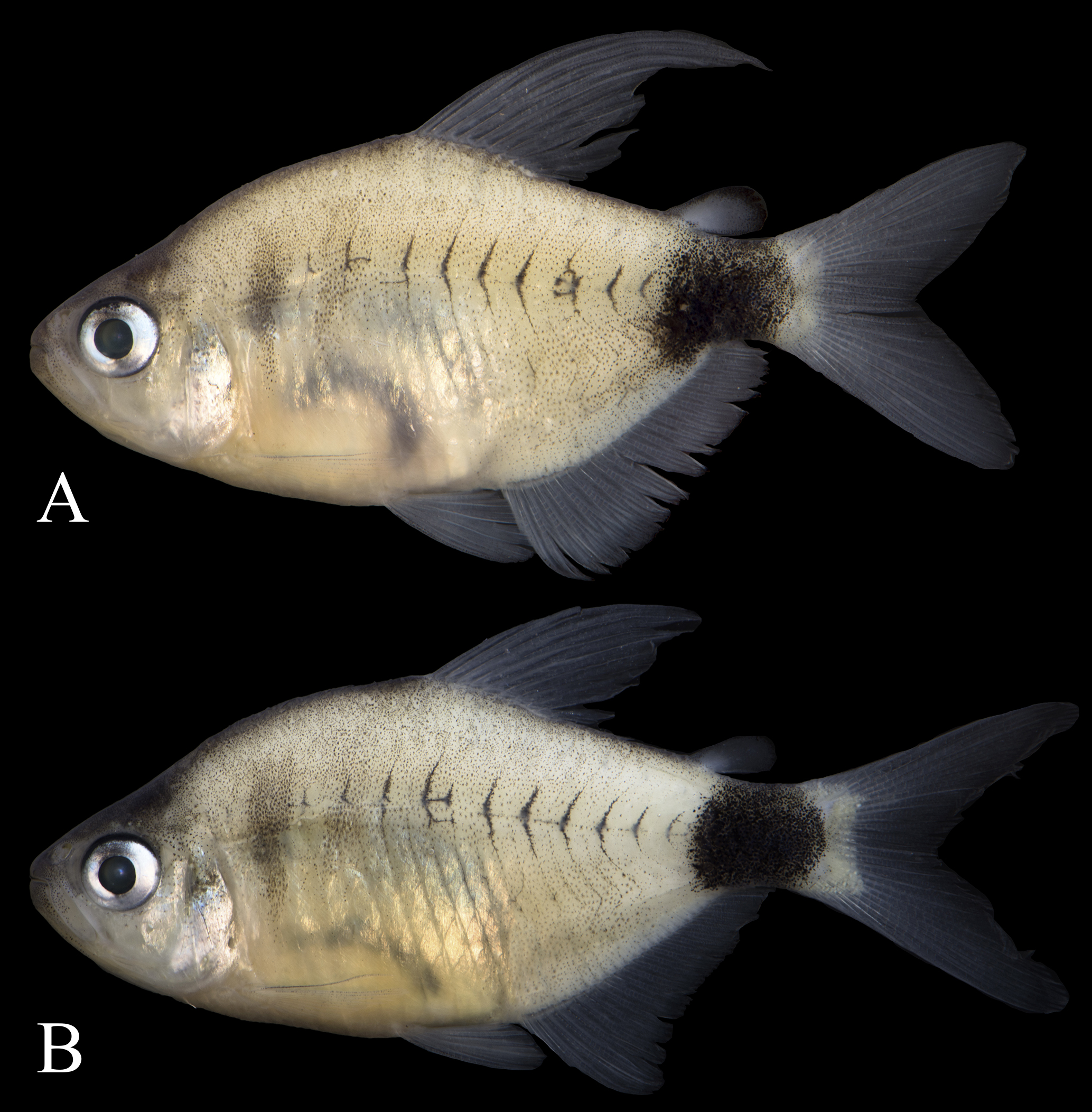
FIGURE 2 | Preserved specimens of Hyphessobrycon canarius from the rio Xingu basin, MUBIO 701, A. Male, 25.5 mm SL; B. Female, 28.6 mm SL.
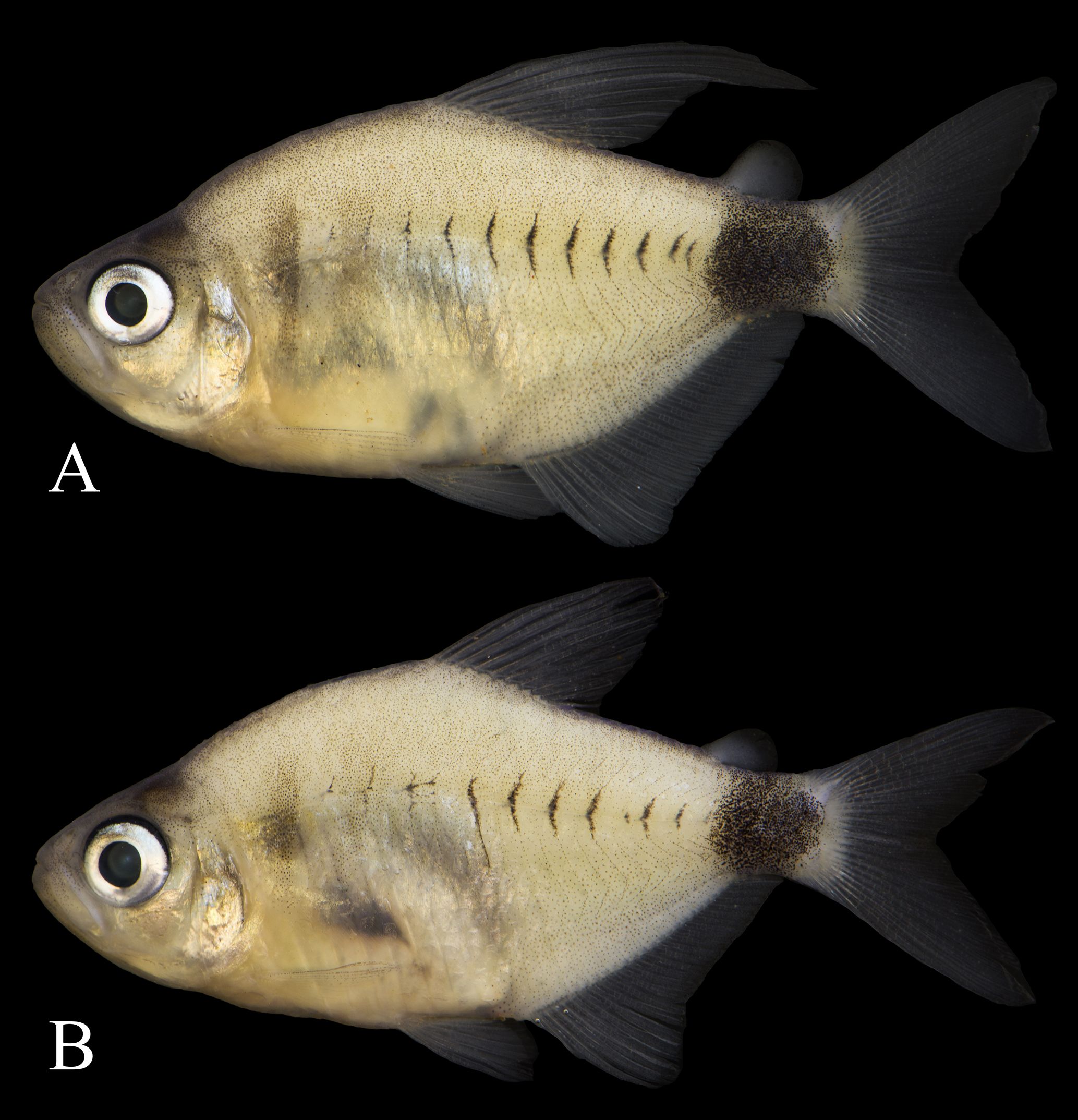
FIGURE 3 | Preserved specimens of Hyphessobrycon canarius from the rio Juruena basin, MUBIO 702, A. Male, 25.9 mm SL; B. Female, 25.3 mm SL.
Coloration in life. Based on photos of live specimens (Figs. 4–6). Overall background coloration and pattern of melanophores similar to coloration in alcohol, except for chevron-like dark markings inconspicuous along the midline of the body. Posterodorsal region of head golden to olive. Region above pupil yellow to golden. Ventral region of head and abdominal region yellow. Distal margin of flank scales silvery. Longitudinal region above lateral line golden to olive. Dorsal and caudal fin hyaline with few yellow pigmentation along edge of lepidotrichia and in interradial membranes. Adipose fin pale yellow to beige, with black edge. Pectoral fin yellow. Pelvic and anal fin yellow, with distal portion orange to red. Distal margin of anal-fin rays dark-brown to black.
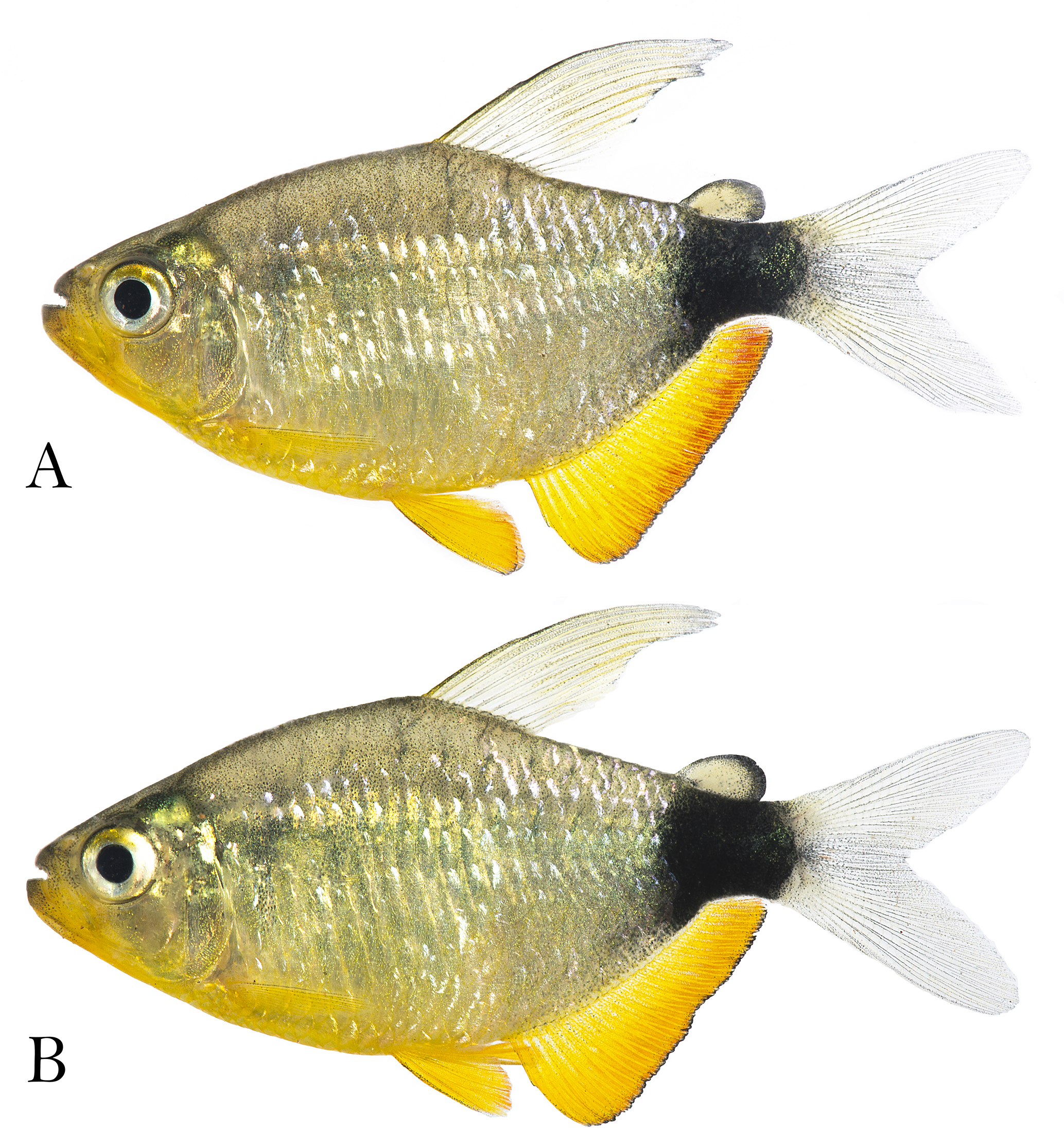
FIGURE 4 | Live specimens of Hyphessobrycon canarius from the rio Xingu basin, MUBIO 701, both males, SL uncertain.
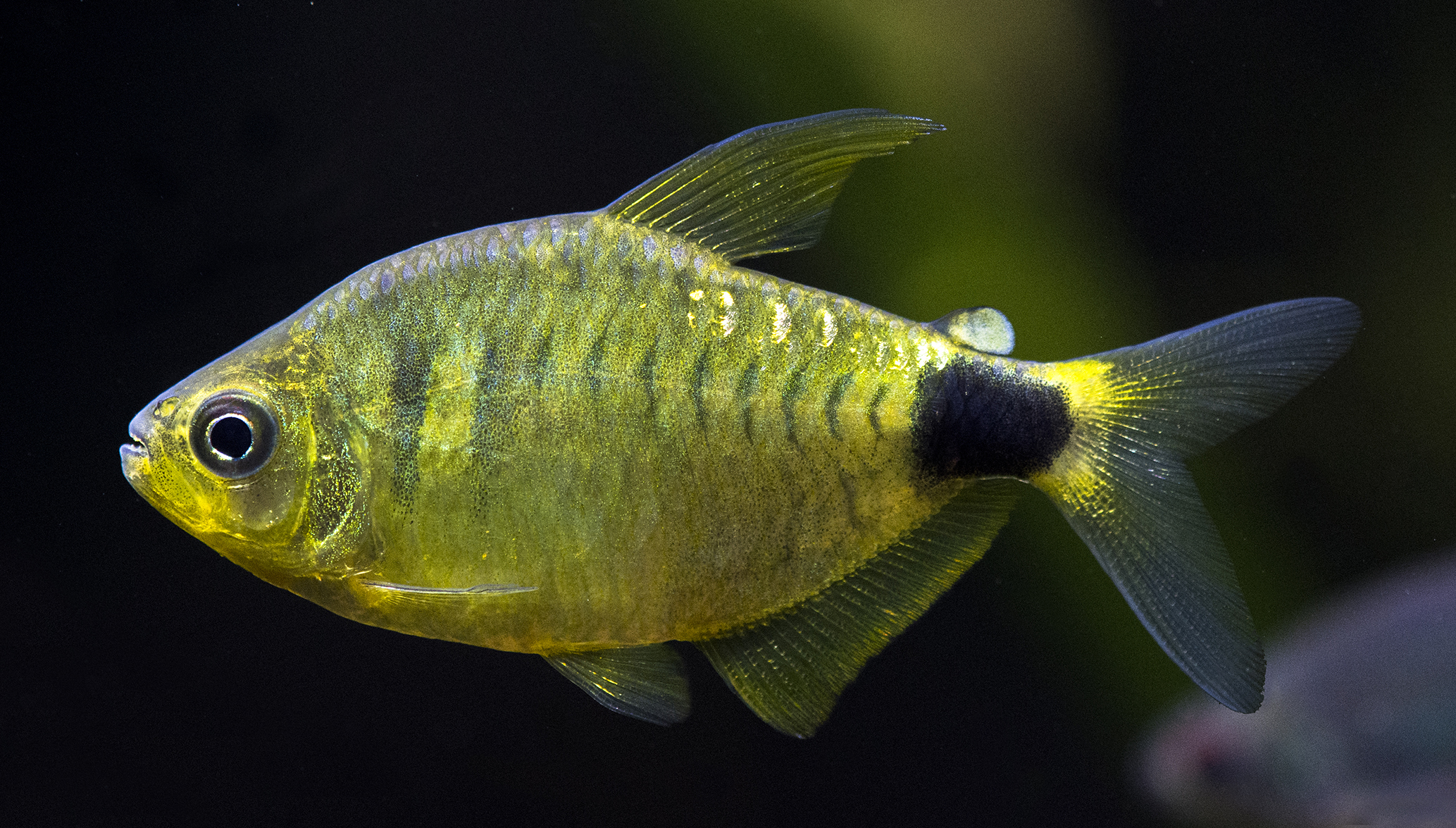
FIGURE 5 | Aquarium-held specimen of Hyphessobrycon canarius, MUBIO 703, from the ornamental fish trade, SL uncertain.
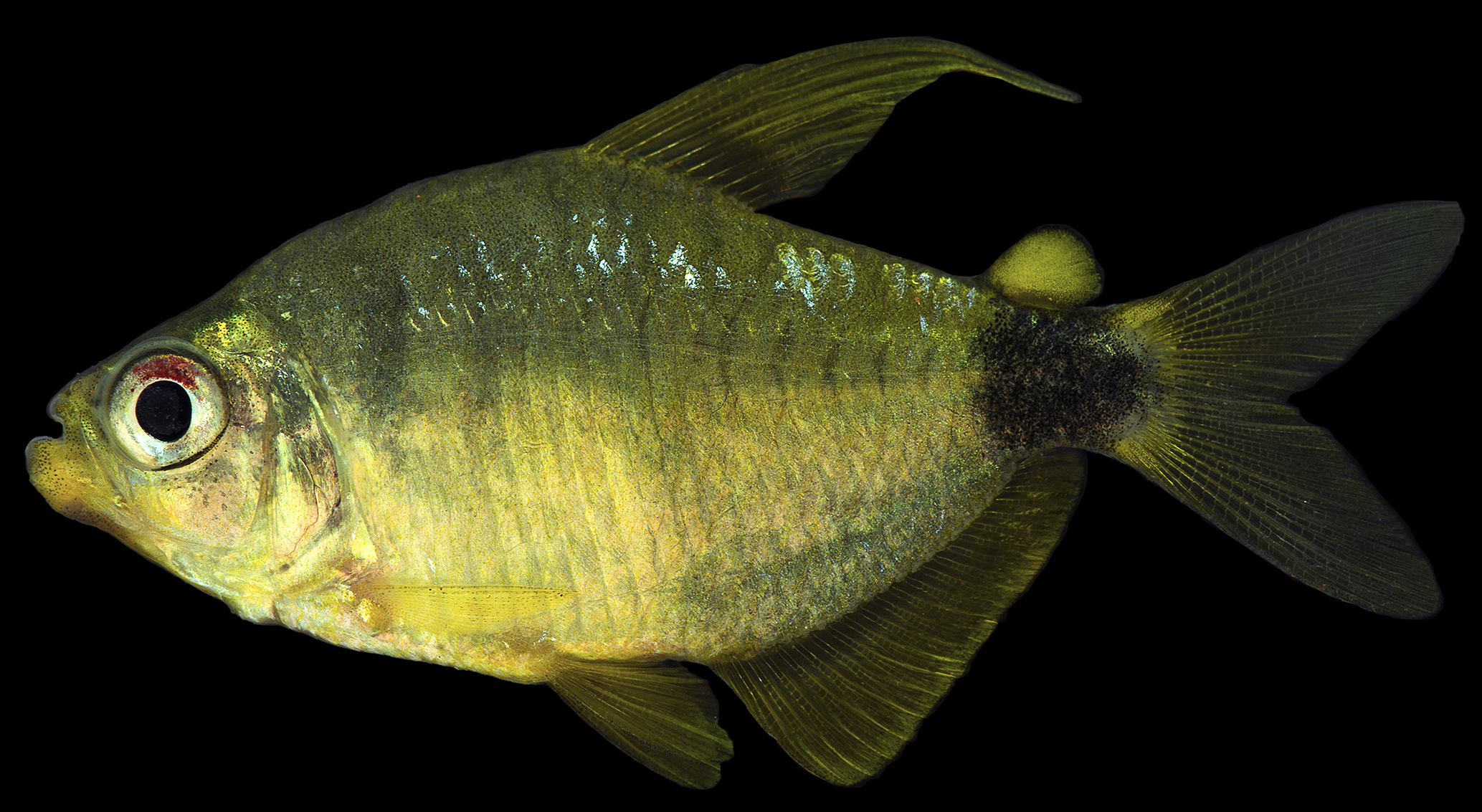
FIGURE 6 | Live male specimen of Hyphessobrycon canarius from the rio Juruena basin, MUBIO 702, SL uncertain.
Sexual dimorphism. Male body pigmentation more intense overall, including humeral blotch and caudal peduncle (vs. less intense and usually smaller in females). Distal margin pigmentation of anal and adipose fins more intense in males (vs. less intense in females). Dorsal fin in males elongate, due to elongation of the last unbranched ray and the first two or three branched rays (vs. first dorsal-fin rays in females not markedly longer than remaining rays). Pelvic-fin rays longer in males, surpassing origin of anal fin (vs. pelvic-fin rays shorter in females). Distal margin of anal-fin rays approximately straight to slightly convex, anterior lobe absent or weakly developed in males (vs. distal margin concave, with well-developed anterior lobe in females). Anal-fin base convex in males (vs. approximately straight in females). Adipose fin larger and more heavily pigmented in males. Caudal-fin lobes broader in males (vs. narrower and more pointed in females).
Intraspecific variation. Specimens from the rio Xingu basin differ from those of the rio Juruena basin in details of both morphometrics and coloration. Mature males from the Xingu exhibit a proportionally longer dorsal fin, reaching up to 61.0% of standard length, whereas in the Juruena population it attains at most 53.0% SL. Individuals from the rio Juruena basin display a more uniformly yellowish pigmentation that extends posteriorly to the base of the caudal fin (Fig. 6). In contrast, specimens from the rio Xingu basin are predominantly grayish, with yellow pigmentation largely confined to the ventral region and to the pectoral, pelvic, and anal fins (Fig. 4). Further differences are observed in the caudal peduncle blotch. In rio Xingu basin specimens, mature males possess a broader blotch that encompasses the entire caudal peduncle, with the anterior margin extending anteroventrally toward the last anal-fin rays. In females and juveniles, this blotch has rounded anterior and posterior margins (Fig. 2). Conversely, specimens from the rio Juruena basin exhibit a less intense and smaller blotch in males and females (Fig. 3). Dentition shows minor variation, with the inner premaxillary row bearing four (7) or five (15) teeth in the rio Xingu population, whereas only five teeth (10) were recorded in specimens from the rio Juruena basin. The most pronounced difference between these populations, however, lies in infraorbital development: specimens from the rio Xingu basin possess six infraorbital bones (n = 2), while those from the rio Juruena exhibit only the first, second, and third elements (n = 2).
Geographical distribution. The species is currently known from two localities distant 285 km from each other in a straight-line and belonging to distinct river basins, the rio Xingu and rio Juruena basins, Mato Grosso State, Brazil (Fig. 7). The rio Teles Pires basin lies between these two drainages and, notably, some of its headwaters are located less than 1 km from the rio Batovizinho locality. Despite targeted sampling efforts in the rio Teles Pires basin, the species has not yet been recorded there. However, ornamental fish collectors (André Bulgarelli, 2026, pers. obs.) have reported the occurrence of the species in the headwaters of the rio Teles Pires, near the municipality of Planalto da Serra, Mato Grosso State. Although we are currently unable to confirm these records, they are biogeographically plausible and would fill the apparent distributional gap of the species within the rio Teles Pires basin.
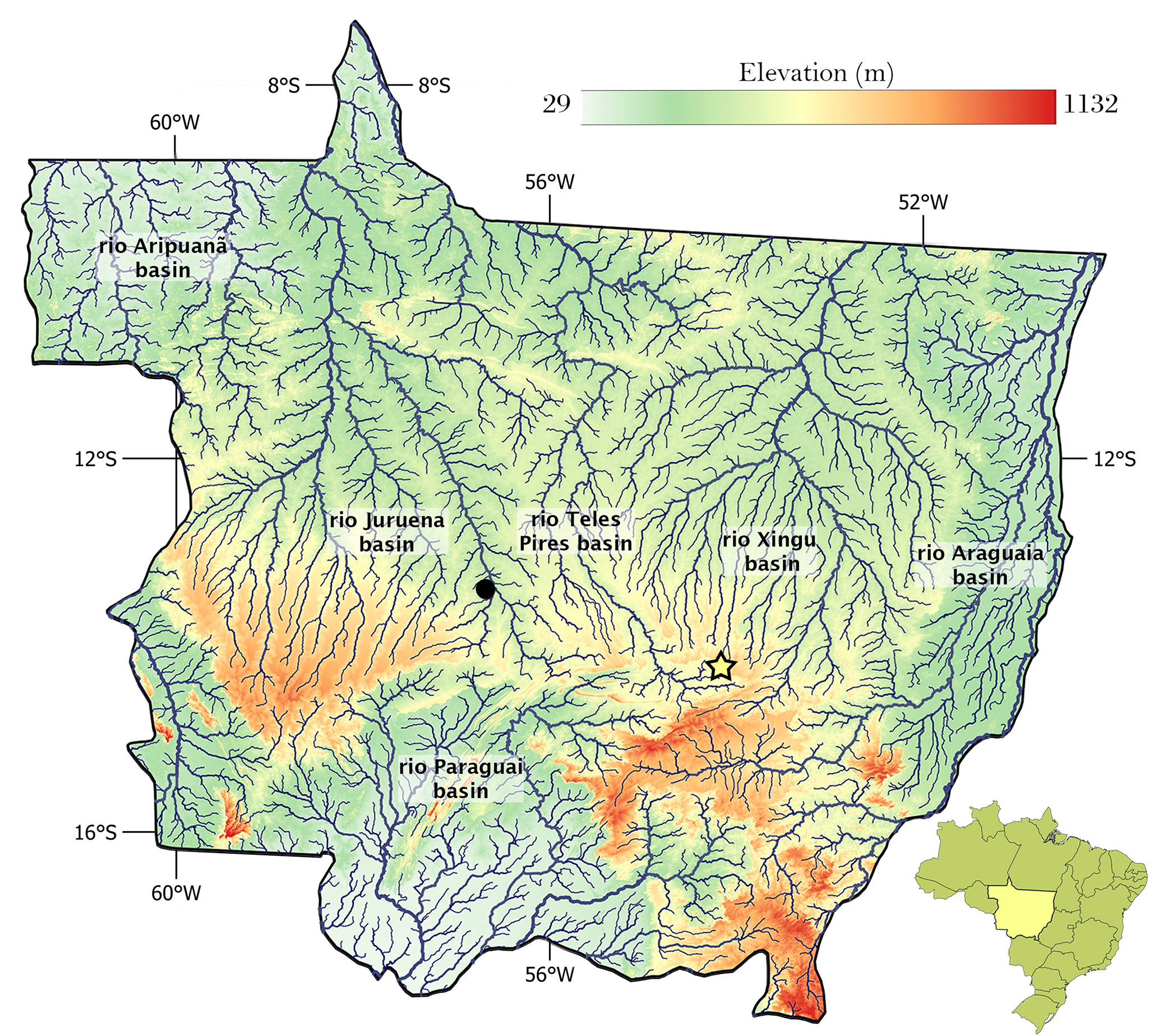
FIGURE 7 | Distribution map of Hyphessobrycon canarius in the state of Mato Grosso, Brazil; star indicates the type locality.
Etymology. The specific name canarius means “pertaining to dogs”, from which the name of the Canary Islands and the canary bird (Serinus canaria (Linnaeus, 1758)) are derived. However, the name is used here as an allusion to the bright yellow body coloration of the species, which resembles several small, yellow Neotropical passerine birds popularly known as “canário” in Brazil (e.g., Sicalis spp. and Myiothlypis flaveola). Additionally, the name refers to the córrego Canário, one of the localities where the new species was collected. A Latin adjective.
Conservation status. The species is currently known from only two localities in distinct river basins: Córrego Canário (rio Juruena basin) and a lagoon associated with the rio Batovizinho (rio Xingu basin) (Fig. 8). Extensive sampling efforts were conducted in surrounding areas with the aim of locating additional populations and refining the known distribution of the species, particularly within the rio Teles Pires basin; however, these attempts were unsuccessful. Despite its apparently restricted distribution, the species is locally abundant at both known localities. Córrego Canário is well preserved, with the stream bordered by intact riparian vegetation, and no evident anthropogenic threats were detected. In contrast, the lagoon at the rio Batovizinho represents an artificial impoundment formed by a farm road crossing the river. The surrounding landscape is dominated by soybean cultivation. Nevertheless, the species is abundant at this site and represents one of the most common fish species in the lagoon, suggesting that it has either benefited from or has not been negatively affected by habitat modification. In this locality, habitat transformation has already occurred and does not appear to have compromised the persistence of the species, indicating a high degree of ecological tolerance to altered environments or, alternatively, a preference for lentic conditions. Another potential threat is collection for the ornamental fish trade; however, given its low commercial value and limited demand, the species is apparently unlikely to be significantly affected by this activity. Based on its local abundance, apparent tolerance to habitat modification, and lack of significant ongoing threats, H. canarius should be classified as Least Concern (LC) under the categories and criteria of the International Union for Conservation of Nature (IUCN, 2024).
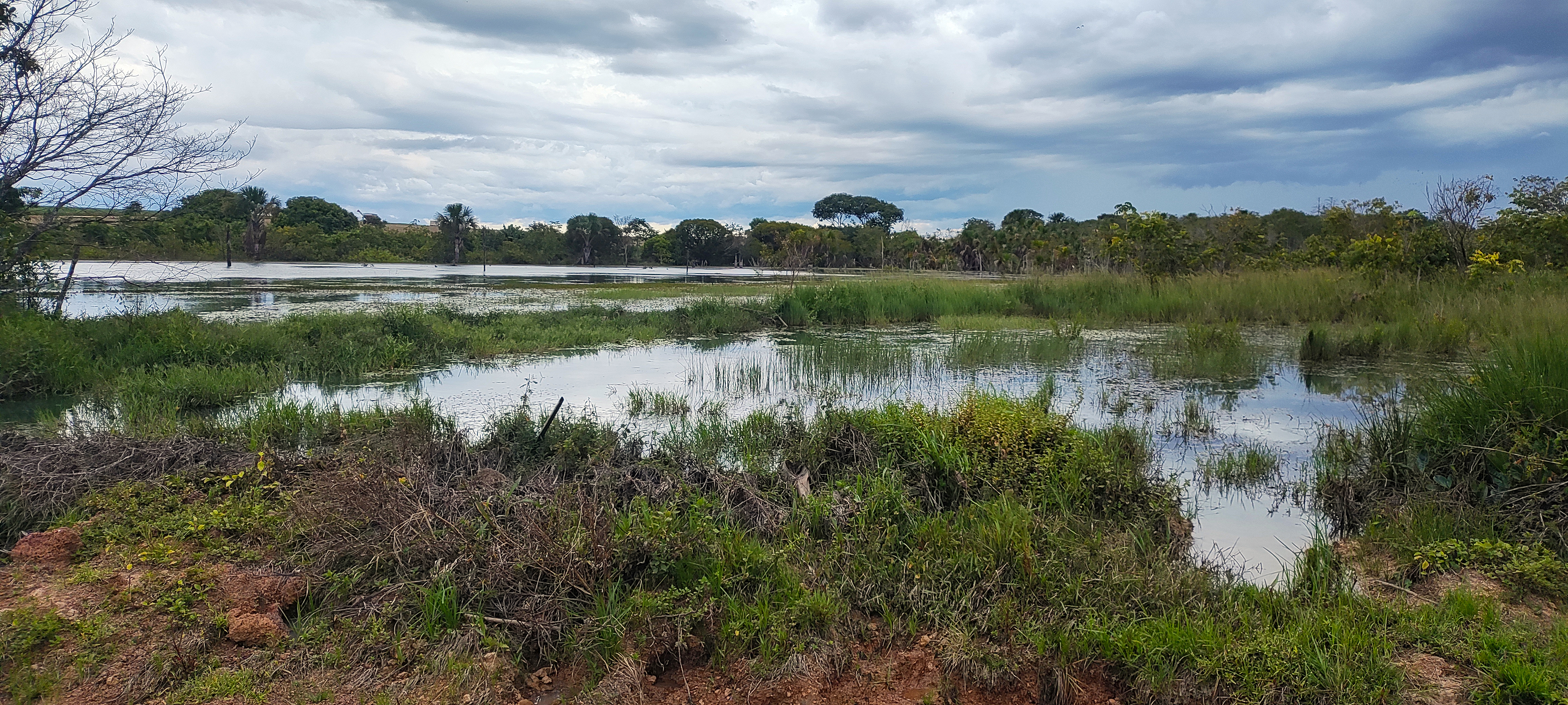
FIGURE 8 | Type locality of Hyphessobrycon canarius, lagoon of the rio Batovizinho, near MT-130 highway, rio Xingu basin, Paranatinga Municipality, Mato Grosso State, Brazil, 14°15’19.81”S 54°10’17.04”W.
Discussion
As noted in the “Intraspecific variation” section, populations from the rio Juruena and rio Xingu basins exhibit variation in details of morphometrics, meristics, and coloration. Despite these differences, we interpret them as conspecific, as none of them is sufficiently discrete or diagnostic to unambiguously support species-level separation. We therefore refrain from splitting these populations in order to avoid taxonomic inflation (Isaac et al., 2004). As emphasized in a closely comparable case by Dagosta et al. (2026), recognizing geographically isolated populations as distinct species without robust evidence may artificially inflate species richness and obscure underlying evolutionary patterns. Delimiting species solely on the basis of minor geographic variation risks overestimating biodiversity, with important consequences for its interpretation and conservation.
One of the most distinctive features of H. canarius is the presence of chevron marks on the body. Chevron marks are laterally arranged, V-shaped dark striations, with the apex oriented anteriorly. These markings are not merely superficial pigment patterns but are associated with the underlying vascular system. In teleost fishes, the trunk musculature is supplied by arteries and veins organized according to the segmental structure of the body. In acestrorhamphids, the chevrons correspond to the lateral portions of a major artery or vein supplying the outer trunk musculature, which typically bears two well-developed intersegmental branches, one dorsal and one ventral. In some species, these vascular structures are clearly visible due to pigmentation of the vessels themselves (Dagosta, 2011).
Although this vascular arrangement represents a fundamental component of the teleostean anatomical ground plan, pigmentation of these vessels has been reported primarily in lineages within Acestrorhamphidae. Species exhibiting pigmented chevrons include Astyanacinus moorii (Boulenger, 1892), Astyanax boliviensis Ruiz-C., Román-Valencia, Taphorn, Buckup & Ortega, 2018, A. leopoldi Géry, Planquette & Le Bail, 1988, A. multidens (Pearson, 1924), A. orthodus Eigenmann, 1907, A. superbus Myers, 1942, A. villwocki Zarske & Géry, 1999, A. yariguies (Torres-Mejia, Hernández & Senechal, 2012), Hyphessobrycon bifasciatus Ellis, 1911, H. ecuadoriensis Eigenmann & Henn, 1914, H. heliacus, H. igneus Miquelarena, Menni, López & Casciotta, 1980, H. panamensis Durbin, 1908, Jupiaba maroniensis (Géry, Planquette & Le Bail, 1996), J. pinnata (Eigenmann, 1909), Makunaima pittieri (Eigenmann, 1920), Nematocharax venustus Weitzman, Menezes & Britski, 1986, N. varii Barreto, Silva, Batalha-Filho, Affonso & Zanata, 2018 and Pseudochalceus lineatus Kner, 1863.
Regarding the phylogenetic significance of chevron marks among species traditionally assigned to Astyanax, Dagosta (2011) discussed that the genus Astyanacinus Eigenmann, 1907, includes not only its type species Astyanacinus moorii but also A. multidens Pearson, 1924, A. orthodus Eigenmann, 1907, A. superbus Myers, 1942, and A. villwocki Zarske & Géry, 1999, based, among other characters, on the presence of these chevron marks. Astyanax boliviensis and A. yariguies were subsequently described and are herein hypothesized to belong to this assemblage based on the presence of these chevron marks and an elongate maxilla.
According to the phylogenetic topology recovered by Melo et al. (2024), Hyphessobrycon igneus, is the sister species of H. bifasciatus, within Acestrorhamphinae, whereas H. ecuadoriensis is closely related to H. panamensis within Hyphessobryconinae. Hyphessobrycon heliacus is recovered as the sister species of H. vilmae Géry, 1966, and is also placed within Hyphessobryconinae, although in a distinct clade composed primarily of species endemic to the Brazilian Shield. Nematocharax venustus is placed within Stichonodontinae as the sister group to a clade comprising Hasemania Ellis, 1911, and several species of Hemigrammus, Hyphessobrycon, and Moenkhausia Eigenmann,1903. Pseudochalceus lineatus is recovered within Rhoadsiinae, whereas Makunaima pittieri is placed within Megalamphodinae; however, this latter placement is questionable, as it is based on a misidentified specimen, with the voucher corresponding in fact to Makunaima guianensis (FCTL, 2026, pers. obs.). Only Astyanax leopoldi, J. maroniensis, J. pinnata and N. varii were not included in any published phylogenetic analyses, and their precise phylogenetic positions therefore remain uncertain. The topology recovered by Melo et al. (2024) clearly demonstrates that chevron marks on the lateral surface of the body have evolved multiple times independently, representing repeated instances of homoplasy across distinct acestrorhamphid lineages.
Among the known species of Hyphessobrycon, H. canarius closely resembles a group of species initially proposed by Ingenito et al. (2013) as a putative monophyletic assemblage comprising Hyphessobrycon elachys, H. heliacus, H. loweae, H. moniliger Moreira et al. 2002 and H. peugeoti. This assemblage was later expanded by Pastana, Ohara (2016), who suggested that H. procyon might also belong to the group and referred to it as the H. loweae group. According to Ingenito et al. (2013) and Pastana, Ohara (2016), this group is diagnosed by a suite of characters, including elongation of the dorsal and pelvic fins in mature males, absence of hooks on fin rays, a straight distal margin of the anal fin, and enlargement of the caudal peduncle blotch. All of these features are also present, to a greater or lesser extent, in H. canarius, indicating that the new species may likewise be a member of this group, a hypothesis that awaits confirmation through phylogenetic analysis. The genomic study of Melo et al. (2024), based on ultraconserved elements, corroborates a close evolutionary relationship between H. heliacus and H. loweae, although these species were not recovered as sister taxa. On the other hand, H. moniliger was recovered in a different clade within Hyphessobryconinae that includes several Jupiaba species (Melo et al., 2024).
The characterization of the Hyphessobrycon loweae species group requires refinement in light of the growing body of available evidence. The absence of hooks on the fins of mature males, originally proposed as a diagnostic feature of the group (cf. Ingenito et al., 2013; Pastana, Ohara, 2016), is more plausibly interpreted as a plesiomorphic condition, given that it is shared with a much more inclusive clade of Hyphessobrycon species from the Brazilian Shield (cf. Melo et al., 2024). Within this clade, which also includes Erythrocharax altipinnis Netto-Ferreira, Birindelli, Sousa, Mariguela & Oliveira, 2013, Phycocharax rasbora Ohara, Mirande & Lima, 2017, and several other species of Hyphessobrycon, fin hooks are universally absent, with only two exceptions, Dinotopterygium diodon Frainer, Carvalho, Bertaco & Malabarba, 2021 and Hyphessobrycon rutiliflavidus Carvalho, Langeani, Miyazawa & Troy 2008 (cf. Carvalho et al., 2008; Frainer et al., 2021). Accordingly, the absence of fin hooks appears to be informative at a broader phylogenetic scale rather than a synapomorphy restricted to the H. loweae group.
Another character used to diagnose the H. loweae group is the presence of a straight distal margin of the anal fin in males (cf. Ingenito et al., 2013; Pastana, Ohara, 2016). As with fin hooks, this trait is also informative in a more inclusive context. In the phylogenomic hypothesis of Melo et al. (2024), all species of Hyphessobrycon from the Brazilian Shield, with the exception of H. juruna Faria, Lima & Bastos, 2018, exhibit males with anal-fin rays of approximately equal length, forming a straight distal margin and lacking a distinct anterior lobe formed by elongation of the posteriormost unbranched and anteriormost branched rays. This condition is likewise present in Erythrocharax altipinnis and Phycocharax rasbora, which are part of the same clade recovered by Melo et al. (2024). Consequently, this character cannot be considered diagnostic for the H. loweae group alone.
An additional character proposed by Pastana, Ohara (2016) to define the H. loweae group is the presence of seven or more cusps on the teeth of the inner premaxillary row. Once again, this character appears to be informative at a more inclusive phylogenetic level. All species of Hyphessobrycon from the Brazilian Shield recovered by Melo et al. (2024) exhibit this condition, with the sole exception of H. psittacus. Accordingly, the presence of seven or more cusps on the inner premaxillary teeth is better interpreted as a synapomorphy of the Brazilian Shield Hyphessobrycon clade sensu Melo et al. (2024) rather than a diagnostic feature exclusive to the H. loweae group. This interpretation is consistent with that of Dagosta et al. (2026) in their description of H. plumbellus, another Brazilian Shield species lacking fin hooks, exhibiting a straight anal-fin margin in males, and possessing up to seven cusps on the teeth of the inner premaxillary row.
The reinterpretation of some of the diagnostic characters of the H. loweae group in light of new evidence does not necessarily invalidate its hypothesized monophyly. For instance, as emphasized by Ingenito et al. (2013), males of H. elachys, H. heliacus, H. loweae, and H. peugeoti exhibit a unique pattern of dorsal-fin elongation within the genus, in which the last unbranched and the first three branched dorsal-fin rays are markedly longer than the remaining rays and often form a filament. In contrast, other species of Hyphessobrycon with relatively elongate dorsal fins have all rays subequal in length, such as H. notidanos, H. diastatos, and members of the rosy tetra group sensu Weitzman, Palmer (1997). Melo et al. (2024) subsequently transferred the “rosy tetra” clade to the genus Megalamphodus and reassigned Hyphessobrycon diastatos to Hasemania, now Hasemania diastata (Dagosta, Marinho & Camelier, 2014). These taxonomic changes confirm that dorsal-fin elongation in male Hyphessobrycon is not homologous across the genus. The pattern of dorsal-fin elongation observed in males of H. canarius is identical to that present in H. elachys, H. heliacus, H. loweae, H. peugeoti, and H. procyon, further reinforcing the hypothesis that the new species belongs to this assemblage.
From a biogeographic perspective, the H. loweae group is notably cohesive. Most species are confined to the Brazilian Shield, with the exception of two species. Hyphessobrycon elachys, is a lowland species, and exhibit an essentially allopatric distribution. Hyphessobrycon moniliger occurs in sympatry with H. loweae in the upper rio Xingu. Notably, molecular evidence presented by Melo et al. (2024) indicates that H. moniliger is not closely related to the remaining members of the H. loweae group. It is also the only species within the group exhibiting a comparatively broad distribution, encompassing the rio Tocantins-Araguaia, Xingu, and Juruena basins. The remaining species display more restricted and non-overlapping distributions: H. elachys occurs in the rio Paraguay and upper rio Guaporé basins; H. heliacus is distributed in the middle to lower rio Teles Pires; H. loweae inhabits the upper rio Xingu and Araguaia basins; H. peugeoti is known from the middle rio Juruena; and H. procyon is restricted to the upper rio Juma (rio Madeira basin).
Within the H. loweae group, the species morphologically most similar to the new taxon is H. heliacus (Fig. 9). Both species share a golden body coloration and conspicuous lateral chevrons, features that strongly suggest a close evolutionary relationship. Their similarity is such that they are often treated as a single entity in the aquarium trade by ornamental fish collectors, with both species being marketed under the common name Kitty Tetra, originally associated with H. heliacus.As noticed earlier, H. canarius entered the aquarium market in the 1980s, having been introduced by the North American aquarist Rosario LaCorte. In contrast, H. heliacus was only formally described in 2002, after which the name Kitty Tetra became widely applied to that species. With the formal description of H. canarius, it will now be possible to distinguish these taxa more clearly, thereby enabling more precise conservation attention and fisheries management strategies directed at each species individually.
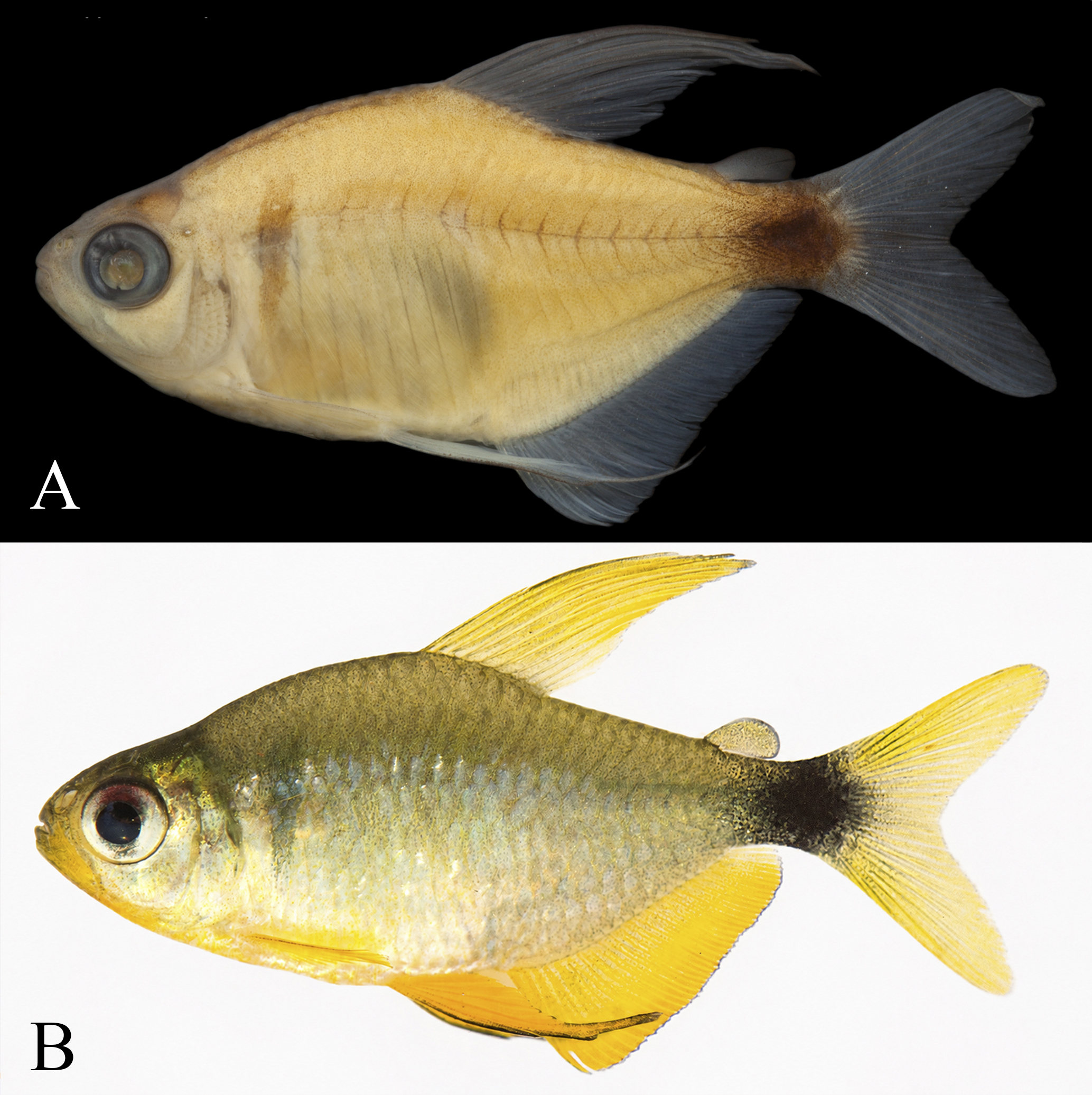
FIGURE 9 | Mature males of Hyphessobrycon heliacus from the ribeirão do Macuco, rio Teles Pires basin: A.Holotype, MZUSP 52891, 26.7 mm SL; B. Topotype, MUBIO 1100, 22.8 mm SL.
Comparative material examined. Hyphessobrycon heliacus: MUBIO 1100, 7, 15.9–22.8 mm SL; MZUSP 115299, 20, 17.9–24.5 mm SL; MZUSP 116606, 9, 13.3–26.8 mm SL. ZUEC 11227, 22, 20.4–26.4 mm SL. Hyphessobrycon loweae: MZUSP 102816, 20, 20.4–33.6 mm SL; ZUEC 12774, 20, 19.1–28.2 mm SL; ZUEC 17627, 13, 15.6–27.5 mm SL; ZUEC 17883, 81, 13.0–27.6 mm SL. Hyphessobrycon notidanos:MZUSP 155228, 14, 12.6–19.7 mm SL. Hyphessobrycon procyon: MZUSP 122613, 21, 15.4–26.2 mm SL; MZUSP 122444, 3, 16.8–20.3 mm SL; MZUSP 122408, 17, 9.3–27.1 mm SL; MZUSP 122543, 78, 16.9–31.9 mm SL; MZUSP 122345, 13, 16.5–31.9 mm SL. Nematocharax venustus: MZUSP 54797, 2, 39.0–39.2 mm SL.
Acknowledgments
We are grateful to an anonymous reviewer and José L. Birindelli (MZUEL) for their valuable suggestions and insightful comments. We thank André Bulgarelli for indicating the localities where the species occurs. The authors are grateful to André Bulgarelli, Bárbara Nagamatsu (UFGD), and Gabriel Piovezan (UFGD) for their invaluable support and assistance during fieldwork. We also thank Murilo Pastana, Osvaldo Oyakawa, and Michel Gianeti (MZUSP) for their curatorial assistance and for facilitating access to specimens. We also thank the South American Characiformes Inventory (SACI; FAPESP grant no 11/50282-7) for providing photograph 9A.
References
Carvalho FR, Langeani F, Miyazawa CS, Troy WP. Hyphessobrycon rutiliflavidus n. sp., a new characid fish from the upper rio Paraguai, State of Mato Grosso, Brazil (Characiformes: Characidae). Zootaxa. 2008; 1674(1):39–49. https://doi.org/10.11646/zootaxa.1674.1.3
Dagosta FCP. Taxonomia e relações filogenéticas do gênero Astyanacinus Eigenmann, 1907 (Characiformes: Characidae). [Master Thesis]. Ribeirão Preto: Universidade de São Paulo; 2011. https://doi.org/10.11606/D.59.2017.tde-06092016-173630
Dagosta FCP, de Pinna M. The fishes of the Amazon: distribution and biogeographical patterns, with a comprehensive list of species. Bull Am Mus Nat Hist. 2019; 2019(431):1–163. https://doi.org/10.1206/0003-0090.431.1.1
Dagosta FCP, Ohara WM, Seren TJ. One species, two basins: a new Hyphessobrycon (Characiformes: Acestrorhamphidae) from the upper rio Juruena and rio Guaporé basins, Mato Grosso, Brazil. Neotrop Ichthyol. 2026; 24(1):e250125. https://doi.org/10.1590/1982-0224-2025-0125
Eigenmann CH. Preliminary descriptions of new genera and species of tetragonopterid characins – Zoölogical Results of the Thayer Brazilian expedition. Bull Mus Comp Zool. 1908; 52(6):91–106.
Eigenmann CH. The American Characidae [Part 2]. Mem Mus Comp Zool. 1918; 43(2):103–208.
Fink WL, Weitzman SH. The so-called cheirodontin fishes of Central America with description of two new species (Pisces: Characidae). Smithson Contrib Zool. 1974; 172:1–46. https://doi.org/10.5479/si.00810282.172
Frainer G, Carvalho FR, Bertaco VA, Malabarba LR. Museum specimens reveal a rare new characid fish genus, helping to refine the interrelationships of the Probolodini (Characidae: Stethaprioninae). Syst Biodivers. 2021; 19(8):1135–48. https://doi.org/10.1080/14772000.2021.1986167
Fricke R, Eschmeyer WN. Eschmeyer’s catalog of fishes: guide to fish collections [Internet]. San Francisco: California Academy of Science; 2026. Available in http://researcharchive.calacademy.org/research/ichthyology/catalog/fishcatmain.asp
Géry J. Characoids of the World. New Jersey: T. F. H. Publications; 1977.
Ingenito LFS, Lima FCT, Buckup PA. A new species of Hyphessobrycon Durbin (Characiformes: Characidae) form the rio Juruena basin, central Brazil, with notes on H. loweae Costa & Géry. Neotrop Ichthyol. 2013; 11(1):33–44. https://doi.org/10.1590/S1679-62252013000100004
International Union for Conservation of Nature (IUCN). Standards and petitions committee. Guidelines for using the IUCN Red List categories and criteria. Version 16 [Internet]. Gland; 2024. Available from: http://www.iucnredlist.org/documents/RedListGuidelines.pdf
Isaac NJB, Mallet J, Mace GM. Taxonomic inflation: its influence on macroecology and conservation. Trends Ecol Evol. 2004; 19(9):464–69. https://doi.org/10.1016/j.tree.2004.06.004
Lima FCT, Silva-Oliveira C, Oliveira C, Faria TCF. A new Hyphessobrycon (Characiformes: Acestrorhamphidae) from the Central Amazon basin, Brazil. Pap Avulsos Zool. 2025; 65:e202565011. https://doi.org/10.11606/1807-0205/2025.65.011
Lucanus O. More new tetras – no end in sight. Amazonas Special Edition. 2021; 1:106–07.
Melo BF, Ota RP, Benine RC, Carvalho FR, Lima FCT, Mattox GMT et al. Phylogenomics of Characidae, a hyperdiverse Neotropical freshwater fish lineage, with a phylogenetic classification including four families (Teleostei: Characiformes). Zool J Linn Soc. 2024; 202(1):1–37. https://doi.org/10.1093/zoolinnean/zlae101
Mirande JM. Phylogeny of the family Characidae (Teleostei: Characiformes) from characters to taxonomy. Neotrop Ichthyol. 2010; 8(3):385–568. https://doi.org/10.1590/S1679-62252010000300001
Mirande JM. Morphology, molecules and the phylogeny of Characidae (Teleostei, Characiformes). Cladistics. 2019; 35(3):282–300. https://doi.org/10.1111/cla.12345
Ohara WM, Lima FCT. Moenkhausia uirapuru, a new species from the upper rio Guaporé, Chapada dos Parecis, Mato Grosso, Brazil (Teleostei: Characidae). Ichthyol Explor Freshw. 2015; 26(2):159–70.
Oliveira C, Avelino GS, Abe KT, Mariguela TC, Benine RC, Orti G et al. Phylogenetic relationships within the speciose family Characidae (Teleostei: Ostariophysi: Characiformes) based on multilocus analysis and extensive ingroup sampling. BMC Evol Biol. 2011; 11:1–25. https://doi.org/10.1186/1471-2148-11-275
Pastana MNL, Ohara WM. A new species of Hyphessobrycon Durbin (Characiformes: Characidae) from rio Aripuanã, rio Madeira basin, Brazil. Zootaxa. 2016; 4161(3):386–98. https://doi.org/10.11646/zootaxa.4161.3.6
Ruiz-C RI, Román-Valencia C, Taphorn DC, Buckup PA, Ortega H. Revision of the Astyanax orthodus species-group (Teleostei: Characidae) with descriptions of three new species. Eur J Taxon. 2018; 402:1–45. https://doi.org/10.5852/ejt.2018.402
Sabaj MH. Codes for Natural History Collections in Ichthyology and Herpetology (online supplement). Version 9.7; 2025. Available from: https://asih.org
Taylor WR, Van Dyke GC. Revised procedures for staining and clearing small fishes and other vertebrates for bone and cartilage study. Cybium. 1985; 9(2):107–19.
Toledo-Piza M, Baena EG, Dagosta FCP, Menezes NA, Andrade M, Benine RC et al. Checklist of the species of the Order Characiformes (Teleostei: Ostariophysi). Neotrop Ichthyol. 2024; 22(1):1–548. https://doi.org/10.1590/1982-0224-2023-0086
Weitzman SH, Palmer L. A new species of Hyphessobrycon (Teleostei: Characidae) from the Neblina region of Venezuela and Brazil, with comments on the putative ‘rosy tetra clade’. Ichthyol Explor Freshw. 1997; 7(3):209–42.
Authors

Fernando Cesar Paiva Dagosta1.2, Thomaz Jefrey Seren1.3 , Flávio Cesar Thadeo de Lima4 and Renata Rúbia Ota1.2
[1] Laboratório de Biogeografia e Sistemática de Peixes (LABISPE/FCBA), Universidade Federal da Grande Dourados, Rodovia Dourados/Itahum, km 12, 79804-970, Dourados, MS, Brazil. (FCPD) ferdagosta@gmail.com, (TJS) thomazjefrey@gmail.com (corresponding author), (RRO) renataota@ufgd.edu.br.
[2] Museu da Biodiversidade (MUBIO), Universidade Federal da Grande Dourados, Rodovia Dourados/Itahum, km 12, 79804-970, Dourados, MS, Brazil.
[3] Programa de Pós-Graduação em Biodiversidade e Meio Ambiente (PPGBMA/FCBA), Universidade Federal da Grande Dourados, Rodovia Dourados/Itahum, km 12, 79804-970, Dourados, MS, Brazil.
[4] Museu de Diversidade Biológica, Instituto de Biologia, Universidade Estadual de Campinas, Rua Monteiro Lobato, 255, 13083 862, Campinas, SP, Brazil. (FCTL) fctlima@gmail.com.
Authors’ Contribution 

Fernando Cesar Paiva Dagosta: Conceptualization, Data curation, Formal analysis, Funding acquisition, Investigation, Methodology, Project administration, Writing-original draft, Writing-review and editing.
Thomaz Jefrey Seren: Conceptualization, Data curation, Formal analysis, Investigation, Methodology, Validation.
Flávio Cesar Thadeo de Lima: Conceptualization, Data curation, Investigation, Writing-original draft, Writing-review and editing.
Renata Rúbia Ota: Conceptualization, Data curation, Formal analysis, Funding acquisition, Investigation, Methodology, Supervision, Writing-original draft, Writing-review and editing.
Ethical Statement
Specimens were collected under IBAMA collection permit 74907–60634/2025.
Competing Interests
The author declares no competing interests.
Data availability statement
The authors confirm that the data supporting the findings of this study are available within the article.
AI statement
The authors used AI-assisted technology (ChatGPT 5.3 – OpenAI) for grammatical revision.
Funding
This paper was supported by INCT-Peixes, funded by MCTIC/CNPq (proc. 405706/2022–7), and by CNPq (proc. 401459/2025–0). FCPD is supported by CNPq (proc. 304864/2024–2) and TJS by CNPq (proc. 141967/2025–0).
Peer Review
How to cite this article
Dagosta FCP, Seren TJ, Lima FCT, Ota RR. The Lacorte sunset tetra revealed: a new colorful and sexually dimorphic Hyphessobrycon from the upper rio Juruena and rio Xingu basin, Mato Grosso, Brazil. Neotrop Ichthyol. 2026; 24(4):e260074. https://doi.org/10.1590/1982-0224-2026-0074
Copyright
This is an open access article under the terms of the Creative Commons Attribution License, which permits use, distribution and reproduction in any medium, provided the original work is properly cited.
Distributed under
Creative Commons CC-BY 4.0

© 2026 The Authors.
Neotropical Ichthyology published by SBI
 Accepted September 16, 2026
Submitted May 13, 2026
Epub November 27, 2026