
 Juan G. Albornoz-Garzón1
  , Paola Pulido-Santacruz2, Jorge E. García-Melo3, Mauricio Torres4 and Carlos DoNascimiento5
PDF: Download Here | Supplementary: Sup | Cite this article
Associate Editor: George Mattox
Section Editor: William Crampton
Editor-in-chief: José Birindelli
Abstract
Una especie nueva de Stevardiidae de la cuenca del río Magdalena (Colombia) es identificada como perteneciente al género mayormente cisandino Knodus, con base en un análisis multilocus exhaustivo de Stevardiidae. La especienueva representa el único registro conocido del género para la cuenca del río Magdalena y es recuperada como grupo hermano de un clado estrictamente amazónico. La especie nueva es diagnosticada por una combinación única de caracteres, merísticos, morfométricos, externos y osteológicos. Adicionalmente, una descripción osteológica detallada de la especie nueva es presentada. Con base en una evaluación de la distribución taxonómica de las sinapomorfías putativas de Knodus en especies registradas en Colombia, se propone reasignar Bryconamericus motatanensis a Knodus. La distribución restringida de la especie nueva en un solo tributario de la cuenca media del río Magdalena sugiere su presencia relictual en la cuenca del río Magdalena.
Palabras clave: Agua dulce, América del Sur, Región Transandina, Ostariophysi, Tetra.
Introduction
Knodus Eigenmann, 1911 is a speciose genus of the Neotropical freshwater fish family Stevardiidae, with 39 valid species (Fricke et al., 2025). Its type-species, K. meridae Eigenmann, 1911, was described in a rather unconventional way, since the new genus was not defined in that same work (Eigenmann, 1911). Moreover, the description of K. meridae was based on a single specimen from the cordillera of Mérida, in western Venezuela. The type locality of K. meridae is likely from a tributary of the Maracaibo Lake, a trans-Andean basin located west to the aforementioned cordillera, where the species has been subsequently recorded (Schultz, 1944; Román-Valencia, 2005). Shortly after, Knodus was formally defined by four characters: presence of four teeth on inner row of premaxilla, second infraorbital in contact with preopercle, lateral line slightly decurved, and caudal fin scaled at the base of each lobe (Eigenmann, 1918). The presence of scales at the caudal-fin base has been traditionally used as the single diagnostic character allowing its recognition from the otherwise undistinguishable Bryconamericus Eigenmann, 1907 (Eigenmann, 1918), a situation that has persisted to the present date. More recent refinements have been provided to the traditional definition of the genus still in use today, i.e., two rows of premaxillary teeth, with outer-row much shorter and narrower than inner series, and inner row consisting of four teeth; 10 total dorsal-fin rays; 2–4 (rarely 5–6) maxillary teeth; dorsal-fin origin distinctly anterior to anal-fin origin; less than 30 branched anal-fin rays; and small, unmodified scales, extending well beyond the basal third of each caudal-fin lobe (Géry, 1972, 1977; Malabarba, Weitzman, 2003; Lima et al., 2004; Deprá et al.,2021).
Since Schultz (1944), the validity of Knodus has been reiteratively questioned, precisely because of this phylogenetically uninformative diagnosis, consisting of plesiomorphic character-states, with a highly homoplastic distribution within Stevardiidae or Characiformes, and the recognized plasticity of the main diagnostic character of the caudal-fin squamation among Knodus species (Menezes et al., 2020). This situation has led to recurrent synonym proposals of Knodus under Bryconamericus (Schultz, 1944; Taphorn, 1992; Román-Valencia, 2000, 2005; Román-Valencia et al., 2008).
A first effort oriented to provide a phylogenetic framework to the diagnosis of Knodus was advanced by Esguícero, Castro (2014), who based on the phylogenetic analysis of Characidae by Mirande (2010), critically evaluated the four characters optimized as autapomorphies for K. breviceps (Eigenmann, 1908), the single species analyzed in Mirande’s cladistic analysis, in species at hand of Bryconamericus (including its type-species, B. exodon Eigenmann, 1907) and Knodus. These autapomorphies are: 1) diverging lamellae of the mesethmoid absent or confluent near the anterior end of the nasal septum (incorrectly interpreted as the derived character-state by Esguícero, Castro 2014); 2) frontals contacting anteriorly to the frontal fontanel; 3) ventral margin of the posttemporal located anterior to the lateral margin of the epioccipital; and 4) scales covering one third of the caudal-fin lobes. The first character was found in their newly described K. figueiredoi Esguícero & Castro, 2014, but no further comment was provided. The anterior contact of frontals was found to be informative, though the authors proposed a redefinition of this character, since K. gamma Géry, 1972, K. shinahota Ferreira & Carvajal, 2007, K. smithi (Fowler, 1913), and K. macrophthalmus (Román-Valencia, 2003) (as K. tiquiensis Ferreira & Lima, 2006) have their frontals separated, but still closer when compared to the condition found in Bryconamericus. Thus, this character was redefined as frontals in contact anteriorly to the frontal fontanel or separated anteriorly by less than one fourth of their distance at the epiphyseal bar region. The third character was dismissed as diagnostic for Knodus, having been verified also in B. exodon and Piabarchus stramineus (Eigenmann, 1908). Finally, regarding the traditional diagnostic character of the caudal fin, Esguícero, Castro (2014) commented on a redefinition proposed by Román-Valencia et al. (2013), i.e., covering both the procurrent caudal-fin rays and at least two-thirds of the remaining rays, noting that in contrast to this putative diagnostic condition, scales do not extend beyond the basal third of the caudal-fin lobe length, and only partially cover the procurrent caudal-fin rays in K. chapadae (Fowler, 1906), K. macrophthalmus, and K. shinahota. Mirande (2019) later provided a revised diagnosis for Knodus based on a broader morphological study that included additional species such as K. breviceps, K. gamma, K. heteresthes (Eigenmann, 1908), K. moenkhausii (Eigenmann & Kennedy, 1903), K. smithi, K. tanaothoros (Weitzman, Menezes, Evers & Burns, 2005), and Aulixidens eugeniae Böhlke, 1952 (therein included in Knodus).
Furthermore, phylogenetic hypotheses derived from molecular data indicate that the conventional notion of Knodus is not monophyletic (Thomaz et al., 2015), since species originally described in Bryconamericus from the Amazon and Orinoco basins were found nested within a clade containing K. meridae (although this sample actually belongs to a different species) and other nominal species of Knodus. Likewise, several geographic samples of a non-monophyletic K. hypopterus (Fowler, 1943); (none of which included samples from its type locality in the río Orteguasa, Caquetá drainage), were recovered in a separate clade, consisting of several undetermined samples of Bryconacidnus Myers,1929 and Bryconacidnus pectinatus (Vari & Siebert, 1990). Based on these results, Thomaz et al. (2015) redefined Knodus as a clade of species restricted to cis-Andean basins of northern South America, a hypothesis that has been supported by later analyses of molecular (García-Melo et al., 2019b; Melo et al., 2021) and combined morphological and molecular data (Mirande, 2019).
Knodus species are mostly distributed in cis-Andean basins: Orinoco, Amazon, Paraná-Paraguay, and Parnaíba (Fricke et al., 2025), except for its type-species, K. meridae, restricted to the Maracaibo basin, being the single known trans-Andean representative of the genus known so far (DoNascimiento, 2016; DoNascimiento et al., 2017).
As a result of recent collecting efforts by the authors in the Serranía de los Yariguíes, in the middle Magdalena River basin of Colombia, we found specimens corresponding to a conspicuous morphotype of Knodus, herein described as a new species. This discovery is particularly noteworthy as it constitutes the first record of Knodus from the río Magdalena basin, further expanding the known geographic distribution of the genus deep into the trans-Andean region. Moreover, this finding provides valuable insights on the evolutionary and biogeographical history of Stevardiidae.
Material and methods
Morphometrics and meristics. Counts and measurements followed Fink, Weitzman (1974), except for number of scales between lateral line and pelvic-fin insertion (counted to the pelvic-fin insertion) and number of post-anal scales (median scales between the posterior rim of the anus and the base of the first anal-fin ray), and the addition of anal-fin base length (measured from the insertion of the first unbranched ray to the insertion of the last branched ray). All measurements were taken point-to-point on the left side of specimens with a digital caliper (0.1 mm accuracy) and expressed as percentage of standard length (SL) or head length (HL). Osteological counts and description of bones were made on four cleared and stained (c&s) specimens, prepared following Taylor, Van Dyke (1985). Total vertebrae count includes four vertebrae of the Weberian apparatus plus the compound caudal vertebra, which was counted as one element. Osteological terminology follows Weitzman (1962), with the following modifications proposed by subsequent authors (Zanata, Vari, 2005; Carvalho et al., 2013): mesethmoid instead of ethmoid, vomer instead of prevomer, epioccipital instead of epiotic, endopterygoid instead of mesopterygoid, anterior ceratohyal instead of ceratohyal, posterior ceratohyal instead of epihyal, retroarticular instead of articular, anguloarticular instead of angular. Frequency for each count is given in parentheses after the respective count and an asterisk indicates the count of the holotype. Photographs of specimens followed the workflow proposed by García-Melo et al.(2019a). Morphological data for species not listed in the additional specimens examined section were obtained exclusively from their original descriptions and subsequent redescriptions (Cope, 1878; Eigenmann, 1918; Fowler, 1943; Géry, 1961; Lima et al., 2004; Weitzman et al., 2005; Zarske, Géry, 2006; Ferreira, Carvajal, 2007; Zarske, 2007, 2008; Menezes et al., 2009, 2020; Ferreira, Netto-Ferreira, 2010; Esguícero, Castro, 2014; Menezes, Marinho, 2019; de Sousa et al., 2020; Deprá et al., 2021; Aguiar et al., 2022; Ferreira, Ohara, 2023; Silva-Oliveira et al., 2023). Catalog numbers are followed by the total number of specimens and their SL range. Number of c&s specimens is given in parentheses, followed by their respective SL range. Institutional abbreviations follow Sabaj (2020).
ANCOVA test. A non-parametric robust ANCOVA test was carried out to identify variables that explain differences in shape between the new species and Bryconamericus motatanensis Schultz, 1944. Statistics were performed with the program R v. 3.5.1 (R Core Development Team, 2018) and RStudio v. 1.1.463, using the packages FactoMineR and npsm, respectively (Kloke, McKean, 2014; Husson et al., 2015), following Ballen et al. (2016).
Molecular data. New DNA sequence data were generated for Knodus alpha (Eigenmann, 1914), K. deuterodonoides (Eigenmann, 1914), K. macarenae (Román-Valencia, García-Alzate, Ruiz-C. & Taphorn, 2010), K. meridae,and the new species(Tab. S1). Total genomic DNA was extracted from ethanol-preserved muscle tissue following Ivanova et al. (2006). Partial sequences of two ribosomal gene regions (12S 427bp, 16S 560bp), two mitochondrial protein-coding genes (Cytb 1202bp, COI 522bp), and four nuclear genes (Myh6: 749bp, PTR: 537bp, Rag1: 1362 bp, Rag2: 771bp) were obtained using either a single round of PCR (16S and COI) or nested PCR protocols (Myh6, Rag1, Rag2) (Tab. S2). PCR products were purified with ExoSAP-IT enzymes (Thermo Fisher Scientific) and sequenced using Sanger technology. Forward and reverse reads were assembled and reading frames of protein-coding gene fragments were checked and alignments for each gene were generated using Geneious pro v. 10.2.3 (Kearse et al., 2012) with MAFFT plugin (Katoh, Standley, 2013). Newly generated sequences were deposited in GenBank (Tab. S1). The molecular dataset was complemented with additional sequences retrieved from GenBank (Tab. S1).
Phylogenetic inference. To infer the phylogenetic position of the new species, we compiled a molecular dataset comprising 223 specimens representing 41 genera of Stevardiidae (Characiformes), with representatives of Characidae included as outgroups (Thomaz et al., 2015; García-Melo et al., 2019b; Tab. S1).
All edited gene alignments were concatenated into one data set of 6,130bp and analyzed under a maximum likelihood (ML) framework using IQ-TREE (Nguyen et al., 2015). ML analyses were conducted on a partitioned dataset, with each gene treated as a separated partition and evolutionary models unlinked across partitions. Model selection and partitionig schemes were determined using PartitionFinder (Lanfear et al., 2012) and implemented in IQ-TREE (Chernomor et al., 2016; Kalyaanamoorthy et al.,2017). The selected models were as follows: GTR+F+I+G4 for partitions 1 (12S) and 2 (16S); TIM2+F+I+G4 for partitions 3 (COI) and 4 (Cytb); TIM2e+I+G4 for partitions 5 (Myh6), 7 (Rag 1), and 8 (Rag 2); and TIM3e+I+G4 for partition 6 (PTR), (BIC score = 130603.85). Branch support analysis was performed with 1000 ultrafast bootstrap replicates (Hoang et al., 2018).
Results
Knodus transandeanus, new species
urn:lsid:zoobank.org:act:B5D29612-5B2E-4D8A-8CE6-BB32A4FB69A5
(Figs. 1–11; Tab. 1)
Holotype. IAvH-P 21076, male, 47.4 mm SL, Colombia, Santander, El Carmen de Chucurí, río Magdalena basin, río Cascajales drainage, quebrada La Concordia, 06º34’55”N 73º35’36”W, 683 m a.s.l., 24 Feb 2018, J. G. Albornoz-Garzón, A. Suárez-Gamboa & G. Caballero.
Paratypes. All from Colombia: Santander, El Carmen de Chucurí, río Magdalena basin, río Cascajales drainage: CZUT-IC 25104, 10, 27.8–46.1 mm SL (1 c&s, 46.1 mm SL), same locality and collectors as holotype, 22 Feb 2018; IAvH-P 17702, 41, 16.9–47.6 mm SL, isolated pool, 06º34’48.3”N 73º34’28.6”W 752 m a.s.l., 20 Feb 2018, J. G. Albornoz-Garzón & A. Arias; IAvH-P 17731, 133, 19.6–49.6 mm SL (1 c&s, 30.4 mm SL), same locality and collectors as holotype, 22 Feb 2018; IAvH-P 17743, 24, 28.9–45.8 mm SL, same locality and collectors as holotype, 23 Feb 2018; IAvH-P 17756, 18, 29.2–48.8 mm SL (1 c&s, 48.8 mm SL), collected with holotype; IAvH-P 17768, 28, 19.4–44.5 mm SL, quebrada La Concordia, 06º35’17.7”N 73º35’04.8”W, 672 m a.s.l., 25 Feb 2018, J. G. Albornoz-Garzón & G. Caballero; IAvH-P 17779, 2, 37.3–42.9 mm SL, quebrada La Leona, 06º34’35.7”N 73º34’30.7”W, 713 m a.s.l., 19 Feb 2018, A. Acosta; IAvH-P 17781, 3, 42.1–48.8 mm SL (1 c&s, 48.1 mm SL), same locality as IAvH-P 17779, 20 Feb 2018, A. Acosta; IAvH-P 17884; 2, 38–40.9 mm SL, same locality as IAvH-P 17779, 24 Feb 2018, A. Acosta; IAvH-P 17791, 26, 21.5–47.6 mm SL, same locality as IAvH-P 17779, 26 Feb 2018, J. G. Albornoz-Garzón.
Diagnosis. Knodus transandeanus differs from congeners, except K. alpha K. angustus Menezes, Ferreira & Netto-Ferreira, 2020, K. borari Silva-Oliveira, Canto & Ribeiro, 2023, K. borki Zarske, 2008, K. chapadae, K. cinarucoensis (Román-Valencia, Taphorn & Ruiz-C., 2008), K. cupariensis de Sousa, Silva-Oliveira, Canto & Ribeiro, 2020, K. delta Géry, 1972, K. diaphanus (Cope, 1878), K. dorsomaculatus Ferreira & Netto-Ferreira, 2010, K. guajajara Aguiar, Brito, Ottoni & Guimarães 2022, K. hypopterus, K. macarenae, K. megalops Myers, 1929, K. moenkhausii, K. pasco Zarske, 2007, K. savannensis Géry, 1961, K. shinahota, K. tanaothoros, K. victoriae (Steindachner, 1907), K. weitzmani (Menezes, Netto-Ferreira & Ferreira, 2009), and K. ytuanama Ferreira & Ohara, 2023, by having 19–23 branched anal-fin rays (vs. fewer than 18 rays in K. breviceps K. cismontanus (Eigenmann, 1914), K. deuterodonoides, K. figueiredoi, K. geryi Lima, Britski & Machado, 2004, K. heteresthes, K. longus Zarske & Géry, 2006, K. macrophthalmus, K. meridae, K. mizquae (Fowler, 1943), K. nuptialis Menezes & Marinho 2019, K. orteguasae (Fowler, 1943), K. obolus Deprá, Ota, Vitorino Júnior & Ferreira, 2021, K. rufford Deprá, Ota, Vitorino Júnior & Ferreira, 2021, K. septentrionalis Géry, 1972;more than 24 rays in K. gamma and K. smithi. Knodus transandeanus is distinguished from K. angustus, K. cupariensis, K. delta, K. dorsomaculatus, K. guajajara, K. hypopterus, and K. moenkhausii by having more scale rows between dorsal-fin origin and lateral line (6–7 vs. 4–5). The new speciesis distinguished from K. alpha, K. pasco,and K. weitzmani by having a shorter caudal peduncle (11.4–15.8% SL vs. 16–17.6% in K. alpha, 16–19% in K. pasco,and17.0–20.0% in K. weitzmani). Knodus transandeanus is distinguished from K. cinarucoensis and K. macarenae byhaving a deeper caudal peduncle (11.2–14% SL vs. 9.8–10.6% in K. cinarucoensis and 8.9–10.6% in K. macarenae). Knodus transandeanus differs from K. megalops and K. shinahota by having asmaller eye (29.9–36.7% HL vs. 36.8–41.1% in K. megalops and 37.2–42.5% in K. shinahota). Knodus transandeanus differs from K. borari and K. victoriae by absence of dark blotch on the base of the middle caudal-fin rays (vs. present). Knodus transandeanus is distinguished from K. borki by having a complete lateral line, with 35–38 pored scales (vs. incomplete, with 6–14 scales). Knodus transandeanus differs from K. chapadae by having pentacuspid teeth on inner row of premaxilla (vs. heptacuspid). The new species differs from K. diaphanus by having maxillary teeth (vs. absent). Knodus transandeanus differs from K. savannensis by having 7–10 dentary teeth (vs. 11–13) and absence of a wide pale brown lateral band (vs. present). The new species is distinguished from K. tanaothoros by absence of ring of dark chromatophores surrounding lateral-line pores (vs. present). Knodus transandeanus is distinguished from K. ytuanama by having humeral blotch (vs. absent) and absence of thickened caudal-fin interradial membranes (vs. present).
Description. Morphometric data presented in Tab. 1. Body compressed, moderately deep; greatest body depth anterior to dorsal-fin origin. Head robust, dorsal profile convex from upper lip to vertical line through posterior margin of posterior nostril, then straight to posterior end of supraoccipital process. Dorsal profile convex from tip of supraoccipital process to dorsal fin-origin. Profile between dorsal-fin origin and caudal fin straight and slanting ventrally. Ventral head profile slightly convex from jaw tip to isthmus. Snout slightly rounded. Ventral body profile convex from isthmus to end of anal-fin base, straight from this point to caudal-fin base (Figs. 1–2).
TABLE 1 | Morphometric data of Knodus transandeanus (N = 50). SD = standard deviation.
| Holotype | Paratypes | ||
Range | Mean | SD | ||
Standard length (mm) | 47.4 | 30.3–49.6 | 41.9 | – |
Percent of standard length | ||||
Depth at dorsal-fin origin | 38.4 | 30.2–37.6 | 32.9 | 1.5 |
Snout to dorsal-fin origin | 53.7 | 51.0–57.5 | 54.1 | 1.4 |
Snout to pectoral-fin origin | 28.0 | 22.7–30.7 | 26.8 | 1.3 |
Snout to pelvic-fin origin | 47.3 | 42.2–48.3 | 45.2 | 1.3 |
Snout to anal-fin origin | 61.2 | 55.9–62.1 | 59.3 | 1.5 |
Caudal-peduncle depth | 14.6 | 11.2–14.0 | 12.7 | 0.7 |
Caudal-peduncle length | 13.9 | 11.4–15.8 | 14.0 | 1.2 |
Pectoral-fin length | 20.2 | 17.5–23.3 | 20.6 | 1.3 |
Pelvic-fin length | 16.1 | 12.0–17.1 | 14.2 | 1.1 |
Dorsal-fin base length | 12.6 | 10.4–13.3 | 12.1 | 0.6 |
Anal-fin base length | 27.7 | 25.2–31.6 | 28.8 | 1.4 |
Anal-fin lobe length | 16.5 | 13.2–19.0 | 15.9 | 1.3 |
Eye to dorsal-fin origin | 40.0 | 37.6–43.7 | 41.4 | 1.3 |
Dorsal-fin origin to caudal-fin base | 51.6 | 47.9–53.7 | 50.7 | 1.4 |
Head length | 26.2 | 24.1–27.3 | 25.5 | 0.7 |
Percent of head length | ||||
Horizontal eye diameter | 34.6 | 29.9–36.7 | 33.6 | 1.8 |
Snout length | 21.8 | 21.0–27.1 | 23.8 | 1.3 |
Interorbital width | 32.9 | 30.7–37.4 | 35.2 | 1.2 |
Upper jaw length | 45.3 | 43.7–50.6 | 47.3 | 1.5 |

FIGURE 1| Knodus transandeanus, IAvH-P 21076, holotype, male, 47.4 mm SL, Colombia, Santander, río Magdalena basin, El Carmen de Chucurí, río Cascajales drainage, quebrada La Concordia.

FIGURE 2| Knodus transandeanus, IAvH-P 17731, paratypes, Colombia, Santander, río Magdalena basin, El Carmen de Chucurí, río Cascajales drainage, quebrada La Concordia: A.48.3 mm SL, B. 42.9 mm SL, C. 39.5 mm SL, D. 32.0 mm SL, E. 25.4 mm SL.
Mouth terminal, situated below horizontal through middle of eye. Maxilla straight, deflected downward with its posterior tip extending below orbit, reaching vertical through anterior third of eye (Figs. 1–2). Premaxilla with two rows of teeth. Outer row with four (24) or five* (26) tricuspid teeth, irregularly aligned, first and fourth teeth displaced anteriorly. Inner row with four pentacuspid teeth regularly aligned, larger than teeth of outer row. Maxilla with two (1), three (24), four* (21) or five (4) pentacuspid teeth (Fig. 3). Extent of implantation of teeth along maxilla not reaching middle of maxillary lamella. Tubule for passage of blood vessels on lamellar portion of maxilla parallel to dorsal margin of maxilla. Dentary with 7–10 teeth, all multicuspidate; anteriormost four teeth largest with 4–5 cuspids, 5–7 posteriormost teeth abruptly decreasing in size, posteriormost tooth tricuspid (Fig. 3). Tendon of adductor mandibulae inserted along vertical through middle of dentary. Dentary reaching posterior border of Meckelian cartilage and covering horizontal process of anguloarticular. Coronomeckelian bone situated mainly dorsal to Meckelian cartilage. Ventral margin of anguloarticular crossing perpendicularly to dentary laterosensory canal.

FIGURE 3| Knodus transandeanus, IAvH-P 17756, paratype, 48.8 mmSL, (A) premaxilla, (B) maxilla, (C) dentary in left lateral view.
Scales cycloid, circuli restricted to anterior region of scale, with 10–15 straight radii that extend parallel from scale center to its posterior margin. Radii of scales not converging at focus and not oriented towards anterior field of scale. Lateral line complete and extending to caudal-fin membrane, slightly curved anteriorly with 35(20), 36*(11), 37(9) or 38(1) pored scales. Scales between dorsal-fin origin and lateral line six* (27) or seven (22); three (9) or four* (41) scales between lateral line and pelvic-fin insertion; four* (48) or five (2) scales between lateral line and anal-fin origin. Predorsal scales 12(16), 13(22), 14(9) or 15*(3); anteriormost 4–5 scales irregularly arranged in a series. Circumpeduncular scale rows 12(13), 13(25) or 14*(9). Scales between anus and anal-fin origin two* (50).
Dorsal-fin rays ii,8*(50). Dorsal-fin origin posterior to pelvic-fin origin. First unbranched dorsal-fin ray almost reaching half-length of second unbranched ray, fleshy interradial folds present. Anal-fin rays iv,19*(7), 20(19), 21(2), 22(1) or 23(1). Anal-fin origin approximately at vertical through insertion of last dorsal-fin ray. Distal margin of anal fin straight to slightly concave, with first rays longer, fleshy interradial folds present. Pectoral-fin rays i,8(2), 9(32), 10*(14) or 11(2); posterior tip reaching pelvic-fin insertion, fleshy interradial folds present. Pelvic-fin rays i,6*(47) or 7(3). Distal tip of pelvic fin reaching anal-fin origin. Adipose fin at vertical between insertion of anal-fin rays 15 to 18. Caudal fin forked with 8/9 principal rays; lower caudal-fin lobe slightly longer than upper lobe. Caudal-fin lobes covered with scales, extending from half to three-fourths of each lobe. Caudal-fin scales similar in size to scales of body. Dorsal procurrent caudal fin-rays 12–13 and ventral procurrent rays 11–12. Anteriormost three ventral procurrent rays fused in laminar medial bones.
Mesethmoid rhomboid, projecting forward from anterior distally edge of frontals, anterior end blunt and slightly sloped ventrally. Lateral wing of mesethmoid pointed and perpendicular to main body of bone. Ventral diverging lamellae confluent near anterior end of nasal septum of mesethmoid (Fig. 4). Anterior process of lateral ethmoid distally broad and articulating with posterolateral corner of vomer. Anterior edge of vomer with a conspicuous medial notch; anterior region of vomer squared with lateral margin straight, posterior region long and arrow-shaped, articulating posteriorly with parasphenoid. Anterior margin of lamellar region of vomer as wide as posterior margin of anterior region. Rhinosphenoid relatively small and rectangular, lacking a dorsal expansion; anteriorly joined to trabecula communis cartilage and posteriorly to orbithosphenoid by a cartilage block. Anteroventral process of orbithosphenoid thin. Articulation between orbitosphenoid and pterosphenoid broad and delimiting fontanel for trochlear nerve dorsally. Small foramen present near posterior margin of pterosphenoid. Ventral projection of lagenar capsule extending ventrally beyond articulation between basioccipital and parasphenoid. Ventral longitudinal lamellae of basioccipital not reaching posterior border of basioccipital. Ventral margin of posttemporal anterior to lateral margin of epioccipital (Fig. 4). Nasal ossified, single and tubular, lacking lamellae. Frontal rectangular, articulating at midline with its counterpart, anteriorly delimiting frontal fontanel. Frontal fontanel half-length of parietal fontanel. Sphenotic spine not extending ventrally to articulation between sphenotic and hyomandibula. Relative extension of pterotic spine restricted to attachment region of hyomandibular ligament. Foramen on ventral lamella of supraoccipital absent. Supraoccipital spine reaching half-length of neural complex of Weberian apparatus.

FIGURE 4| Knodus transandeanus, IAvH-P 17781, paratype, 48.1 mm SL, neurocranium in dorsal view.
Dorsal extension of antorbital leaving a broad space with frontal. Articulation between second and third infraorbitals anteroventrally angled. Infraorbital 2 not overlapping maxilla. Infraorbital 3 reaching horizontal arm of preopercle. Infraorbital 4 approximately square (Fig. 5A). Infraorbital 6 leaving a conspicuous naked area in anterior region of dilatator fossa. Epiphyseal branch of supraorbital canal absent. Frontal and pterotic laterosensory canals forming an angle on pore receiving infraorbital canal. Posterior branch of posttemporal laterosensory canal absent (Fig. 4). Ventral exit of laterosensory canal of supracleithrum ventral to lamella of supracleithrum and emerging on posterior margin of bone.

FIGURE 5| Knodus transandeanus, IAvH-P 17781, paratype, 48.1 mm SL, (A) infraorbital (IO) series, (B) suspensorium in left lateral view.
Palatine longer than half-length of ectopterygoid. Palatine foramen absent. Lateral expansion of middle region of ectopterygoid expanded lateral to lateral ethmoid and reaching infraorbitals. Ectopterygoid not contacting anterodorsal region of quadrate (Fig. 5B). Foramen on posterior region of metapterygoid present. Articulation between quadrate and anguloarticular at vertical through middle of eye.
Anterior ceratohyal with notches on ventral margin. Hyoid artery emerging from anterior ceratohyal, near its articulation with posterior ceratohyal. Basibranchials 2 and 3 separated by bony lamellae. Bony lamella dorsal to fourth basibranchial present. Epibranchial 1 with 6–7 gill rakers; ceratobranchial 1 with 11–12 gill rakers (Fig. 6).

FIGURE 6| Knodus transandeanus, IAvH-P 17781, paratype, 48.1 mm SL, hyoid and branchial arches in dorsal view.
Neural pedicle of third vertebra much smaller and lacking articular surface with neural complex. Dorsal process of neural pedicle of third vertebra overlapping neural complex. Parapophyses of second vertebra wider than tripus. Supraneurals five (4). Bony lamellae associated with supraneurals reduced, smaller than main cylindrical body of supraneural (Fig. 7). Total vertebrae 36; precaudal vertebrae 15, transitional vertebrae two, first transitional vertebrae bearing last pair of ribs, reduced to less than half-length of preceding vertebrae, caudal vertebrae 21 (Fig. 8).

FIGURE 7| Knodus transandeanus, IAvH-P 17781, paratype, 48.1 mm SL, supraneurals in left lateral view.

FIGURE 8| Knodus transandeanus, IAvH-P 17781, paratype, 48.1 mm SL, whole skeleton in left lateral view.
Coracoid foramen reduced to small pore. Anterior projection of mesocoracoid absent. Posterior margin of cleithrum with concavity ventral to first postcleithrum. Postcleithrum 3 slender, without associated lamella (Fig. 9). Anterior tip of pelvic bone anterior to second rib (Fig. 8). Dorsal-fin pterygiophores nine. First dorsal-fin pterygiophore with lamella, located posterior to neural spine of vertebra 11; remaining pterygiophores thinner and acute posteriorly (Fig. 10A). Anteriormost anal-fin pterygiophore inserting anterior to hemal spine of vertebra 16. Anteriormost five anal-fin rays articulating with first anal-fin pterygiophore (Fig. 10B). Uroneurals two.

FIGURE 9| Knodus transandeanus, IAvH-P 17781, paratype, 48.1 mm SL, posterior region of cranium and pectoral girdle in left lateral view.

FIGURE 10| Knodus transandeanus, IAvH-P 17781, paratype, 48.1 mm SL, (A) dorsal-fin skeleton, (B) anal-fin skeleton, (C) pelvic girdles, (D) caudal-fin skeleton in left lateral and ventral views.
Coloration in alcohol. Overall ground coloration of head and body light brown. Immediately after collection, some specimens with reddish coloration, mostly concentrated on dorsal and ventral region of caudal peduncle, and on base of dorsal, anal, and caudal fins. Dorsal portion of head and body slightly darker. Snout, anterior portion of dentary, and maxilla dark brown. Infraorbitals and preopercle with scattered dark chromatophores, more concentrated on opercle. Ventral portion of head and body pale. Humeral blotch faint, vertically elongated, covering second to third scale of lateral line; silver midlateral stripe originating on first scale of lateral line and extending to base of caudal fin. Dorsal fin with melanophores, concentrated on interradial membranes; pectoral fin with some melanophores along border of rays; pelvic fin with few melanophores; anal fin with chromatophores concentrated on first unbranched ray and distal half of remaining rays; caudal fin with melanophores on interradial membranes, somewhat concentrated in middle rays, giving appearance of a dark stripe. Dorsal and ventral procurrent caudal-fin rays dark (Figs. 1–2).
Coloration in life. Based on the photo of a paratype immediately after collection (Fig. 11).Dorsum of head and body brown, ventral region silvery. Dorsal region of eye yellow. Faint humeral blotch vertically elongated with denser concentration of melanophores on scales above the lateral line. Bright lateral stripe with bluish tones, extending from humeral blotch to caudal peduncle. Dusky fins. Dorsal and anal fin base red in some specimens (Fig. 1). Adipose fin reddish.
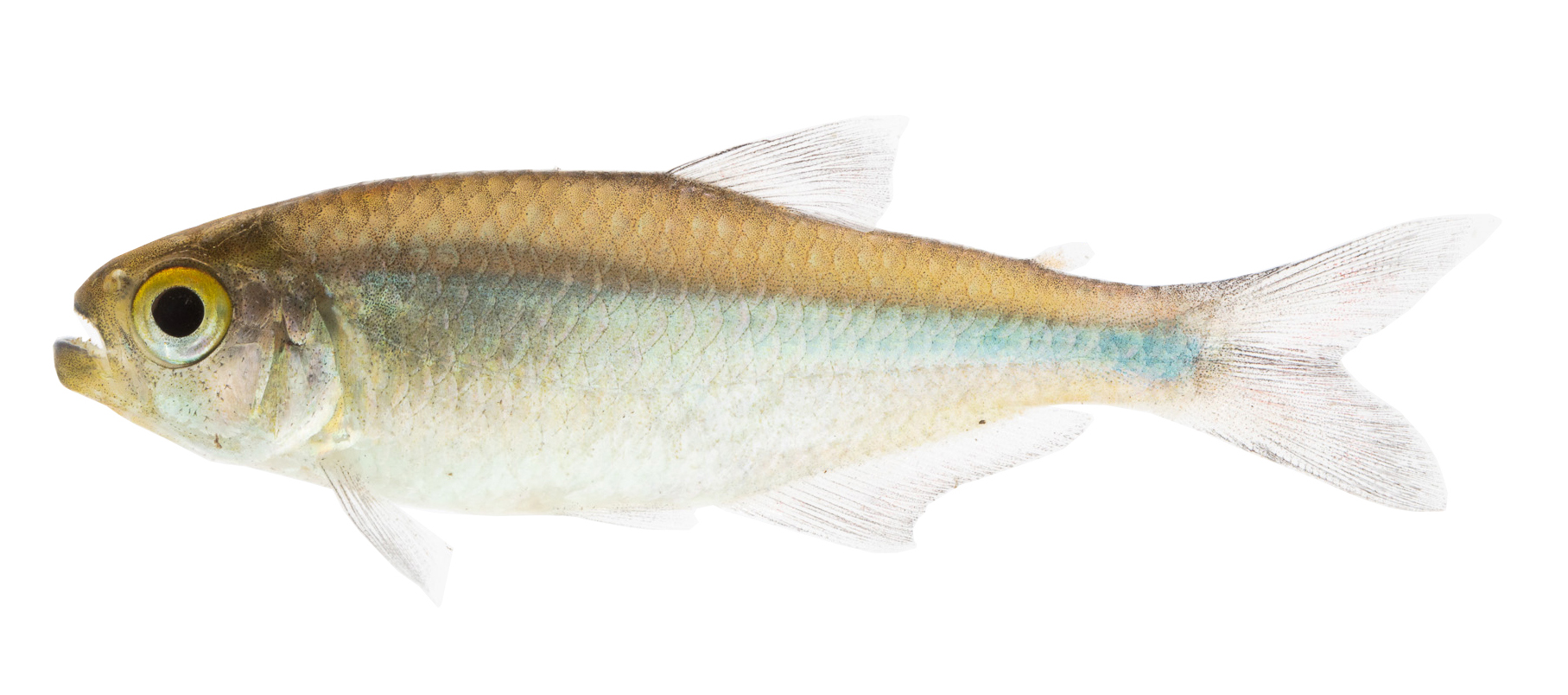
FIGURE 11| Knodus transandeanus, IAvH-P-17731, paratype, living specimen immediately before preservation. Photograph by Felipe Villegas
Sexual dimorphism. Adult males (30.3–49.6 mm SL) differ by presence of bony hooks on anal and pelvic-fin rays. Anal-fin hooks located along posterior margin from third unbranched ray to ninth or tenth branched ray (Fig. 10B). Bony hooks on pelvic-fin segments of mature males unpaired, distributed along posterior margin from first to sixth branched rays (Fig. 10C).
Geographical distribution. Knodus transandeanus is only known from two small tributaries (quebrada La Concordia and quebrada La Leona) of the río Cascajales. This river is a tributary of the río La Colorada, a tributary of the middle río Magdalena basin, draining the western slope of the Cordillera Oriental, close to the Parque Nacional Natural Serranía de los Yariguíes, in Santander, Colombia (Fig. 12).
FIGURE 12| Map of northwestern portion of South America showing distribution of Knodus recorded from Colombia based in specimens from museum lots. Amber yellow: K. alpha. Brown: K. cinarucoensis. Dark blue: K. deuterodonoides. Pink: K. gamma. White: K. hypopterus. Gray: type locality of K. hypopterus and K. orteguasae. Orange: K. macarenae. Red: K. macrophthalmus. Light blue: K. meridae. Purple: K. motatanensis. Black: K. orteguasae. Brown: K. septentrionalis. Yellow: K. transandeanus. Stars correspond to type-localities.
Ecological notes. The type locality of Knodus transandeanus is a stream with an average width of 7 m, substrate of sand, pebbles, and rocks, and abundant riparian vegetation (Fig. 13). Specimens were found syntopically with Hoplias malabaricus (Bloch, 1794), Lebiasina chucuriensis Ardila Rodríguez, 2001, Astyanax yariguies (Torres-Mejia, Hernández & Senechal, 2012), Creagrutus guanes Torres-Mejia & Vari, 2005, C. magdalenae Eigenmann, 1913, Hemibrycon plutarcoi (Román-Valencia, 2001), Pimelodella floridablancaensis Ardila Rodríguez, 2017, Magdalenichthys yariguies DoNascimiento, Albornoz-Garzón, Méndez-López, Villa-Navarro & Conde-Saldaña, 2025, Trichomycterus ruitoquensis Ardila Rodríguez, 2007, T. transandianus (Steindachner, 1915), Ancistrus caucanus Fowler, 1943, Dolichancistrus carnegiei (Eigenmann, 1916), Farlowella yarigui Ballen & Mojica, 2014, Astroblepus verai Ardila Rodríguez, 2015, Geophagus steindachneri Eigenmann & Hildebrand, 1910, and Poecilia caucana (Steindachner, 1880). Stomach content of two c&s specimens included remains of aquatic and terrestrial insects.

FIGURE 13| Type locality of Knodus transandeanus. Colombia, Santander, río Magdalena basin, El Carmen de Chucurí, río Cascajales drainage, quebrada La Concordia. Photograph by M. Arias-Mañosca.
Etymology. The specific epithet alludes to the distribution of this species, being the first species reported from the río Magdalena basin.
ANCOVA test. Bryconamericus motatanensis is a trans-Andean species (Maracaibo basin) showing the greater phenetic similarity to Knodus transandeanus, among geographically most proximate species (Maracaibo, Orinoco, and Amazon basins). Since there is no genetic information to analyze B. motatanensis (Fig. 14A) along with our molecular data set, it is necessary to test whether the two forms can be morphologically discriminated, to rule out a simple distribution expansion of B. motatanensis in the río Magdalena basin. The scores from the ANCOVA test showed that caudal-peduncle length, pectoral-fin length, pelvic-fin length, dorsal-fin base length, anal-fin lobe length, horizontal eye diameter, and snout length exhibited significant differences between B. motatanensis and K. transandeanus (Tab. S3). Likewise, with the exception of snout length, homogeneous slopes were observed for all other morphometric variables (Tab. S3; Fig. S4). Despite these results, the ranges of variation observed for each of these variables overlap between K. transandeanus and B. motatanensis. These findings effectively show that both forms are similar in their body shape, so that their discrimination relies on the following characters: number and shape of teeth of lower jaw (7–10, all multicuspidate in K. transandeanus vs. 12–14, posteriormost teeth conical in B. motatanensis), anal-fin base with 15–17 scales in a single series, extending from 2/3 to the entire length of the anal-fin base in K. transandeanus (vs. 10–13 scales, extending to half-length of anal-fin base or slightly more in B. motatanensis), frontal bones articulating anterior to the frontal fontanel in K. transandeanus (vs. not in contact in B. motatanensis), lateral edges of vomer straight in K. transandeanus (vs. concave in B. motatanensis). This high phenetic similarity potentially may suggests a closer phylogenetic affinity between both species, which could be a tenable hypothesis, given the well-recognized shared biogeographic pattern between the Magdalena and Maracaibo basins (Rodríguez-Olarte et al., 2011). These questions remain open to future efforts, when access to genetic information of B. motatanensis becomes available.

FIGURE 14| A. Knodus motatanensis, IAvH-P 9781, 33.2 mm SL. B. K. macarenae, IAvH-P 19533, 34.7 mm SL.
Phylogenetic analysis. According to our phylogenetic analyses (Figs. 15-16), Knodus transandeanus is recovered as a member of Diapomini (support value: 71), nested within a clade congruent with that recovered by Thomaz et al. (2015), thereby supporting the redefined circumscription of Knodus (support value: 85). The analyses further revealed that K. transandeanus is sister to a clade composed exclusively of Amazonian taxa, K. borki, K. caquetae, K. delta, K. megalops, and several undetermined Knodus lineages, although this relationship is weakly supported (56). The complete phylogenetic tree can be found in Fig. S5.
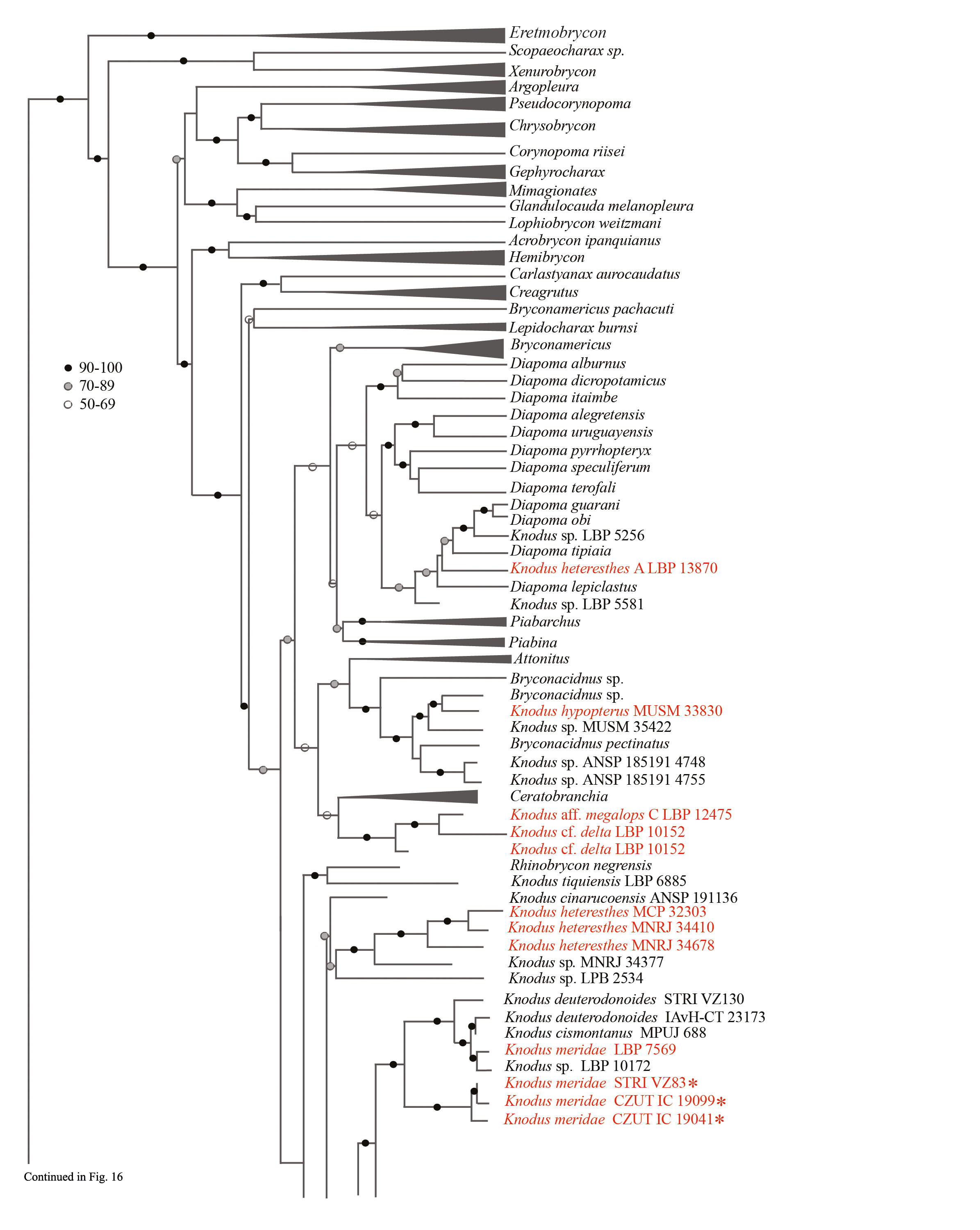
FIGURE 15| Phylogenetic placement of Knodus transandeanus within Stevardiidae, based on the Maximum Likelihood inference of concatenated data. Labels and GenBank numbers of sequences are listed in detail in Tab. S1. Monophyletic genera have been collapsed for clarity, and other clades have been drawn to scale. The scale bar corresponds to 0.04 expected substitutions per site. Bootstrap support for nodes is marked with circles. Red lineages represent terminals of nominal species with conflicting phylogenetic positions, rendering such species non-monophyletic. Asterisks indicate specimens of K. meridae from Maracaibo Lake.

FIGURE 16| Phylogenetic placement of Knodus transandeanus within Stevardiidae, based on the Maximum Likelihood inference of concatenated data. Labels and GenBank numbers of sequences are listed in detail in Tab. S1. Monophyletic genera have been collapsed for clarity, and other clades have been drawn to scale. The scale bar corresponds to 0.04 expected substitutions per site. Bootstrap support for nodes is marked with circles. Red lineages represent terminals of nominal species with conflicting phylogenetic positions, rendering such species non-monophyletic. Asterisks indicate specimens of K. meridae from Maracaibo Lake.
Discussion
A clade equivalent to the circumscription of Knodus proposed by Thomaz et al. (2015) has been consistently recovered as monophyletic within Stevardiidae (García-Melo et al., 2019b; Mirande, 2019; this study). In the present analysis, the correspondence of this clade with Knodus is further corroborated by the inclusion of specimens unambiguously assignable to the type-species, K. meridae, sampled from the basin encompasing its type locality (Maracaibo Lake). Knodus meridae is placed as sister to a clade containing K. cismontanus, K. deuterodonoides, and the sample originally attributed to K. meridae by Thomaz et al. (2015); however, this latter specimen comes instead from the cis-Andean Orinoco basin rather than from the Maracaibo system. The placement of this Orinoco sample, separate from the specimen of K. meridae from Maracaibo, suggests that it may instead represent a misidentified specimen of K. deuterodonoides (this taxonomic identity is also suspected for the sample identified as K. cismontanus) or to a yet undescribed and closely related species. As currently understood, Knodus remains taxonomically challenging, as the reliable assignment of species based solely on morphology is often uncertain (Menezes et al., 2020). This difficulty extends to several nominal species that lack molecular data, underscoroing the need for integrative approaches to better resolve species boundaries and diversity within the genus
On the other hand, the placement of the new species in Knodus is further corroborated morphologically by the presence of all three putative synapomorphies proposed by Mirande (2010), as well as the redefined character of the caudal-fin squamation of Roman-Valencia et al. (2013). Additional examination of the taxonomic distribution of Mirande’s autapomorphies was performed in B. motatanensis and Knodus species from Colombia. Hence, the diverging lamellae of the mesethmoid confluent near the anterior end of the nasal septum were observed in B. motatanensis, K. alpha, K. cinarucoensis, K. deuterodonoides, K. hypopterus, K. macarenae, K. meridae, K. orteguasae, and K. septentrionalis (missing in K. cismontanus, and K. macrophthalmus). The anterior articulation of frontals was found in K. alpha, K. cinarucoensis, K. deuterodonoides, K. hypopterus, K. meridae, K. orteguasae, and K. septentrionalis, while the separated condition by less than one fourth of their distance at the epiphyseal bar region was confirmed in B. motatanensis, K. macarenae (Fig. 17), and K. macrophthalmus. The ventral margin of the posttemporal located anterior to the lateral margin of the epioccipital was present in all examined species. Finally, the scales covering one-third of the caudal-fin lobes were verified in B. motatanensis, K. alpha, K. cinarucoensis, K. cismontanus, K. deuterodonoides, K. gamma, K. hypopterus, K. macarenae, K. meridae (where these scales cover completely the procurrent caudal-fin rays and are progressively larger posteriorly, along the principal caudal-fin rays), K. macrophthalmus, K. orteguasae, and K. septentrionalis.

FIGURE 17| A. Knodus motatanensis, IAvH-P 9781, 33.2 mm SL. B. K. macarenae, IAvH-P 19533, 34.7 mm SL, neurocranium in dorsal view.
In addition, based on the synapomorphies listed in the revised diagnosis of Knodus proposed by Mirande (2019), formerly proposed autapomorphies of K. breviceps, the anterior contact of frontals (ch. 27 in Mirande, 2019) and the caudal-fin lobes covered by scales (ch. 470 in Mirande, 2019) were once again confirmed as synapomorphies of Knodus, along with other three characters: anterior maxillary teeth with five or more cusps (ch. 192 in Mirande, 2019), five or fewer supraneurals (ch. 393 in Mirande, 2019), and sheath of scales covering 3/4 of anal-fin base (ch. 469 in Mirande, 2019). Knodus transandeanus shows all these putative synapomorphies, i.e., frontal bones articulating anterior to the frontal fontanel (Fig. 4), maxillary teeth pentacuspid (Fig. 3B); five supraneurals (Fig. 7); sheath of scales covering from 2/3 to the entire length of the anal-fin base (Figs. 1–2); and scales covering from half to three-fourths of each caudal-fin lobe (Fig. 1). This result is congruent withthephylogenetic placement of K. transandeanus recovered in our molecular analysis. This new set of putative synapomorphies was also evaluated in the same species already examined above for Mirande’s (2010) characters, obtaining the following results: anterior maxillary teeth with five or more cuspswere recorded in B. motatanensis (Fig. 18A), K. alpha, K. cinarucoensis, K. cismontanus, K. deuterodonoides, K. gamma, K. hypopterus, K. macarenae (Fig. 18B), K. macrophthalmus, K. meridae, K. orteguasae, and K. septentrionalis. Regarding the reduced number of supraneurals, K. alpha, K. hypopterus, K. macrophthalmus, K. meridae, K. orteguasae, and K. septentrionalis have up to five supraneurals,but K. cinarucoensis, K. deuterodonoides, and K. macarenae have six supraneurals (Fig. 19B), suggesting that this character is only informative for a less inclusive group within Knodus. Besides, B. motatanensis is polymorphic for this character, since five or six elements were recorded in this species (Fig. 19A), overlapping the proposed ranges for the two states of this character (state 0: five or fewer, state 1: six or more). Finally, the sheath of scales covering 3/4 of the anal-fin base was observed in B. motatanensis (Fig. 20), K. alpha, K. cinarucoensis, K. cismontanus, K. deuterodonoides, K. gamma, K. hypopterus, K. macarenae, K. macrophthalmus K. meridae, K. orteguasae, and K. septentrionalis.
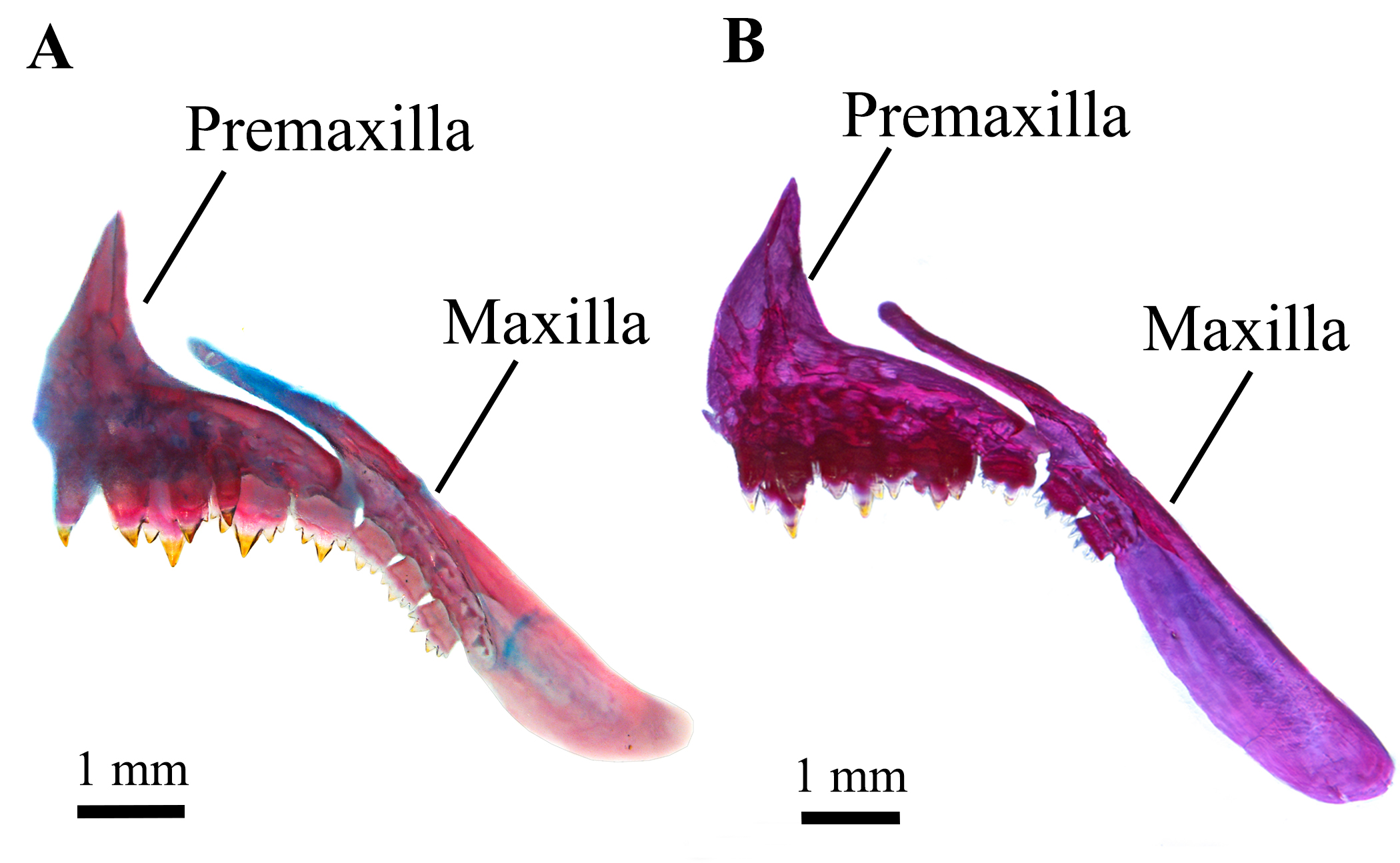
FIGURE 18| A. Knodus motatanensis, IAvH-P 9781, 33.2 mm SL. B. K. macarenae, IAvH-P 19533, 34.7 mm SL, maxillary and premaxillary bones in left lateral view.

FIGURE 19| A. Knodus motatanensis, IAvH-P 9781, 33.2 mm SL. B. K. macarenae, IAvH-P 19533, 34.7 mm SL, supraneurals in left lateral view.

FIGURE 20| Knodus motatanensis, IAvH-P 9781, 42.8 mm SL, anal fin in left lateral view.
This assessment, along with that of Esguícero, Castro (2014), provides a foundation for exploring the taxonomic distribution and congruence of these putative diagnostic characters for Knodus. Such analysis indicates that, at least for some of the Colombian species with available genetic information, there is a consistent result with their phylogenetic position recovered in molecular analyses. Although we could not evaluate the phylogenetic position of B. motatanensis, the consistent presence of all the proposed synapomorphies suggests it belongs to Knodus, so we propose its generic reallocation as K. motatanensis, new combination. Thus, with the present contribution, taxonomic diversity of Knodus reaches 41 valid species, a certainly provisionary number considering the two undescribed species from the Guaviare drainage, recovered in distant phylogenetic positions in our analysis, the Orinoco sample of K. meridae from Thomaz et al. (2015), as well as the several non-monophyletic nominal species (i.e., K. alpha, K. breviceps, K. chapadae, K. delta, K. macarenae, K. heteresthes, K. megalops, K. orteguasae, and K. smithi;Figs. 15–16) with terminals occupying different phylogenetic positions (red highlighted in Figs. 15–16). This hidden diversity fits with the cryptic nature already noticed by García-Melo et al. (2019b) for Knodus and Stevardiidae in general. Moreover, the findings herein observed increase the necessity to conduct a comprehensive analysis to unravel the actual taxonomic diversity of Knodus.
Knodus transandeanus constitutes a striking finding given it represents the first known record of this genus from the río Magdalena basin, which is of special relevance considering that this basin is the best inventoried in Colombia (García-Alzate et al., 2020). Likewise, the restricted distribution of K. transandeanus to the río Cascajales, a direct tributary of the middle basin of the río Magdalena is noteworthy, since the single Magdalena representatives of genera (Gymnotus ardilai Maldonado-Ocampo & Albert, 2004, Farlowella yarigui) or species groups [Astyanax yariguies of the Astyanax orthodus group)] far greater diversified in cis-Andean basins are also restricted to the middle basin of the río Magdalena. Such a narrow distribution in the entire basin (being absent in upper and lower sections of the río Magdalena and in the large tributaries of the basin as the Cauca, Cesar, and San Jorge rivers), suggest a common relict pattern of K. transandeanus, a condition reinforced by its recovered sister group relationship with a clade exclusively comprising species from the Amazon basin.
Examination of specimens of Knodus available in Colombian ichthyological collections confirmed that K. meridae and K. motatanensis are endemics of the Maracaibo basin (Fig. 12). From the Orinoco basin, five species are found: K. alpha, K. cismontanus, and K. deuterodonoides are distributed in the piedmont region of the río Meta, K. cinarucoensis is only recorded in Colombia from the río Bita, and K. macarenae (Fig. 14B) from the río Guaviare (Fig. 12). From the Amazon basin, five species are recognized: K. gamma, K. hypopterus, K. orteguasae, and K. septentrionalis,allfrom drainages of the Amazon piedmont, and K. macrophthalmus restricted to the upper rio Negro basin, including the rio Vaupés (Fig. 12). Records of K. breviceps, K. heteresthes, and K. moenkhausii from localities in Colombia have been dismissed (DoNascimiento et al., 2017; Bogotá-Gregory et al., 2022) and have been proved to be misidentifications of K. hypopterus, K. gamma, or yet undescribed species. This scenario highlights the need for further studies to better understand the diversity and systematics of Knodus, which in turn would allow a more accurate interpretation of the diversification patterns of stevardiids.
Comparative material examined. Brazil: Knodus heteresthes: MCZ 89966, syntypes, 34, 21.4–39 mm SL. Knodus victoriae: MZUSP 87510, 17, 15.7–31.6 mm SL. Colombia: Knodus alpha: FMNH 56646, holotype, 45.1 mm SL; IAvH-P 18906, 38, 21–56.6 mm SL (2 c&s, 52–55.3 mm SL); IAvH-P 22280, 157, 22.2–61.1 mm SL; ICN-MHN 2831, 4, 43.7–58mm SL; UMMZ 145759, 8, 39.3–53 mm SL. Knodus cinarucoensis: IAvH-P 15237, 10, 15.8–28.7 mm SL (2 c&s, 28.5–26.9 mm SL). Knodus cismontanus:FMNH 56642, holotype, 44.9 mm SL; IAvH-P 24242, 1, 37.6 mm SL. Knodus deuterodonoides: IAvH-P 18977, 2, 31.5–37.8 mm SL; IAvH-P 19002, 49, 14.1–37.9 (1 c&s 32.5 mm SL); IAvH-P 22300, 25, 30.1–52.2 mm SL; ICN-MHN 2886, 154, 29.2–52 mm SL. Knodus gamma: CIACOL 1291, 4, 31.8–45.1 mm SL; CIACOL 1771, 20, 27.6–43.3 mm SL; CIACOL 2962, 9, 25.7–32.9 mm SL (1 c&s, 29.7 mm SL); CIACOL 2954, 1, 36.1 mm SL. Knodus hypopterus:CZUT-IC 12053, 12, 31–43 mm SL (2 c&s, 36.6–45.1 mm SL); ICN-MHN 11013, 25, 23.3–39 mm SL. Knodus macarenae: IAvH-P 19533, 78, 18.9–39.5 mm SL(2 c&s, 31–34.7 mmSL). Knodus macrophthalmus: CIACOL 1001, 6, 22.5–46 mm SL; CIACOL 1004, 10, 27–34.1 mm SL (1 c&s 34.1 mm SL). Knodus meridae: IAvH-P 15840, 20, 23.9–36.1 mm SL; IAvH-P 15870, 54, 25.2–38.5mm SL(2 c&s, 30–36 mmSL); Knodus motatanensis: IAvH-P 9781, 6, 25.5–45.7 mm SL(2 c&s, 33.4–38.6 mm SL); IAvH-P 15961, 3, 20.7–40.1 mm SL; ICN-MHN 17666, 14, 29–47.5 mm SL. Knodus orteguasae: CZUT-IC 12066, 2, 37.1–39.3 mm SL (1 c&s, 37.1 mm SL); CZUT-IC 12072, 2, 34.3–35.7 mm SL. Knodus septentrionalis: CZUT-IC 18434, 10, 40.7–58.6 mm SL (2 c&s, 40.7–50.5 mm SL). Paraguay: Knodus moenkhausii: UMMZ 206817, 64, 33.6–48.7 mm SL. Peru: Knodus megalops: UMMZ, 260306, 18, 40–61.7 mm SL. Suriname: Knodus heteresthes: UMMZ 251215, 24, 18.9–34.4 mm SL. Venezuela: Knodus meridae: UMMZ 145033, 5, 27.1–42.2 mm SL; UMMZ 145383, 9, 33.9–50 mm SL. Knodus motatanensis: USNM 121478, paratypes, 2 out of 74, 41–42.1 mm SL; UMMZ 145030, paratypes, 5, 26.4–36.8 mmSL.
Acknowledgments
We thank the following curators and researchers for the access and loan of specimens housed in their respective collections: Mark H. Sabaj (ANSP), Astrid Acosta-Santos and Edwin Agudelo-Córdoba (CIACOL), Diana C. Montoya-Ospina and Francisco Antonio Villa-Navarro (CZUT-IC), Susan Mochel and Caleb McMahan (FMNH), Yuliana Chala-Velásquez and Ángela Gutiérrez-Cortés (IAvH-P), Henry D. Agudelo-Zamora and José Iván Mojica (ICN-MHN), Anne Everly and Andrew Williston (MCZ), Michel Donato Gianeti and Murilo N. L. Pastana (MZUSP), Mary Burridge, Don Stacey Erling Holm, and Nathan K. Lujan (ROM), Randy Singer and Hernán López-Fernández (UMMZ), and Diane Pitassy and Abigail Reft (USNM). We are also grateful to the colleagues and people who helped us in the field: Alcides Arias, Albeiro Suárez-Gamboa, Gabriel Caballero, Maribel Arias-Mañosca, and Andres R. Acosta-Galvis. We thank Eduardo Tovar (Instituto de Investigación de Recursos Biológicos Alexander von Humboldt) for assistance with tissue extraction and amplification, Paola Montoya-Valencia for her help performing the ANCOVA test, and Harold Flórez-Herrera for performing the dissection shown in Fig. 5.
References
Aguiar RG, Guimarães EC, Brito PS, Santos JP, Katz AM, Dias LJBS et al. A new species of Knodus (Characiformes: Characidae), with deep genetic divergence, from the Mearim and Munim river basins, Northeastern Brazil, and evidence for hidden diversity in adjacent river basins. Neotrop Ichthyol. 2022; 20(2):e210173. https://doi.org/10.1590/1982-0224-2021-0173
Ballen GA, Urbano-Bonilla A, Maldonado-Ocampo JA. Description of a new species of the genus Chaetostoma from the Orinoco River drainage with comments on Chaetostoma milesi Fowler, 1941 (Siluriformes: Loricariidae). Zootaxa. 2016; 4105(2):181–97. https://doi.org/10.11646/zootaxa.4105.2.6
Bogotá-Gregory JD, DoNascimiento C, Lima FCT, Acosta-Santos A, Villa-Navarro FA, Urbano-Bonilla A et al. Fishes from the Colombian Amazonia region: species composition from the river systems within the rainforest biome. Biota Neotrop. 2022; 22(4):e20221392. https://doi.org/10.1590/1676-0611-BN-2022-1392
Carvalho M, Bockmann FA, Carvalho MR. Homology of the fifth epibranchial and accessory elements of the ceratobranchials among Gnathostomes: insights from the development of ostariophysans. PLos ONE. 2013; 8(4):e62389. https://doi.org/10.1371/journal.pone.0062389
Chernomor O, von Haeseler A, Minh BQ. Terrace aware data structure for phylogenomic inference from supermatrices. Syst Biol. 2016; 65(6):997–1008. https://doi.org/10.1093/sysbio/syw037
Cope ED. Synopsis of the fishes of the Peruvian Amazon, obtained by professor Orton during his expeditions of 1873 and 1877. Proc Am Philos Soc. 1878; 17(101):673–701.
Deprá GDC, Ota RR, Vitorino Júnior OB, Ferreira KM. Two new species of Knodus (Characidae: Stevardiinae) from the upper rio Tocantins basin, with evidence of ontogenetic meristic changes. Neotrop Ichthyol. 2021; 19(1):e200106. https://doi.org/10.1590/1982-0224-2020-0106
DoNascimiento C. Lista de los peces de agua dulce de Venezuela: una actualización. In: Del Moral-Flores LF, Ramírez-Villalobos AJ, Martínez-Pérez JA, González-Acosta AF, Franco-López J, editors, Colecciones Ictiológicas de Latinoamérica. Facultad de Estudios Superiores Iztacala, Universidad Nacional Autónoma de México & Sociedad Ictiológica Mexicana, A.C., Ciudad de México, D. F., México; 2016. p.521–53.
DoNascimiento C, Herrera-Collazos EE, Herrera-R GA, Ortega-Lara A, Villa-Navarro FA, Oviedo JSU et al. Checklist of the freshwater fishes of Colombia: a Darwin Core alternative to the updating problem. ZooKeys. 2017; 708:25–138. https://doi.org/10.3897/zookeys.708.13897
Eigenmann CH. Description of two new tetragonopterid fishes in the British Museum. Ann Mag Nat Hist. 1911; 7(38):215–17. https://doi.org/10.1080/00222931108692927
Eigenmann CH. The American Characidae. Mem Mus Comp Zool. 1918; 43(2):103–208.
Esguícero ALH, Castro RMC. Knodus figueiredoi, a new characid from the rio das Garças, upper rio Araguaia basin, Brazil, with comments on the taxonomic limits of the genera Knodus and Bryconamericus (Teleostei: Characidae). Ichthyol Explor Freshw. 2014; 25(1):39–48.
Ferreira KM, Carvajal FM. Knodus shinahota (Characiformes: Characidae) a new species from the río Shinahota, río Chapare basin (Mamoré system), Bolivia. Neotrop Ichthyol. 2007; 5(1):31–36. https://doi.org/10.1590/S1679-62252007000100004
Ferreira KM, Netto-Ferreira AL. Knodus dorsomaculatus (Characiformes: Characidae), a new species from Teles Pires River, Tapajós River basin, Brazil. J Fish Biol. 2010; 77(3):468–78. https://doi.org/10.1111/j.1095-8649.2010.02680.x
Ferreira KM, Ohara WM. A new rheophilic species of Knodus Eigenmann (Characiformes: Characidae: Stevardiinae) from the upper rio Juruena, rio Tapajós basin, Chapada dos Parecis, Mato Grosso, Brazil. Zootaxa. 2023; 5227(3):365–77. https://doi.org/10.11646/zootaxa.5227.3.5
Ferreira KM, Lima FCT. Bryconamericus macrophthalmus Román-Valencia, 2003, a senior synonym of Knodus tiquiensis Ferreira & Lima, 2006 (Characiformes: Stevardiidae), and its reassignment to the genus Knodus Eigenmann, 1918. Zootaxa. 2025; 5692(3):585–93. https://doi.org/10.11646/zootaxa.5692.3.10
Fink WL, Weitzman SH. The so-called cheirodontin fishes of Central America with descriptions of two new species (Pisces: Characidae). Smithson Contrib Zool. 1974; 172:1–45. https://doi.org/10.5479/si.00810282.172
Fowler HW. Zoological results of the second Bolivian expedition for the Academy of Natural Sciences of Philadelphia, 1936-1937. Part II: Additional new fishes. Not Naturae. 1943; 120:1–07.
Fricke R, Eschmeyer WN, Van der Laan R, editors. Eschmeyer’s catalog of fishes: genera, species, references [Internet]. San Francisco: California Academy of Sciences; 2025. Available from: http://researcharchive.calacademy.org/research/ichthyology/catalog/fishcatmain.asp
García-Alzate C, DoNascimiento C, Villa-Navarro FA, García-Melo JE, Herrera-R G. Diversidad de peces de la cuenca del río Magdalena, Colombia. In: Jiménez-Segura L, Lasso CA, editors, Peces de la cuenca del río Magdalena, Colombia: diversidad, conservación y uso sostenible. Serie Editorial Recursos Hidrobiológicos y Pesqueros Continentales de Colombia. Instituto de Investigación de Recursos. Bogotá, D. C., Colombia; 2020. p.85–113.
García-Melo JE, García-Melo LJ, García-Melo JD, Rojas-Briñez DK, Guevara G, Maldonado-Ocampo JA. Photafish system: an affordable device for fish photography in the wild. Zootaxa. 2019a; 4554(1):141–72. https://doi.org/10.11646/zootaxa.4554.1.4
García-Melo JE, Oliveira C, Silva GJC, Ochoa-Orrego LE, Pereira LHG, Maldonado-Ocampo JA. Species delimitation of Neotropical characins (Stevardiinae): implications for taxonomy of complex groups. PLoS ONE. 2019b; 14(6):e0216786. https://doi.org/10.1371/journal.pone.0216786
Géry J. Three new tetras from the upper rio Negro near Tapurucuara. TFH. 1961; 12(3):9–15.
Géry J. Contribution a l’etude des poissons characoides de l’Equateur. Avec une revision du genre Pseudochalceus et la description d’un Nouveau genre endemique du Rio Cauca en Colombie. Acta Humboldt Ser Geol Palaeontol Biol. 1972; 2:1–110.
Géry J. Characoids of the world. Neptune City: T. F. H. Publications; 1977.
Hoang DT, Chernomor O, von Haeseler A, Minh BQ, Vinh LS. UFBoot2: improving the ultrafast bootstrap approximation. Mol Biol Evol. 2018; 35(2):518–522. https://doi.org/10.1093/molbev/msx281
Husson F, Josse J, Le S, Mazet J. FactoMineR: multivariate exploratory data analysis and data mining [Internet]. CRAN: R-Project; 2015. Available from: https://cran.r-project.org/package=FactoMineR
Ivanova NV, Dewaard JR, Hebert PDN. An inexpensive, automation-friendly protocol for recovering high-quality DNA. Mol Ecol Notes. 2006; 6(4):998–1002. https://doi.org/10.1111/j.1471-8286.2006.01428.x
Kalyaanamoorthy S, Minh BQ, Wong TKF, von Haeseler A, Jermiin LS. ModelFinder: fast model selection for accurate phylogenetic estimates. Nat Methods. 2017; 14(6):587–89. https://doi.org/10.1038/nmeth.4285
Katoh K, Standley DM. MAFFT multiple sequence alignment software version 7: improvements in performance and usability. Mol Biol Evol. 2013; 30(4):772–80. https://doi.org/10.1093/molbev/mst010
Kearse M, Moir R, Wilson A, Stones-Havas S, Cheung M, Sturrock S et al. Geneious basic: an integrated and extendable desktop software platform for the organization and analysis of sequence data. Bioinformatics. 2012; 28(12):1647–49. https://doi.org/10.1093/bioinformatics/bts199
Kloke J, McKean J. npsm: nonparametric statistical methods [Internet]. CRAN: R-Project; 2014. https://doi.org/10.32614/CRAN.package.npsm
Lanfear R, Calcott B, Ho SYW, Guindon S. PartitionFinder: combined selection of partitioning schemes and substitution models for phylogenetic analyses. Mol Biol Evol. 2012; 29(6):1695–701. https://doi.org/10.1093/molbev/mss020
Lima FCT, Britski HA, Machado FA. New Knodus (Ostariophysi: Characiformes: Characidae) from the upper rio Paraguay basin, Brazil. Copeia. 2004; 2004(3):577–82. https://doi.org/10.1643/CI-03-297R1
Malabarba LR, Weitzman SH. Description of a new genus with six new species from southern Brazil, Uruguay and Argentina, with a discussion of a putative characid clade (Teleostei: Characiformes: Characidae). Comun Mus Ciênc Tecnol PUCRS, Sér. Zool. 2003; 16(1):67–151.
Maldonado-Ocampo JA, Albert JS. Gymnotus ardilai: a new species of Neotropical electric fish (Ostariophysi: Gymnotidae) from the Rio Magdalena basin of Colombia. Zootaxa. 2004; 759(1):1–10. https://doi.org/10.11646/zootaxa.759.1.1
Menezes NA, Ferreira KM, Netto-Ferreira AL. A new species of Knodus (Characiformes: Characidae: Stevardiinae) from the rio Aripuanã, rio Madeira basin, Brazil. Neotrop Ichthyol. 2020; 18(2):e190139. https://doi.org/10.1590/1982-0224-2019-0139
Menezes NA, Marinho MM. A new species of Knodus Eigenmann (Characiformes: Characidae: Stevardiinae) with comments on nuptial tubercles and gill gland in characiform fishes. PLoS ONE. 2019; 14(7):e0217915. https://doi.org/10.1371/journal.pone.0217915
Menezes NA, Netto-Ferreira AL, Ferreira KM. A new species of Bryconadenos (Characiformes: Characidae) from the rio Curuá, rio Xingu drainage, Brazil. Neotrop Ichthyol. 2009; 7(2):147–52. https://doi.org/10.1590/S1679-62252009000200003
Melo BF, Sidlauskas BL, Near TJ, Roxo FF, Ghezelayagh A, Ochoa LE et al. Accelerated diversification explains the exceptional species richness of tropical characoid fishes. Syst Biol. 2021; 71(1):78–92. https://doi.org/10.1093/sysbio/syab040
Mirande JM. Phylogeny of the family Characidae (Teleostei: Characiformes): from characters to taxonomy. Neotrop Ichthyol. 2010; 8(3):385–568. https://doi.org/10.1590/S1679-62252010000300001
Mirande JM. Morphology, molecules and the phylogeny of Characidae (Teleostei, Characiformes). Cladistics. 2019; 35(3):282–300. https://doi.org/10.1111/cla.12345
Nguyen L-T, Schmidt HA, von Haeseler A, Minh BQ. IQ-TREE: a fast and effective stochastic algorithm for estimating maximum-likelihood phylogenies. Mol Biol Evol. 2015; 32(1):268–74. https://doi.org/10.1093/molbev/msu300
R Development Core Team. R: A language and environment for statistical computing. R Foundation for Statistical Computing, Vienna, Austria; 2018. Available from: https://www.R-project.org/.
Román-Valencia C. Tres nuevas especies de Bryconamericus (Ostariophysi: Characidae) de Colombia y diagnóstico del género. Rev Biol Trop. 2000; 48(2–3):449–64. https://doi.org/10.15517/rbt.v48i2-3.18762
Román-Valencia C. Sinopsis comentada de las especies del género Bryconamericus (Teleostei: Characidae) de Venezuela y norte del Ecuador, con la descripción de una nueva especie para Venezuela. Mem Fund La Salle Cien Nat. 2005; 163:27–52.
Román-Valencia C, Taphorn DC, Ruiz-C RI. Two new Bryconamericus: B. cinarucoense n. sp. and B. singularis n. sp. (Characiformes, Characidae) from the Cinaruco River, Orinoco Basin, with keys to all Venezuelan species. Anim Biodivers Conserv. 2008; 31(1):15–27. https://doi.org/10.32800/abc.2008.31.0015
Román-Valencia C, Ruiz-C RI, Taphorn DC, García-Alzate CA. Three new species of Bryconamericus (Characiformes, Characidae), with keys for species from Ecuador and a discussion on the validity of the genus Knodus. Anim Biodivers Conserv. 2013; 36:123–39. https://doi.org/10.32800/abc.2013.36.0123
Sabaj MH. Codes for natural history collections in ichthyology and herpetology. Copeia. 2020; 108(3):593–669. https://doi.org/10.1643/ASIHCODONS2020
Schultz LP. The fishes of the family Characinidae from Venezuela, with descriptions of seventeen new forms. Proc U S Natl Mus. 1944; 95(3181):235–367. https://doi.org/10.5479/si.00963801.95-3181.235
Silva-Oliveira C, Colares Canto AL, Ribeiro FRV. Knodus borari, a new species from the lower Rio Tapajós basin (Characiformes: Characidae). J Fish Biol. 2023; 103(1):136–42. https://doi.org/10.1111/jfb.15422
de Sousa DJA, Silva-Oliveira C, Canto ALC, Ribeiro FRV. A new species of Knodus (Characiformes: Characidae) from the rio Cupari drainage, lower rio Tapajós basin, Brazil. Zootaxa. 2020; 4747(3):575–84. https://doi.org/10.11646/zootaxa.4747.3.10
Taphorn DC. The characiform fishes of the Apure river drainage, Venezuela. Biollania Edición Especial, No. 4. Guanare: Monografias Científicas del Museo de Ciencias Naturales, UNELLEZ; 1992.
Taylor WR, Van Dyke GC. Revised procedures for staining and clearing small fishes and other vertebrates for bone and cartilage study. Cybium. 1985; 9(2):107–19.
Thomaz AT, Arcila D, Ortí G, Malabarba LR. Molecular phylogeny of the subfamily Stevardiinae Gill, 1858 (Characiformes: Characidae): classification and the evolution of reproductive traits. BMC Ecol Evol. 2015; 15:146. https://doi.org/10.1186/s12862-015-0403-4
Weitzman SH. The osteology of Brycon meeki, a generalized characid fish, with an osteological definition of the family. Stanford Ichthyol Bull. 1962; 8(1):1–77.
Weitzman SH, Menezes NA, Evers H-G, Burns JR. Putative relationships among inseminating and externally fertilizing characids, with a description of a new genus and species of Brazilian inseminating fish bearing an anal-fin gland in males (Characiformes: Characidae). Neotrop Ichthyol. 2005; 3(3):329–60. https://doi.org/10.1590/S1679-62252005000300002
Zanata AM, Vari RP. The family Alestidae (Ostariophysi, Characiformes): a phylogenetic analysis of a trans-Atlantic clade. Zool J Linn Soc. 2005; 145(1):1–144. https://doi.org/10.1111/j.1096-3642.2005.00183.x
Zarske A. Knodus pasco sp. n. – ein neuer Salmler (Teleostei: Characiformes: Characidae) aus Peru. Vertebr Zool. 2007; 57(1):15–21. https://doi.org/10.3897/vz.57.e30867
Zarske A. Knodus borki sp. n. – ein neuer Salmler aus Peru mit einer ergänzenden Beschreibung von Boehlkea fredcochui Géry, 1966 (Teleostei: Characiformes: Characidae). Vertebr Zool. 2008; 58(2):159–71. https://doi.org/10.3897/vz.58.e30929
Zarske A, Géry J. Knodus longus sp. n. – ein neuer Salmler (Teleostei: Characiformes: Characidae) aus den bolivianischen Anden, Einzugsgebiet des Río Beni. Zool Abh. 2006; 55:51–57.
Authors

Juan G. Albornoz-Garzón1 , Paola Pulido-Santacruz2, Jorge E. García-Melo3, Mauricio Torres4 and Carlos DoNascimiento5
[1] Department of Ecology and Evolutionary Biology, University of Michigan, Ann Arbor, USA. albornoz@umich.edu (corresponding author).
[2] Escuela de Ciencias e Ingeniería, Universidad del Rosario, Bogotá, Colombia. paola.pulidos@urosario.edu.co.
[3] Facultad de Ciencias Naturales y Matemáticas, Programa de Biología Ambiental, Universidad de Ibagué, Ibagué, Colombia. jorge.melo@unibague.edu.co.
[4] Fundación Iguaque, Bucaramanga, Colombia. mauriciotorres@iguaque.org.
[5] Grupo de Ictiología, Instituto de Biología, Facultad de Ciencias Exactas y Naturales, Universidad de Antioquia, Medellín, Colombia. c.donascimiento@udea.edu.co.
Authors’ Contribution 

Juan G. Albornoz-Garzón: Conceptualization, Data curation, Formal analysis, Investigation, Methodology, Software, Validation, Visualization, Writing-original draft, Writing-review and editing.
Paola Pulido-Santacruz: Conceptualization, Methodology, Software, Visualization, Writing-original draft.
Jorge E. García-Melo: Conceptualization, Investigation, Visualization, Writing-original draft, Writing-review and editing.
Mauricio Torres: Conceptualization, Funding acquisition, Investigation, Methodology, Resources, Writing-original draft, Writing-review and editing.
Carlos DoNascimiento: Conceptualization, Data curation, Formal analysis, Investigation, Methodology, Supervision, Validation, Visualization, Writing-original draft, Writing-review and editing.
Ethical Statement
Specimens were collected by the Instituto de Investigación de Recursos Biológicos Alexander von Humboldt, under Decree 1376 of 2013.
Competing Interests
The author declares no competing interests.
Data availability statement
The authors confirm that the molecular data supporting the findings of this study are available in Genbank with access numbers available in Tab. S1. Morphological data and distributions are available within the article.
AI statement
The authors did not use any AI-assisted technologies in the creation of this manuscript or its figures.
Funding
This research was supported by Santander Bio, a project funded by the Sistema General de Regalías, administered by the Departamento Nacional de Planeación (BPIN 2017000100046), executed by the Gobernación de Santander, and operated by the Instituto de Investigación de Recursos Biológicos Alexander von Humboldt and the Universidad Industrial de Santander (Inter-administrative Agreement 2243, Gobernación de Santander).
Supplementary Material
Supplementary material SUP
Peer Review
How to cite this article
Albornoz-Garzón JG, Pulido-Santacruz P, García-Melo JE, Torres M, DoNascimiento C. A relict from the water: a new species from the río Magdalena basin (Colombia) of the mostly cis-Andean diversified genus Knodus (Characiformes: Stevardiidae). Neotrop Ichthyol. 2026; 24(2):e250170. https://doi.org/10.1590/1982-0224-2025-0170
Copyright
This is an open access article under the terms of the Creative Commons Attribution License, which permits use, distribution and reproduction in any medium, provided the original work is properly cited.
Distributed under
Creative Commons CC-BY 4.0

© 2025 The Authors.
Diversity and Distributions Published by SBI
 Accepted November 11, 2025
Submitted May 2, 2025
Epub July 20, 2026